How to Move Across Town Without Wasting an Entire Weekend
Plan and execute a local move that wraps up in a single day — no chaos, no extra trips, no leftover boxes.
Deciding to move across town feels like it should be the easy version of moving. The drive is short, you are not crossing state lines, and you probably already know the neighborhood. Yet local moves have a way of expanding into all-weekend ordeals — multiple trips back and forth, forgotten items, borrowed trucks that need to be back by five, and a Sunday evening spent sitting on a mattress on the floor wondering where the weekend went. It does not have to go that way.
If you would rather have experienced professionals handle the heavy lifting so you can focus on settling in from day one, call our team at 719-357-9048 to lock in your move date.
Whether you are moving a few blocks away or across Colorado Springs to a completely different neighborhood, the strategies below will help you plan a local move that wraps up in a single day — with your bed made, your kitchen functional, and the truck returned on time.
Why Local Moves Take Longer Than People Expect
The biggest trap of a local move is the assumption that proximity makes preparation optional. When the new place is only ten minutes away, it is tempting to skip the planning and just start loading the car. That approach almost always results in a chaotic stream of partial loads, furniture jammed in doorways, and a second — sometimes third — day of hauling stragglers.
Three patterns turn a short-distance move into a multi-day ordeal:
- The "one more trip" mentality — because the drive is short, there is always a temptation to do just one more car trip rather than loading properly from the start. Those extra trips add up fast.
- Skipping the packing phase — many people assume that because they are moving close, they can carry things loose or in laundry baskets. Loose items are harder to load efficiently, take up more space, and get damaged more easily than properly boxed belongings.
- No sequencing plan — without a clear order of operations, furniture and boxes end up blocking hallways, the wrong rooms get filled first, and everyone spends time reshuffling instead of unloading.
The solution is to treat a local move with the same respect you would give a long-distance one — right up until the moment you turn the ignition key and appreciate that the drive is only ten minutes.
Plan the Logistics Before You Pack a Single Box
Most of the time lost on moving day is not spent lifting — it is spent making decisions that should have been made the week before. Locking in the logistics early eliminates the on-the-spot problem-solving that slows everything down.
Choose your equipment honestly
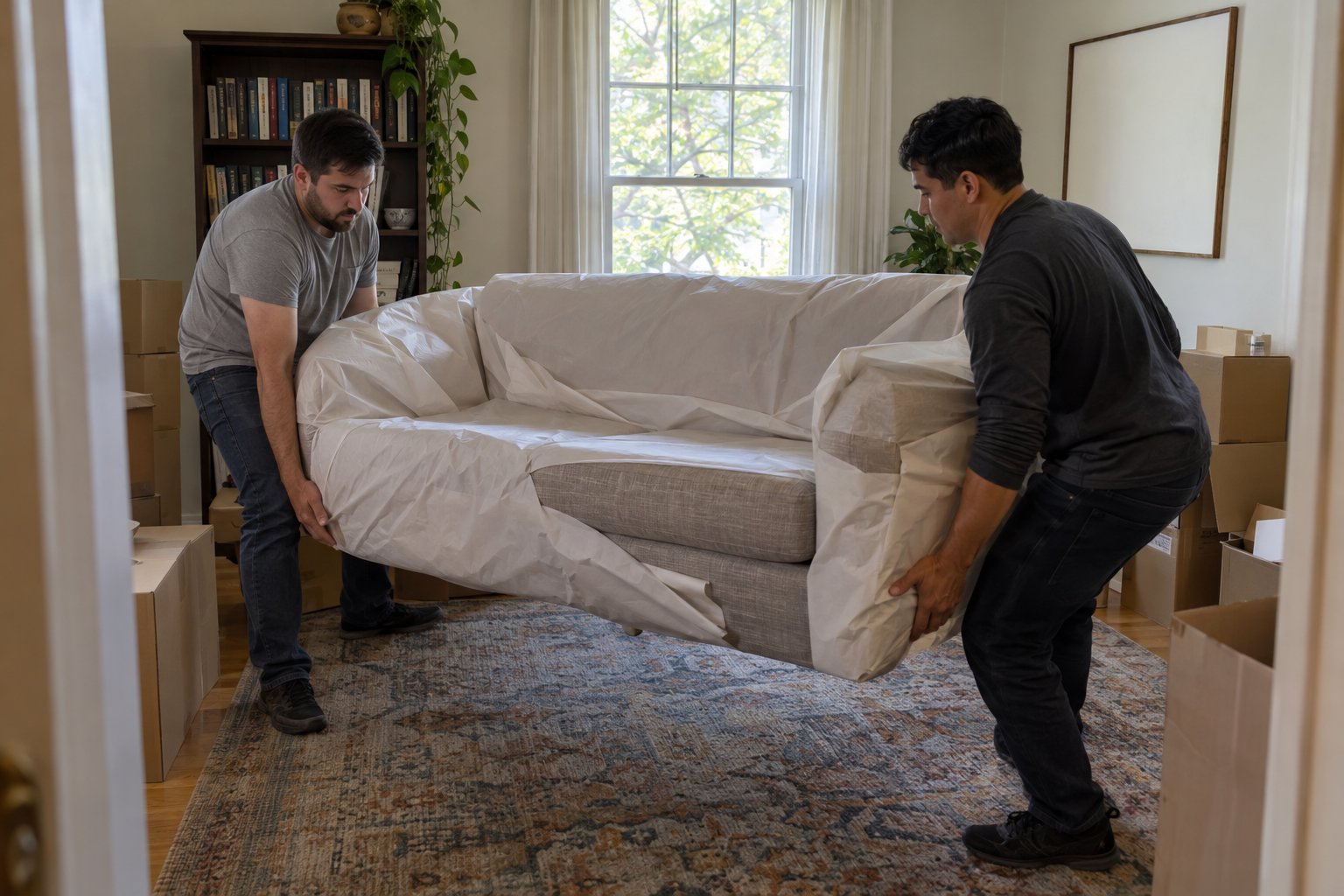
The single most consequential decision in a local move is whether you need a truck. A studio apartment's worth of belongings might genuinely fit in a large SUV and a friend's van. A two-bedroom house almost certainly will not. Before you commit to "we can probably do this ourselves," walk through every room and estimate the volume honestly. Furniture — sofas, bed frames, dressers, dining tables — takes up far more truck space than boxes, and it cannot be stacked the way boxes can.
If you are renting a truck, book it well in advance and confirm the return window. Getting caught with a late-return fee because the move ran long is a frustrating and easily preventable outcome.
Reserve parking at both ends
This step gets skipped constantly on local moves. If you are moving from or into an apartment complex, contact the property manager several days in advance to reserve a loading zone or ask about elevator scheduling. If you are moving to or from a street address in a busy Colorado Springs neighborhood, check whether you need a parking permit for an oversized vehicle. A truck that cannot park close to the front door adds significant time to every single trip.
Confirm who is helping and when
Helpers who commit to "morning" and show up at noon are one of the most common reasons local moves bleed into a second day. Be specific: tell helpers what time to arrive, what to wear (closed-toe shoes, comfortable clothes), and whether you need them all day or just for the heavy items. If the crew is small, consider calling in professional movers for the furniture and handling the boxes yourself — that combination often turns out to be faster and less stressful than relying entirely on friends.
Pack Like You Are Moving Far Away — Even Though You Are Not
The instinct to skip proper packing on a local move is understandable but consistently counterproductive. Boxes protect your belongings, stack efficiently in a truck, and make it possible for multiple people to carry multiple items simultaneously. Loose items do none of those things.
Pack room by room and label every box clearly
Label each box with its destination room and a brief description of contents — not just "kitchen," but "kitchen — pots and pans" or "kitchen — pantry dry goods." This takes an extra fifteen seconds per box and saves several minutes of confusion when the box comes off the truck and helpers are asking where it goes.
Pack a first-night bag separately
Even on a same-day local move, you may not finish unpacking before bedtime. Pack a bag with the items you will need regardless of how the unpacking goes: phone charger, toiletries, a change of clothes, any medications, and whatever you need for your morning routine. Keep it in your car, not in the truck, so it is immediately accessible at the new place.
Break down furniture before moving day
Bed frames, bookshelves, and flat-pack furniture are significantly faster and safer to move when they are broken down. Take the time to disassemble them the night before, keep all hardware in clearly labeled zip-lock bags taped to the relevant piece, and have the reassembly tools ready on the other end. The time you invest the evening before moving day is almost always less than the time you would lose wrestling furniture through doorways.
Build a Realistic Moving Day Timeline
A local move that goes well is almost always a local move that ran on a schedule. Without a rough timeline, tasks expand to fill whatever time is available — and available time has a way of running out before the job is done.
Start earlier than feels necessary
Most local moves that run into a second day started too late in the morning. Aim to begin loading by eight or nine o'clock at the latest. Early starts capture cooler temperatures in summer, give you a full day's buffer for unexpected delays, and let helpers leave at a reasonable hour — which means they are more likely to actually show up and stay engaged.
Load heavy items first, boxes last
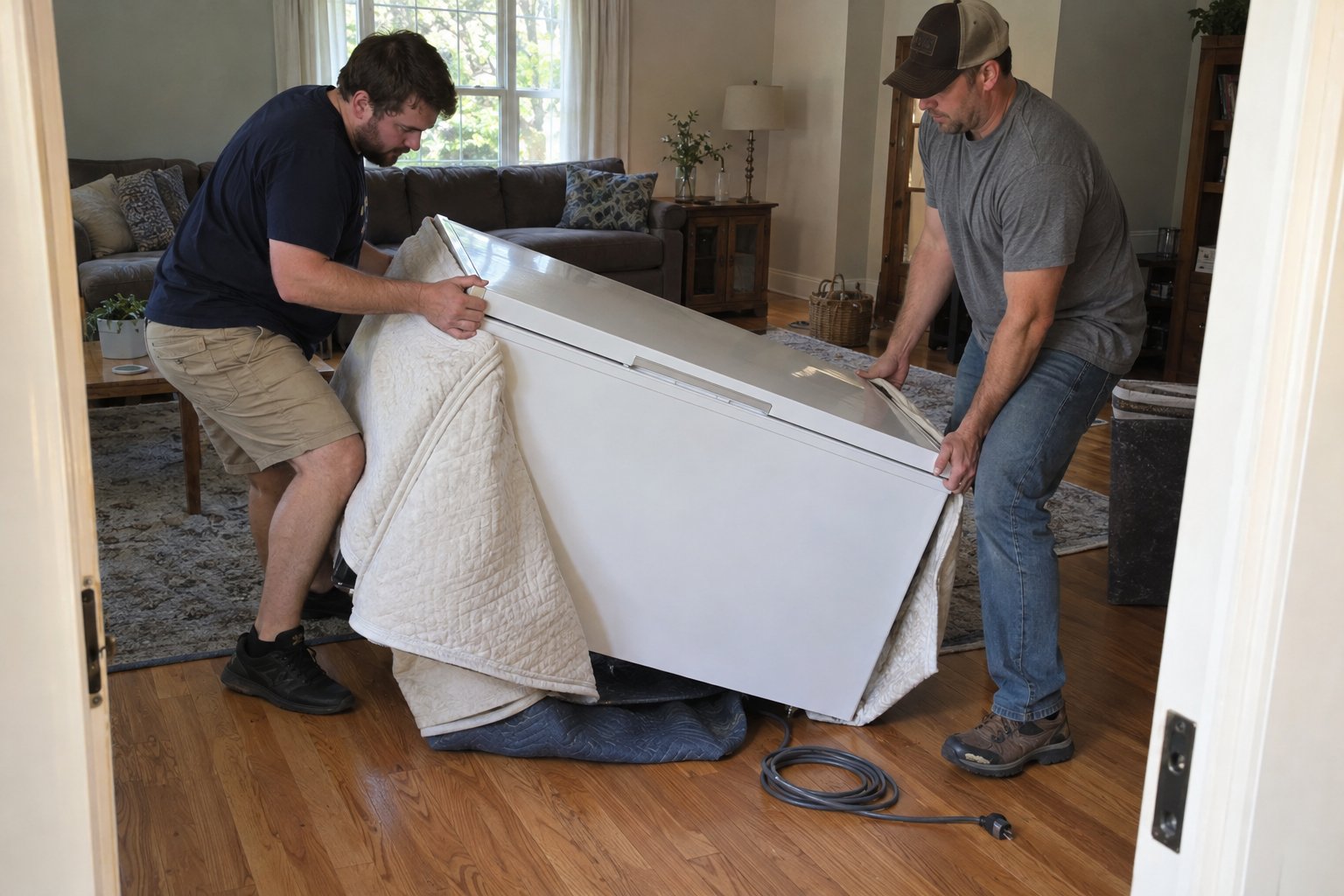
Furniture and appliances go into the truck first — loaded against the cab wall, heaviest pieces on the bottom, legs and protruding parts wrapped in moving blankets. Boxes fill in around and on top of the furniture. Fragile boxes ride on top or secured against the side walls. This order maximizes how much fits in a single load and minimizes damage.
Do not make a second trip if you can avoid it
Every additional trip across town costs time — not just the drive, but the reloading, the parking, and the loss of momentum. Pack the truck as thoroughly as possible on the first load. If you are doing a DIY move, rent a slightly larger truck than you think you need rather than a slightly smaller one. The cost difference between truck sizes is almost always less than the cost of a second round trip in time, fuel, and energy.
Settle In Strategically on the Other End
Unloading a truck quickly is only half the job. How you set up the new space in the first few hours determines whether you feel functional by evening or lost in a sea of boxes for days.
Direct every box to its correct room immediately
As boxes come off the truck, the person managing the new space should direct each one straight to its destination room — not to a staging area, and not to "wherever there is space." A brief walkthrough with your helpers before unloading begins, pointing out which room is which, pays off enormously in the first thirty minutes of unloading.
Set up the bedroom and bathroom first
Whatever else remains unpacked at the end of the day, you need a functional place to sleep and a functional bathroom. Reassemble the bed, put sheets on the mattress, and set up the bathroom before you tackle anything else. Once those two rooms are operational, the rest of the unpacking can happen at a sustainable pace over the next few days without feeling like you are camping in your own home.
Get the kitchen to a working state
You do not need every dish, pot, and pantry item sorted by end of day — but you do need the ability to make coffee in the morning and heat something up for dinner. Identify the two or three kitchen boxes that contain your daily essentials and unpack those first. Everything else can wait until the following day when you are fresh.
A local move handled with intention rather than improvisation is one of the most satisfying projects a household can undertake. The distance is short, the logistics are manageable, and with the right plan in place, you can genuinely be settled — not just moved — by the time the sun goes down on moving day.
Frequently Asked Questions
How long does a local move across town typically take?
The timeline depends on the size of your home and how well-prepared you are, but most local moves — with proper packing, the right equipment, and a reliable crew — can be completed in four to eight hours. A studio or one-bedroom apartment often wraps up in half a day. A three-bedroom house may take a full day. The biggest variable is not the drive time but how organized the loading and unloading process is.
Is it worth hiring professional movers for a short local move?
For many households, yes. Professional movers bring the right equipment, know how to protect furniture and doorways, and work efficiently as a team. The cost of hiring movers for a local move is often comparable to or lower than the combined cost of truck rental, moving supplies, fuel, and the time and goodwill spent coordinating friends. It also eliminates the risk of injury or property damage from inexperienced handling of heavy items.
How many trips should a local move require?
Ideally, one. With a properly sized truck and well-packed boxes, most one- and two-bedroom households can complete a local move in a single load. Three-bedroom homes may require two loads. If you find yourself making more than two trips, it is usually a sign that either the truck is too small or items were not packed efficiently enough to maximize space.
What is the biggest mistake people make on a local move?
Underestimating the preparation required. Because a local move feels less serious than a long-distance one, many households skip proper packing, skip reserving parking, and start too late in the day. Those shortcuts consistently turn a manageable same-day move into a drawn-out multi-day process. Treating the logistics with the same care you would give any move — regardless of distance — is the single most effective thing you can do.
Should I pack everything before moving day even for a local move?
Yes. Having everything packed and boxed before the truck arrives — or before your helpers show up — is one of the highest-impact things you can do for the efficiency of a local move. Movers and helpers can load boxes and furniture continuously when things are ready. Every time they have to wait while you pack a last-minute item or search for tape, you lose momentum that is hard to recover.
Deciding to move across town feels like it should be the easy version of moving. The drive is short, you are not crossing state lines, and you probably already know the neighborhood. Yet local moves have a way of expanding into all-weekend ordeals — multiple trips back and forth, forgotten items, borrowed trucks that need to be back by five, and a Sunday evening spent sitting on a mattress on the floor wondering where the weekend went. It does not have to go that way.
If you would rather have experienced professionals handle the heavy lifting so you can focus on settling in from day one, call our team at 719-357-9048 to lock in your move date.
Whether you are moving a few blocks away or across Colorado Springs to a completely different neighborhood, the strategies below will help you plan a local move that wraps up in a single day — with your bed made, your kitchen functional, and the truck returned on time.
Why Local Moves Take Longer Than People Expect
The biggest trap of a local move is the assumption that proximity makes preparation optional. When the new place is only ten minutes away, it is tempting to skip the planning and just start loading the car. That approach almost always results in a chaotic stream of partial loads, furniture jammed in doorways, and a second — sometimes third — day of hauling stragglers.
Three patterns turn a short-distance move into a multi-day ordeal:
- The "one more trip" mentality — because the drive is short, there is always a temptation to do just one more car trip rather than loading properly from the start. Those extra trips add up fast.
- Skipping the packing phase — many people assume that because they are moving close, they can carry things loose or in laundry baskets. Loose items are harder to load efficiently, take up more space, and get damaged more easily than properly boxed belongings.
- No sequencing plan — without a clear order of operations, furniture and boxes end up blocking hallways, the wrong rooms get filled first, and everyone spends time reshuffling instead of unloading.
The solution is to treat a local move with the same respect you would give a long-distance one — right up until the moment you turn the ignition key and appreciate that the drive is only ten minutes.
Plan the Logistics Before You Pack a Single Box
Most of the time lost on moving day is not spent lifting — it is spent making decisions that should have been made the week before. Locking in the logistics early eliminates the on-the-spot problem-solving that slows everything down.
Choose your equipment honestly
The single most consequential decision in a local move is whether you need a truck. A studio apartment's worth of belongings might genuinely fit in a large SUV and a friend's van. A two-bedroom house almost certainly will not. Before you commit to "we can probably do this ourselves," walk through every room and estimate the volume honestly. Furniture — sofas, bed frames, dressers, dining tables — takes up far more truck space than boxes, and it cannot be stacked the way boxes can.
If you are renting a truck, book it well in advance and confirm the return window. Getting caught with a late-return fee because the move ran long is a frustrating and easily preventable outcome.
Reserve parking at both ends
This step gets skipped constantly on local moves. If you are moving from or into an apartment complex, contact the property manager several days in advance to reserve a loading zone or ask about elevator scheduling. If you are moving to or from a street address in a busy Colorado Springs neighborhood, check whether you need a parking permit for an oversized vehicle. A truck that cannot park close to the front door adds significant time to every single trip.
Confirm who is helping and when
Helpers who commit to "morning" and show up at noon are one of the most common reasons local moves bleed into a second day. Be specific: tell helpers what time to arrive, what to wear (closed-toe shoes, comfortable clothes), and whether you need them all day or just for the heavy items. If the crew is small, consider calling in professional movers for the furniture and handling the boxes yourself — that combination often turns out to be faster and less stressful than relying entirely on friends.
Pack Like You Are Moving Far Away — Even Though You Are Not
The instinct to skip proper packing on a local move is understandable but consistently counterproductive. Boxes protect your belongings, stack efficiently in a truck, and make it possible for multiple people to carry multiple items simultaneously. Loose items do none of those things.
Pack room by room and label every box clearly
Label each box with its destination room and a brief description of contents — not just "kitchen," but "kitchen — pots and pans" or "kitchen — pantry dry goods." This takes an extra fifteen seconds per box and saves several minutes of confusion when the box comes off the truck and helpers are asking where it goes.
Pack a first-night bag separately
Even on a same-day local move, you may not finish unpacking before bedtime. Pack a bag with the items you will need regardless of how the unpacking goes: phone charger, toiletries, a change of clothes, any medications, and whatever you need for your morning routine. Keep it in your car, not in the truck, so it is immediately accessible at the new place.
Break down furniture before moving day
Bed frames, bookshelves, and flat-pack furniture are significantly faster and safer to move when they are broken down. Take the time to disassemble them the night before, keep all hardware in clearly labeled zip-lock bags taped to the relevant piece, and have the reassembly tools ready on the other end. The time you invest the evening before moving day is almost always less than the time you would lose wrestling furniture through doorways.
Build a Realistic Moving Day Timeline
A local move that goes well is almost always a local move that ran on a schedule. Without a rough timeline, tasks expand to fill whatever time is available — and available time has a way of running out before the job is done.
Start earlier than feels necessary
Most local moves that run into a second day started too late in the morning. Aim to begin loading by eight or nine o'clock at the latest. Early starts capture cooler temperatures in summer, give you a full day's buffer for unexpected delays, and let helpers leave at a reasonable hour — which means they are more likely to actually show up and stay engaged.
Load heavy items first, boxes last
Furniture and appliances go into the truck first — loaded against the cab wall, heaviest pieces on the bottom, legs and protruding parts wrapped in moving blankets. Boxes fill in around and on top of the furniture. Fragile boxes ride on top or secured against the side walls. This order maximizes how much fits in a single load and minimizes damage.
Do not make a second trip if you can avoid it
Every additional trip across town costs time — not just the drive, but the reloading, the parking, and the loss of momentum. Pack the truck as thoroughly as possible on the first load. If you are doing a DIY move, rent a slightly larger truck than you think you need rather than a slightly smaller one. The cost difference between truck sizes is almost always less than the cost of a second round trip in time, fuel, and energy.
Settle In Strategically on the Other End
Unloading a truck quickly is only half the job. How you set up the new space in the first few hours determines whether you feel functional by evening or lost in a sea of boxes for days.
Direct every box to its correct room immediately
As boxes come off the truck, the person managing the new space should direct each one straight to its destination room — not to a staging area, and not to "wherever there is space." A brief walkthrough with your helpers before unloading begins, pointing out which room is which, pays off enormously in the first thirty minutes of unloading.
Set up the bedroom and bathroom first
Whatever else remains unpacked at the end of the day, you need a functional place to sleep and a functional bathroom. Reassemble the bed, put sheets on the mattress, and set up the bathroom before you tackle anything else. Once those two rooms are operational, the rest of the unpacking can happen at a sustainable pace over the next few days without feeling like you are camping in your own home.
Get the kitchen to a working state
You do not need every dish, pot, and pantry item sorted by end of day — but you do need the ability to make coffee in the morning and heat something up for dinner. Identify the two or three kitchen boxes that contain your daily essentials and unpack those first. Everything else can wait until the following day when you are fresh.
A local move handled with intention rather than improvisation is one of the most satisfying projects a household can undertake. The distance is short, the logistics are manageable, and with the right plan in place, you can genuinely be settled — not just moved — by the time the sun goes down on moving day.
Have Questions About Your Move?
How long does a local move across town typically take?
The timeline depends on the size of your home and how well-prepared you are, but most local moves — with proper packing, the right equipment, and a reliable crew — can be completed in four to eight hours. A studio or one-bedroom apartment often wraps up in half a day. A three-bedroom house may take a full day. The biggest variable is not the drive time but how organized the loading and unloading process is.
Is it worth hiring professional movers for a short local move?
For many households, yes. Professional movers bring the right equipment, know how to protect furniture and doorways, and work efficiently as a team. The cost of hiring movers for a local move is often comparable to or lower than the combined cost of truck rental, moving supplies, fuel, and the time and goodwill spent coordinating friends. It also eliminates the risk of injury or property damage from inexperienced handling of heavy items.
How many trips should a local move require?
Ideally, one. With a properly sized truck and well-packed boxes, most one- and two-bedroom households can complete a local move in a single load. Three-bedroom homes may require two loads. If you find yourself making more than two trips, it is usually a sign that either the truck is too small or items were not packed efficiently enough to maximize space.
What is the biggest mistake people make on a local move?
Underestimating the preparation required. Because a local move feels less serious than a long-distance one, many households skip proper packing, skip reserving parking, and start too late in the day. Those shortcuts consistently turn a manageable same-day move into a drawn-out multi-day process. Treating the logistics with the same care you would give any move — regardless of distance — is the single most effective thing you can do.
Should I pack everything before moving day even for a local move?
Yes. Having everything packed and boxed before the truck arrives — or before your helpers show up — is one of the highest-impact things you can do for the efficiency of a local move. Movers and helpers can load boxes and furniture continuously when things are ready. Every time they have to wait while you pack a last-minute item or search for tape, you lose momentum that is hard to recover.