How to Move Heavy Furniture Without Injuring Yourself or Damaging Your Home
The right tools, body mechanics, and home-protection steps make every heavy piece manageable — without injuries or damage.
Knowing how to move heavy furniture is one of the most practically useful skills in any relocation — and one of the most commonly improvised at the worst possible moment. A dresser that looks manageable from across the room has a way of becoming an immovable object the instant two people try to muscle it through a hallway. Backs get strained, doorframes get gouged, and the dresser ends up sitting at a 45-degree angle in the middle of a corridor while everyone catches their breath. It does not have to go that way.
If you would rather have experienced professionals handle the heavy lifting so you can focus on settling in from day one, call our team at 719-357-9048 to lock in your move date.
Whether you are moving a single piece across a room or relocating an entire household, the techniques below will help you move heavy furniture without injury, without damage to your home, and without needing a crew of ten people to make it happen.
Why Moving Heavy Furniture Goes Wrong So Often
The most common reason furniture moves turn into disasters is underestimation. People look at a bookcase or a sectional sofa and assume they can figure it out on the fly. What they discover — usually with something already scraped or someone already wincing — is that heavy furniture follows its own rules, and improvisation rarely beats preparation.
Three specific patterns cause the majority of heavy-furniture injuries and damage:
- Lifting with the back instead of the legs — the single most predictable cause of moving-day injuries. When you bend at the waist to grab something heavy, your lower back absorbs forces it was not designed to handle. The mechanics of a proper squat lift feel awkward at first but eliminate that risk entirely.
- Moving without the right tools — attempting to slide a 300-pound refrigerator across hardwood floors without furniture sliders, or carrying a sofa through a narrow doorway without removing the legs first, turns a manageable task into an ordeal.
- Not measuring the path before you start — discovering that a wardrobe will not fit through the bedroom door after you have already lifted it is one of the most demoralizing experiences in any move. Thirty seconds with a tape measure prevents it completely.
The solution is a short pre-move routine that covers your body mechanics, your tools, and your path — in that order.
The Right Tools Make Every Heavy Piece Manageable
Professional movers do not rely on brute strength. They rely on mechanical advantage — the right tools that reduce the effective weight and friction of any object. Investing in a few of these before moving day will change the experience entirely.
Furniture sliders
Furniture sliders are flat pads — typically plastic on hardwood and carpet-friendly felt on hard floors — that sit under the legs or base of a heavy piece and allow it to glide across the floor with a fraction of the normal effort. A sofa that would require four people to carry can often be slid into position by one person using sliders. They are inexpensive, widely available at hardware stores, and reusable across multiple moves.
The key is to lift the piece just enough to slip a slider under each corner — never drag the piece over the slider. If you cannot lift the corner, use a pry bar or a flat-head screwdriver against a piece of scrap wood to gently lever the leg up without damaging the floor.
Moving straps and forearm forklifts
Moving straps — sometimes called forearm forklifts — are harness-style straps that distribute the weight of a heavy item across your forearms and shoulders rather than concentrating it in your hands and lower back. Two people wearing moving straps can carry a mattress, a large dresser, or even a small appliance with noticeably better control and significantly less strain.
They take a few minutes to learn but pay back that investment immediately. If you are planning a DIY move involving any furniture heavier than you can comfortably carry with two hands, moving straps are worth owning.
A two-wheel hand truck and a four-wheel dolly
A hand truck — the classic upright L-shaped cart — is ideal for tall, rigid pieces like bookshelves, filing cabinets, and stacked boxes. Tip the piece back onto the hand truck's base plate, tilt the whole unit backward until it balances over the wheels, and roll it rather than carry it.
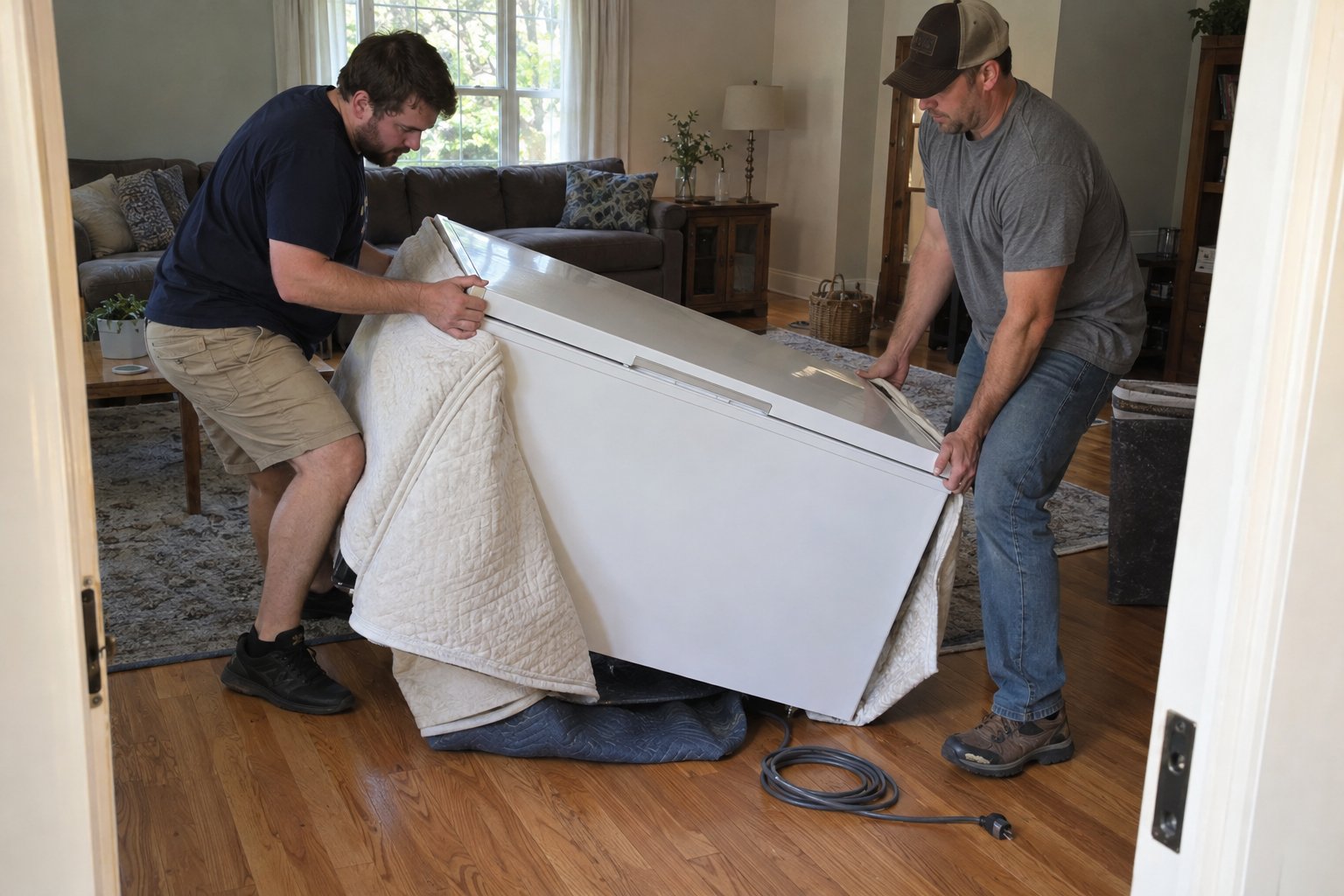
A flat four-wheel dolly is better suited for wide, low pieces like dressers and washing machines. Set the piece on the dolly, secure it with a ratchet strap if it is at risk of sliding, and push rather than carry.
Both tools are available for rent at most moving truck companies, which makes them accessible even if you do not own them.
Body Mechanics: How to Lift Without Hurting Yourself
No tool eliminates the need to lift at some point — but proper mechanics mean that every lift you do take on is as safe as possible.
The squat lift
Stand close to the object with your feet shoulder-width apart. Bend at the knees and hips — not the waist — and grip the piece firmly. Keep your back straight and your core engaged. Lift by driving through your heels and straightening your legs, letting your legs do the work. Keep the load close to your body throughout the lift — the farther out in front of you a heavy object sits, the more stress it places on your spine.
Moving with a partner
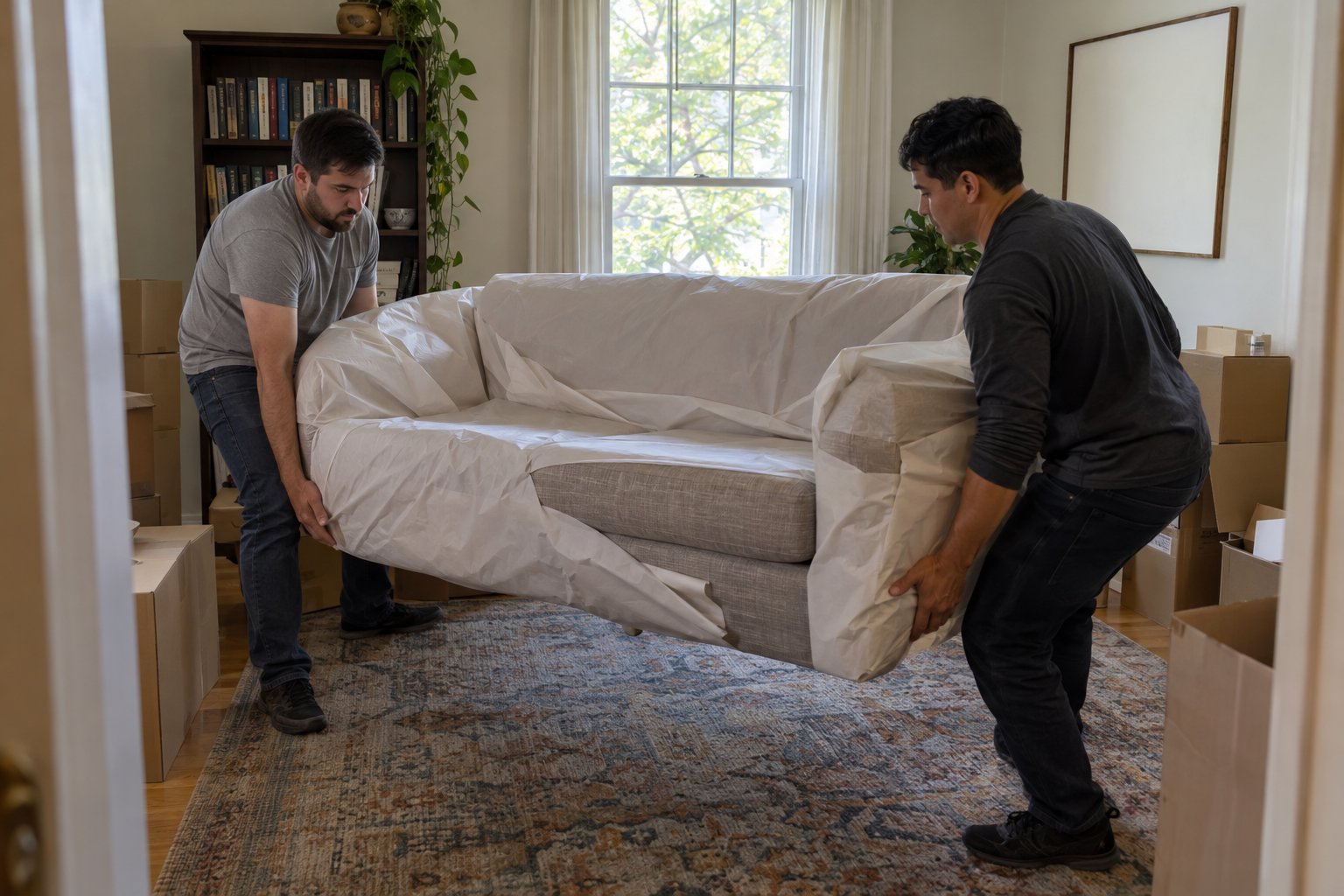
When carrying with another person, communication matters more than strength. Designate one person to call the movements: "ready, lift," "step left," "set it down." Uncoordinated lifting — where one person goes early and the other compensates — is one of the most common causes of dropped furniture and strained muscles.
For stairways, the stronger or more experienced person should be at the bottom, supporting more of the load. The person at the top guides direction. Both should keep the piece tilted slightly toward the stairs so that gravity works with the carry rather than against it.
Know when to stop
If a piece genuinely requires more strength or control than you and your helpers have available, stop and reassess. Trying to muscle through a lift that is beyond your capacity is where serious injuries happen. Sometimes the right answer is to disassemble the piece further, take a longer route, or call a professional crew to handle that specific item.
Protecting Your Home During the Move
Moving heavy furniture through a home puts floors, walls, and door frames at risk even when the lift itself goes smoothly. A few simple precautions prevent almost all of the cosmetic damage that moving day routinely causes.
Protect door frames and corners
Wrap door frames with moving blankets or thick cardboard secured with painter's tape before you start moving large pieces. Adhesive corner guards — available at hardware stores — protect wall corners from the inevitable brush of a sofa arm or bookcase edge. These take less than ten minutes to install and save hours of touch-up painting later.
Cover your floors
Hardwood and laminate floors scratch easily under the repeated traffic of a move. Ram board — a heavy-duty temporary floor protection product — can be laid down over high-traffic pathways and taped at the seams to protect the surface throughout the day. Furniture sliders, as noted above, also protect floors during repositioning.
Carpeted hallways are more forgiving of foot traffic but still benefit from protection if you are rolling a heavy dolly over them repeatedly — the wheels can compress and damage carpet fibers in high-traffic lines.
Measure before you move anything
Before lifting a single piece of large furniture, take a tape measure to every doorway, stairwell, and hallway on your route. Compare those measurements against the piece's height, width, and diagonal (for items that may need to be tilted through a doorway). Write the numbers down. If something will not fit upright, determine whether it will clear the opening when tilted — and if not, identify whether legs can be removed to reduce the height.
Discovering a fit problem in advance means you can solve it calmly. Discovering it with the piece in the air means you are solving it under stress, with your back already loaded.
When DIY Furniture Moving Makes Sense — and When It Does Not
There is a class of furniture that genuinely does not belong in a DIY move: pianos, gun safes, large antique pieces with fragile veneers, pool tables, and oversized sectional sofas. These items require specialized equipment, experience reading tight spaces, and in some cases, multiple trained crew members working in precise coordination. Attempting to improvise with items in this category is how serious injuries and significant property damage happen.
For everything else — beds, dressers, dining tables, bookshelves, appliances — the combination of the right tools, proper body mechanics, measured pathways, and a reliable helper is usually sufficient for a safe DIY move. The honest question to ask yourself is not "can we technically attempt this?" but "do we have everything we need to do this without anyone getting hurt and without damaging the home?"
If the answer to that question is uncertain, a professional moving crew is not an admission of defeat — it is the most efficient use of your time and the best insurance against a move-day injury that sidelines you for weeks afterward.
Ready to hand the heavy lifting to a team that does this every day? Call Men on Mission at 719-357-9048 or get a free quote online and lock in your move date.
Frequently Asked Questions
What is the safest way to lift a heavy piece of furniture without hurting my back?
The safest method is the squat lift: stand close to the piece with feet shoulder-width apart, bend at the knees and hips rather than the waist, keep your back straight and core engaged, and drive upward through your legs. Keep the load close to your body throughout the lift to minimize stress on your spine. Avoid bending at the waist to grab anything heavy — that position places your lower back under forces it is not designed to handle.
What tools do professional movers use to move heavy furniture?
Professional movers rely on furniture sliders (to glide pieces across floors with minimal friction), moving straps or forearm forklifts (to distribute weight across forearms and shoulders), two-wheel hand trucks (for tall rigid pieces), and four-wheel flat dollies (for wide, heavy items like dressers and appliances). These tools reduce effective load, protect floors, and allow smaller crews to handle pieces that would otherwise require more people.
How do I get a large sofa or couch through a narrow doorway?
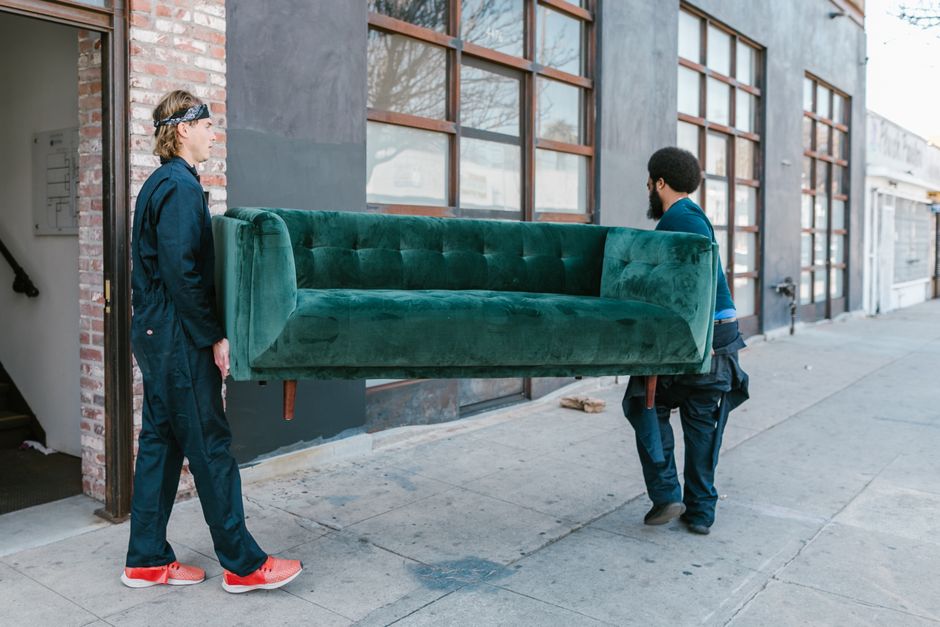
Start by measuring the sofa and the doorway — both the opening width and the diagonal clearance when the piece is tilted. Remove any detachable legs to reduce the sofa's height. Try carrying the sofa upright first; if it does not clear, try tilting it on its side or at an angle. The hook method — rotating the sofa around the door frame in an L-shape — works well for standard doorways. If nothing clears, the sofa may need to go through a window or be disassembled.
How do I protect hardwood floors when moving heavy furniture?
The two most effective methods are furniture sliders and temporary floor protection boards. Furniture sliders fit under each leg of the piece and allow it to glide without scratching. Ram board or similar heavy-duty floor protection can be laid along high-traffic pathways and taped at the seams to protect the surface throughout the move. Avoid dragging furniture directly across hardwood — even a short drag can leave deep scratches that require professional refinishing.
Which types of furniture should I never try to move myself?
Pianos, gun safes, pool tables, large antique pieces with fragile veneers, and very heavy appliances like commercial refrigerators typically require professional movers with specialized equipment and training. These items are either too heavy for safe DIY handling, require disassembly expertise, or have components that can be permanently damaged by improper technique. Attempting to move them without the right crew and equipment is one of the most common causes of serious moving-day injuries.
Knowing how to move heavy furniture is one of the most practically useful skills in any relocation — and one of the most commonly improvised at the worst possible moment. A dresser that looks manageable from across the room has a way of becoming an immovable object the instant two people try to muscle it through a hallway. Backs get strained, doorframes get gouged, and the dresser ends up sitting at a 45-degree angle in the middle of a corridor while everyone catches their breath. It does not have to go that way.
If you would rather have experienced professionals handle the heavy lifting so you can focus on settling in from day one, call our team at 719-357-9048 to lock in your move date.
Whether you are moving a single piece across a room or relocating an entire household, the techniques below will help you move heavy furniture without injury, without damage to your home, and without needing a crew of ten people to make it happen.
Why Moving Heavy Furniture Goes Wrong So Often
The most common reason furniture moves turn into disasters is underestimation. People look at a bookcase or a sectional sofa and assume they can figure it out on the fly. What they discover — usually with something already scraped or someone already wincing — is that heavy furniture follows its own rules, and improvisation rarely beats preparation.
Three specific patterns cause the majority of heavy-furniture injuries and damage:
- Lifting with the back instead of the legs — the single most predictable cause of moving-day injuries. When you bend at the waist to grab something heavy, your lower back absorbs forces it was not designed to handle. The mechanics of a proper squat lift feel awkward at first but eliminate that risk entirely.
- Moving without the right tools — attempting to slide a 300-pound refrigerator across hardwood floors without furniture sliders, or carrying a sofa through a narrow doorway without removing the legs first, turns a manageable task into an ordeal.
- Not measuring the path before you start — discovering that a wardrobe will not fit through the bedroom door after you have already lifted it is one of the most demoralizing experiences in any move. Thirty seconds with a tape measure prevents it completely.
The solution is a short pre-move routine that covers your body mechanics, your tools, and your path — in that order.
The Right Tools Make Every Heavy Piece Manageable
Professional movers do not rely on brute strength. They rely on mechanical advantage — the right tools that reduce the effective weight and friction of any object. Investing in a few of these before moving day will change the experience entirely.
Furniture sliders
Furniture sliders are flat pads — typically plastic on hardwood and carpet-friendly felt on hard floors — that sit under the legs or base of a heavy piece and allow it to glide across the floor with a fraction of the normal effort. A sofa that would require four people to carry can often be slid into position by one person using sliders. They are inexpensive, widely available at hardware stores, and reusable across multiple moves.
The key is to lift the piece just enough to slip a slider under each corner — never drag the piece over the slider. If you cannot lift the corner, use a pry bar or a flat-head screwdriver against a piece of scrap wood to gently lever the leg up without damaging the floor.
Moving straps and forearm forklifts
Moving straps — sometimes called forearm forklifts — are harness-style straps that distribute the weight of a heavy item across your forearms and shoulders rather than concentrating it in your hands and lower back. Two people wearing moving straps can carry a mattress, a large dresser, or even a small appliance with noticeably better control and significantly less strain.
They take a few minutes to learn but pay back that investment immediately. If you are planning a DIY move involving any furniture heavier than you can comfortably carry with two hands, moving straps are worth owning.
A two-wheel hand truck and a four-wheel dolly
A hand truck — the classic upright L-shaped cart — is ideal for tall, rigid pieces like bookshelves, filing cabinets, and stacked boxes. Tip the piece back onto the hand truck's base plate, tilt the whole unit backward until it balances over the wheels, and roll it rather than carry it.
A flat four-wheel dolly is better suited for wide, low pieces like dressers and washing machines. Set the piece on the dolly, secure it with a ratchet strap if it is at risk of sliding, and push rather than carry.
Both tools are available for rent at most moving truck companies, which makes them accessible even if you do not own them.
Body Mechanics: How to Lift Without Hurting Yourself
No tool eliminates the need to lift at some point — but proper mechanics mean that every lift you do take on is as safe as possible.
The squat lift
Stand close to the object with your feet shoulder-width apart. Bend at the knees and hips — not the waist — and grip the piece firmly. Keep your back straight and your core engaged. Lift by driving through your heels and straightening your legs, letting your legs do the work. Keep the load close to your body throughout the lift — the farther out in front of you a heavy object sits, the more stress it places on your spine.
Moving with a partner
When carrying with another person, communication matters more than strength. Designate one person to call the movements: "ready, lift," "step left," "set it down." Uncoordinated lifting — where one person goes early and the other compensates — is one of the most common causes of dropped furniture and strained muscles.
For stairways, the stronger or more experienced person should be at the bottom, supporting more of the load. The person at the top guides direction. Both should keep the piece tilted slightly toward the stairs so that gravity works with the carry rather than against it.
Know when to stop
If a piece genuinely requires more strength or control than you and your helpers have available, stop and reassess. Trying to muscle through a lift that is beyond your capacity is where serious injuries happen. Sometimes the right answer is to disassemble the piece further, take a longer route, or call a professional crew to handle that specific item.
Protecting Your Home During the Move
Moving heavy furniture through a home puts floors, walls, and door frames at risk even when the lift itself goes smoothly. A few simple precautions prevent almost all of the cosmetic damage that moving day routinely causes.
Protect door frames and corners
Wrap door frames with moving blankets or thick cardboard secured with painter's tape before you start moving large pieces. Adhesive corner guards — available at hardware stores — protect wall corners from the inevitable brush of a sofa arm or bookcase edge. These take less than ten minutes to install and save hours of touch-up painting later.
Cover your floors
Hardwood and laminate floors scratch easily under the repeated traffic of a move. Ram board — a heavy-duty temporary floor protection product — can be laid down over high-traffic pathways and taped at the seams to protect the surface throughout the day. Furniture sliders, as noted above, also protect floors during repositioning.
Carpeted hallways are more forgiving of foot traffic but still benefit from protection if you are rolling a heavy dolly over them repeatedly — the wheels can compress and damage carpet fibers in high-traffic lines.
Measure before you move anything
Before lifting a single piece of large furniture, take a tape measure to every doorway, stairwell, and hallway on your route. Compare those measurements against the piece's height, width, and diagonal (for items that may need to be tilted through a doorway). Write the numbers down. If something will not fit upright, determine whether it will clear the opening when tilted — and if not, identify whether legs can be removed to reduce the height.
Discovering a fit problem in advance means you can solve it calmly. Discovering it with the piece in the air means you are solving it under stress, with your back already loaded.
When DIY Furniture Moving Makes Sense — and When It Does Not
There is a class of furniture that genuinely does not belong in a DIY move: pianos, gun safes, large antique pieces with fragile veneers, pool tables, and oversized sectional sofas. These items require specialized equipment, experience reading tight spaces, and in some cases, multiple trained crew members working in precise coordination. Attempting to improvise with items in this category is how serious injuries and significant property damage happen.
For everything else — beds, dressers, dining tables, bookshelves, appliances — the combination of the right tools, proper body mechanics, measured pathways, and a reliable helper is usually sufficient for a safe DIY move. The honest question to ask yourself is not "can we technically attempt this?" but "do we have everything we need to do this without anyone getting hurt and without damaging the home?"
If the answer to that question is uncertain, a professional moving crew is not an admission of defeat — it is the most efficient use of your time and the best insurance against a move-day injury that sidelines you for weeks afterward.
Ready to hand the heavy lifting to a team that does this every day? Call Men on Mission at 719-357-9048 or get a free quote online and lock in your move date.
Have Questions About Your Move?
What is the safest way to lift a heavy piece of furniture without hurting my back?
The safest method is the squat lift: stand close to the piece with feet shoulder-width apart, bend at the knees and hips rather than the waist, keep your back straight and core engaged, and drive upward through your legs. Keep the load close to your body throughout the lift to minimize stress on your spine. Avoid bending at the waist to grab anything heavy — that position places your lower back under forces it is not designed to handle.
What tools do professional movers use to move heavy furniture?
Professional movers rely on furniture sliders (to glide pieces across floors with minimal friction), moving straps or forearm forklifts (to distribute weight across forearms and shoulders), two-wheel hand trucks (for tall rigid pieces), and four-wheel flat dollies (for wide, heavy items like dressers and appliances). These tools reduce effective load, protect floors, and allow smaller crews to handle pieces that would otherwise require more people.
How do I get a large sofa or couch through a narrow doorway?
Start by measuring the sofa and the doorway — both the opening width and the diagonal clearance when the piece is tilted. Remove any detachable legs to reduce the sofa's height. Try carrying the sofa upright first; if it does not clear, try tilting it on its side or at an angle. The hook method — rotating the sofa around the door frame in an L-shape — works well for standard doorways. If nothing clears, the sofa may need to go through a window or be disassembled.
How do I protect hardwood floors when moving heavy furniture?
The two most effective methods are furniture sliders and temporary floor protection boards. Furniture sliders fit under each leg of the piece and allow it to glide without scratching. Ram board or similar heavy-duty floor protection can be laid along high-traffic pathways and taped at the seams to protect the surface throughout the move. Avoid dragging furniture directly across hardwood — even a short drag can leave deep scratches that require professional refinishing.
Which types of furniture should I never try to move myself?
Pianos, gun safes, pool tables, large antique pieces with fragile veneers, and very heavy appliances like commercial refrigerators typically require professional movers with specialized equipment and training. These items are either too heavy for safe DIY handling, require disassembly expertise, or have components that can be permanently damaged by improper technique. Attempting to move them without the right crew and equipment is one of the most common causes of serious moving-day injuries.