How to Choose Between Full-Service Movers and Doing It Yourself
Not sure whether to rent a truck or book full-service movers? This guide breaks down real costs, time, and risk so you can decide.
Deciding between DIY vs full-service movers usually comes down to three things: how much your time is worth, how much physical risk you're willing to take on, and how complicated your move actually is. A studio apartment move across town and a four-bedroom house move across the state are not the same decision, even though both technically qualify as "moving yourself" if you rent a truck for either one.
This isn't a guide that tells you movers are always worth it. Plenty of moves genuinely are better handled solo. The goal here is to help you run the comparison honestly, using the same categories a mover would use to quote your job, so you land on the right call for your specific move instead of a generic one. If you already know full-service is the direction you're leaning, our full service moving page covers exactly what's included when you hand off the whole job.
What's the Real Cost Difference Between DIY and Full-Service Moving?
A DIY move looks cheaper on the receipt but often costs more once you count everything: truck rental, fuel, packing materials, borrowed or rented equipment, lost work hours, and the odds of damaging something you now have to replace. Full-service movers charge more upfront but bundle labor, equipment, and liability coverage into one number.
Truck rental alone can run from around $20 a day for a small local move to several hundred dollars for a one-way interstate rental, and that's before mileage, insurance add-ons, and fuel, which adds up fast for anything towing distance. Add in boxes, tape, furniture pads, and a dolly if you don't already own one, and the "cheap" option starts closing the gap with a professional quote. Full-service pricing typically reflects crew size, hours on site, and distance, and it's worth getting a written quote rather than estimating from memory of what a friend paid on a totally different move.
The honest cost comparison also has to include what your time is worth. If packing, loading, driving, and unloading eats two full weekend days plus a sick day recovering, that has a real cost even if it never shows up on a receipt.
How Much Time Does Each Option Actually Take?
DIY moves take longer than people plan for, almost every time, because the estimate is usually based on how long loading the truck takes and ignores the hours spent on wrapping, disassembling furniture, making repeat trips, and driving a vehicle you're not used to. Full-service crews move faster simply because it's what they do daily, with the manpower and technique to load and unload in a fraction of the time.
A two-bedroom apartment that takes a rental crew two to three hours to load might take a couple of friends with a rented truck most of a day, especially once you factor in stairs, parking logistics, and the inevitable "wait, where does this go" pauses. If your move has a tight closing date, a same-day lease overlap, or work obligations that don't bend, that time difference is often the deciding factor on its own.
When Timing Pressure Should Tip the Decision
If you have less than a weekend between move-out and move-in, or you're juggling a job that doesn't allow for a slow, staggered move, professional help buys you certainty. DIY works best when your timeline has slack built in.
What Are You Actually Risking by Moving Yourself?
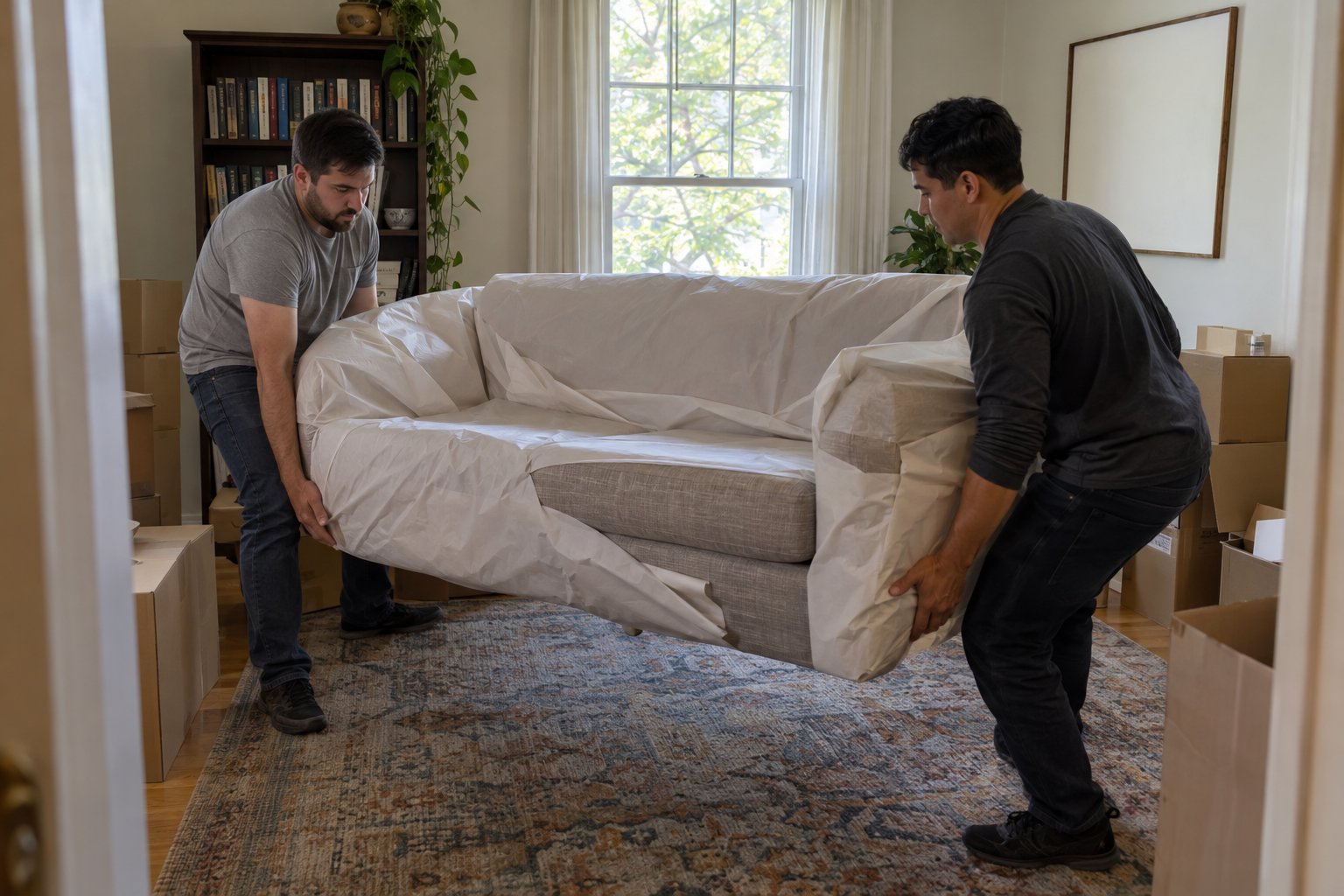
The physical risk in a DIY move is underrated until someone throws out their back on a couch or a dresser gets gouged going through a doorway. Full-service movers carry training, the right equipment, and typically some form of liability coverage for exactly this reason, which shifts the risk off you and onto the crew and their insurance.
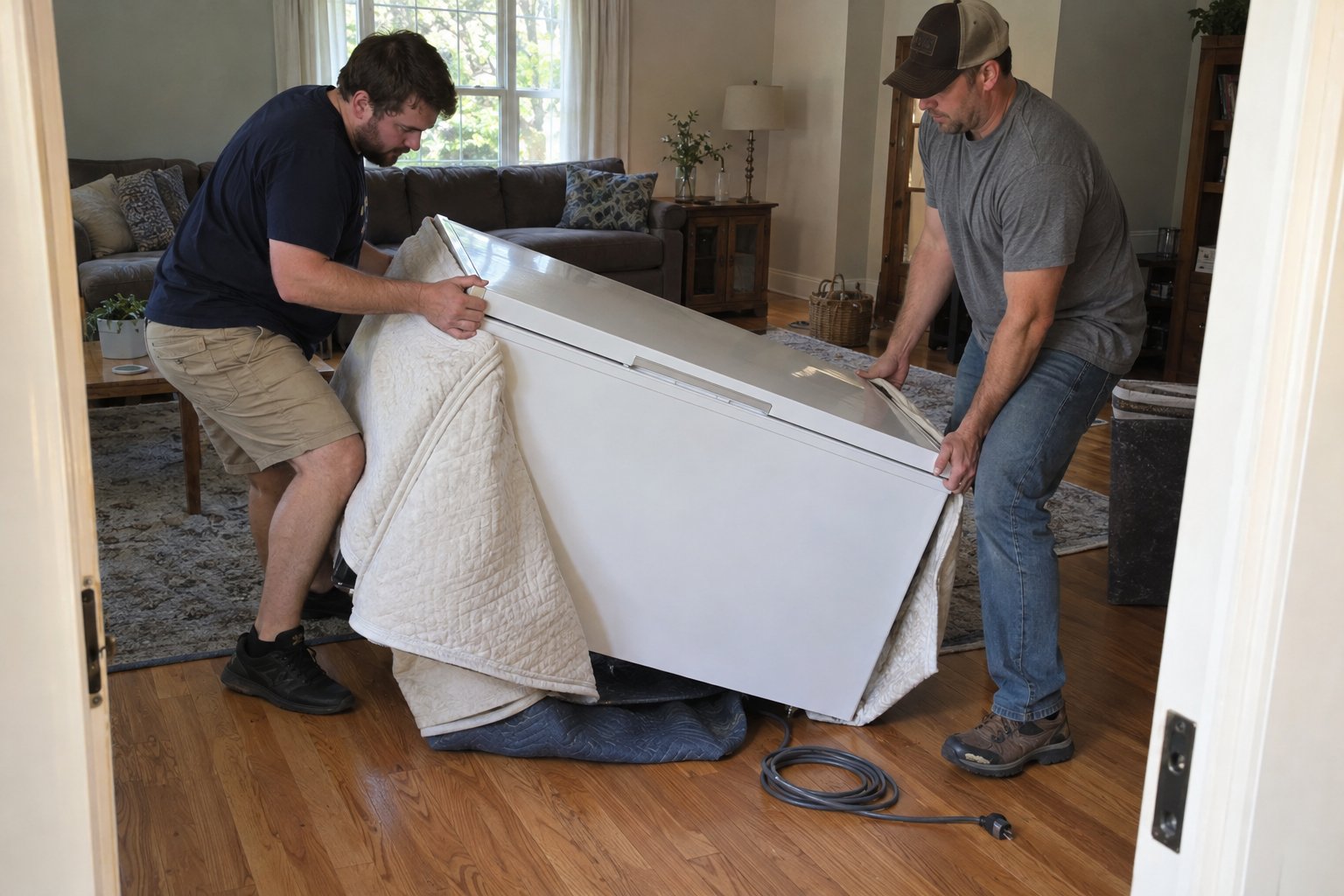
Heavy furniture is the biggest injury risk in any move, and it's also where DIY movers most often damage walls, floors, or the furniture itself trying to muscle large pieces through tight spaces without the right technique. If you're moving anything genuinely heavy, like an appliance, a large sectional, or anything that needs to go up or down a staircase, it's worth reading our guide on how to move heavy furniture without injuring yourself or damaging your home before you decide to handle it solo. For items that fall outside normal furniture entirely, professional handling matters even more; specialty pieces like pianos, gun safes, and hot tubs need equipment most households simply don't own, which is exactly what specialty item moving services exist for.
Which Moves Are Better Suited to DIY?
DIY makes the most sense for small, local moves with light furniture, flexible timing, and helpers you can actually count on. A studio or one-bedroom apartment move within the same city, with no oversized furniture and a group of friends willing to show up, is a reasonable candidate for going it alone.
It also works well when your belongings are modest in volume and you have access to a vehicle or a short-term truck rental without a long drive involved. The math tips toward DIY when the job is small enough that the time and physical toll stay manageable in a single day, and the value of what you're moving is low enough that a scratch or dent wouldn't be a real financial loss.
Which Moves Are Better Suited to Full-Service Movers?
Full-service movers earn their cost on moves with a lot of furniture, an inconvenient layout, a long distance, or a tight schedule. Any combination of stairs, narrow hallways, heavy or antique furniture, or a move that spans more than a short drive usually tips the scale toward hiring help.
Full-service also makes sense if you simply don't have reliable help lined up. A DIY move without enough hands turns into either an overloaded solo effort or a rescheduled weekend, and neither is worth the savings. If your situation includes commercial equipment, a business relocation, or items that require disassembly and reassembly like bed frames, sectional sofas, or wall-mounted furniture, our furniture assembly and disassembly services handle that piece specifically, whether or not you book full-service help for the entire move.
Is There a Middle Ground Between DIY and Full-Service?
Yes, and it's often the best value for people who don't fit neatly into either category. Hybrid options let you handle packing yourself while paying for labor only on loading and unloading, or the reverse: pack fragile and high-value items with help while boxing up the rest solo.
If your main hesitation is the labor of lifting and driving rather than the packing itself, loading and unloading services let you rent the truck and pack at your own pace while professionals handle the physically risky part. If it's the opposite problem, and boxing everything up is what's eating your weekends, packing services for bulky household items can take that off your plate while you handle the drive yourself. Neither option costs as much as a full crew for the entire move, and both remove the specific part of a DIY move that tends to cause the most damage or injury.
Whichever way you lean, it helps to get a real number instead of guessing. A quote based on your actual inventory and distance will tell you more than any general comparison, ours included.
If you're still weighing the decision, getting a written quote costs nothing and gives you a concrete number to compare against renting a truck yourself. Get a free moving quote and see what full-service actually costs for your specific move before you commit either way.
Frequently Asked Questions
Is it cheaper to move yourself or hire movers?
It depends on the size of the move and how much your time is worth. Small local moves are often genuinely cheaper to DIY once you factor in truck rental and supplies, but larger or long-distance moves frequently close the cost gap once you count fuel, lost work time, and the risk of damaged items.
How many people do I need to move myself?
Most DIY moves need at least two to three able-bodied helpers beyond yourself for anything larger than a studio apartment, especially if stairs or heavy furniture are involved. Fewer helpers means a slower move and a higher injury risk.
Do full-service movers pack everything for you?
It depends on the package you book. Some full-service moves include complete packing, while others cover only loading, transport, and unloading, so it's worth confirming exactly what's included before you compare a quote to a DIY budget.
What should I look for when deciding if a move is too big to DIY?
Watch for stairs, narrow doorways, heavy or antique furniture, long driving distances, and tight moving timelines. Any one of these can turn a manageable DIY move into a stressful, injury-prone one.
Can I hire movers for just part of my move and do the rest myself?
Yes, hybrid options exist for exactly this. You can hire help for loading and unloading while packing yourself, or pay for packing help while handling the drive on your own, which often costs less than a full-service booking.
Deciding between DIY vs full-service movers usually comes down to three things: how much your time is worth, how much physical risk you're willing to take on, and how complicated your move actually is. A studio apartment move across town and a four-bedroom house move across the state are not the same decision, even though both technically qualify as "moving yourself" if you rent a truck for either one.
This isn't a guide that tells you movers are always worth it. Plenty of moves genuinely are better handled solo. The goal here is to help you run the comparison honestly, using the same categories a mover would use to quote your job, so you land on the right call for your specific move instead of a generic one. If you already know full-service is the direction you're leaning, our full service moving page covers exactly what's included when you hand off the whole job.
What's the Real Cost Difference Between DIY and Full-Service Moving?
A DIY move looks cheaper on the receipt but often costs more once you count everything: truck rental, fuel, packing materials, borrowed or rented equipment, lost work hours, and the odds of damaging something you now have to replace. Full-service movers charge more upfront but bundle labor, equipment, and liability coverage into one number.
Truck rental alone can run from around $20 a day for a small local move to several hundred dollars for a one-way interstate rental, and that's before mileage, insurance add-ons, and fuel, which adds up fast for anything towing distance. Add in boxes, tape, furniture pads, and a dolly if you don't already own one, and the "cheap" option starts closing the gap with a professional quote. Full-service pricing typically reflects crew size, hours on site, and distance, and it's worth getting a written quote rather than estimating from memory of what a friend paid on a totally different move.
The honest cost comparison also has to include what your time is worth. If packing, loading, driving, and unloading eats two full weekend days plus a sick day recovering, that has a real cost even if it never shows up on a receipt.
How Much Time Does Each Option Actually Take?
DIY moves take longer than people plan for, almost every time, because the estimate is usually based on how long loading the truck takes and ignores the hours spent on wrapping, disassembling furniture, making repeat trips, and driving a vehicle you're not used to. Full-service crews move faster simply because it's what they do daily, with the manpower and technique to load and unload in a fraction of the time.
A two-bedroom apartment that takes a rental crew two to three hours to load might take a couple of friends with a rented truck most of a day, especially once you factor in stairs, parking logistics, and the inevitable "wait, where does this go" pauses. If your move has a tight closing date, a same-day lease overlap, or work obligations that don't bend, that time difference is often the deciding factor on its own.
When Timing Pressure Should Tip the Decision
If you have less than a weekend between move-out and move-in, or you're juggling a job that doesn't allow for a slow, staggered move, professional help buys you certainty. DIY works best when your timeline has slack built in.
What Are You Actually Risking by Moving Yourself?
The physical risk in a DIY move is underrated until someone throws out their back on a couch or a dresser gets gouged going through a doorway. Full-service movers carry training, the right equipment, and typically some form of liability coverage for exactly this reason, which shifts the risk off you and onto the crew and their insurance.
Heavy furniture is the biggest injury risk in any move, and it's also where DIY movers most often damage walls, floors, or the furniture itself trying to muscle large pieces through tight spaces without the right technique. If you're moving anything genuinely heavy, like an appliance, a large sectional, or anything that needs to go up or down a staircase, it's worth reading our guide on how to move heavy furniture without injuring yourself or damaging your home before you decide to handle it solo. For items that fall outside normal furniture entirely, professional handling matters even more; specialty pieces like pianos, gun safes, and hot tubs need equipment most households simply don't own, which is exactly what specialty item moving services exist for.
Which Moves Are Better Suited to DIY?
DIY makes the most sense for small, local moves with light furniture, flexible timing, and helpers you can actually count on. A studio or one-bedroom apartment move within the same city, with no oversized furniture and a group of friends willing to show up, is a reasonable candidate for going it alone.
It also works well when your belongings are modest in volume and you have access to a vehicle or a short-term truck rental without a long drive involved. The math tips toward DIY when the job is small enough that the time and physical toll stay manageable in a single day, and the value of what you're moving is low enough that a scratch or dent wouldn't be a real financial loss.
Which Moves Are Better Suited to Full-Service Movers?
Full-service movers earn their cost on moves with a lot of furniture, an inconvenient layout, a long distance, or a tight schedule. Any combination of stairs, narrow hallways, heavy or antique furniture, or a move that spans more than a short drive usually tips the scale toward hiring help.
Full-service also makes sense if you simply don't have reliable help lined up. A DIY move without enough hands turns into either an overloaded solo effort or a rescheduled weekend, and neither is worth the savings. If your situation includes commercial equipment, a business relocation, or items that require disassembly and reassembly like bed frames, sectional sofas, or wall-mounted furniture, our furniture assembly and disassembly services handle that piece specifically, whether or not you book full-service help for the entire move.
Is There a Middle Ground Between DIY and Full-Service?
Yes, and it's often the best value for people who don't fit neatly into either category. Hybrid options let you handle packing yourself while paying for labor only on loading and unloading, or the reverse: pack fragile and high-value items with help while boxing up the rest solo.
If your main hesitation is the labor of lifting and driving rather than the packing itself, loading and unloading services let you rent the truck and pack at your own pace while professionals handle the physically risky part. If it's the opposite problem, and boxing everything up is what's eating your weekends, packing services for bulky household items can take that off your plate while you handle the drive yourself. Neither option costs as much as a full crew for the entire move, and both remove the specific part of a DIY move that tends to cause the most damage or injury.
Whichever way you lean, it helps to get a real number instead of guessing. A quote based on your actual inventory and distance will tell you more than any general comparison, ours included.
If you're still weighing the decision, getting a written quote costs nothing and gives you a concrete number to compare against renting a truck yourself. Get a free moving quote and see what full-service actually costs for your specific move before you commit either way.
Have Questions About Your Move?
Is it cheaper to move yourself or hire movers?
It depends on the size of the move and how much your time is worth. Small local moves are often genuinely cheaper to DIY once you factor in truck rental and supplies, but larger or long-distance moves frequently close the cost gap once you count fuel, lost work time, and the risk of damaged items.
How many people do I need to move myself?
Most DIY moves need at least two to three able-bodied helpers beyond yourself for anything larger than a studio apartment, especially if stairs or heavy furniture are involved. Fewer helpers means a slower move and a higher injury risk.
Do full-service movers pack everything for you?
It depends on the package you book. Some full-service moves include complete packing, while others cover only loading, transport, and unloading, so it's worth confirming exactly what's included before you compare a quote to a DIY budget.
What should I look for when deciding if a move is too big to DIY?
Watch for stairs, narrow doorways, heavy or antique furniture, long driving distances, and tight moving timelines. Any one of these can turn a manageable DIY move into a stressful, injury-prone one.
Can I hire movers for just part of my move and do the rest myself?
Yes, hybrid options exist for exactly this. You can hire help for loading and unloading while packing yourself, or pay for packing help while handling the drive on your own, which often costs less than a full-service booking.