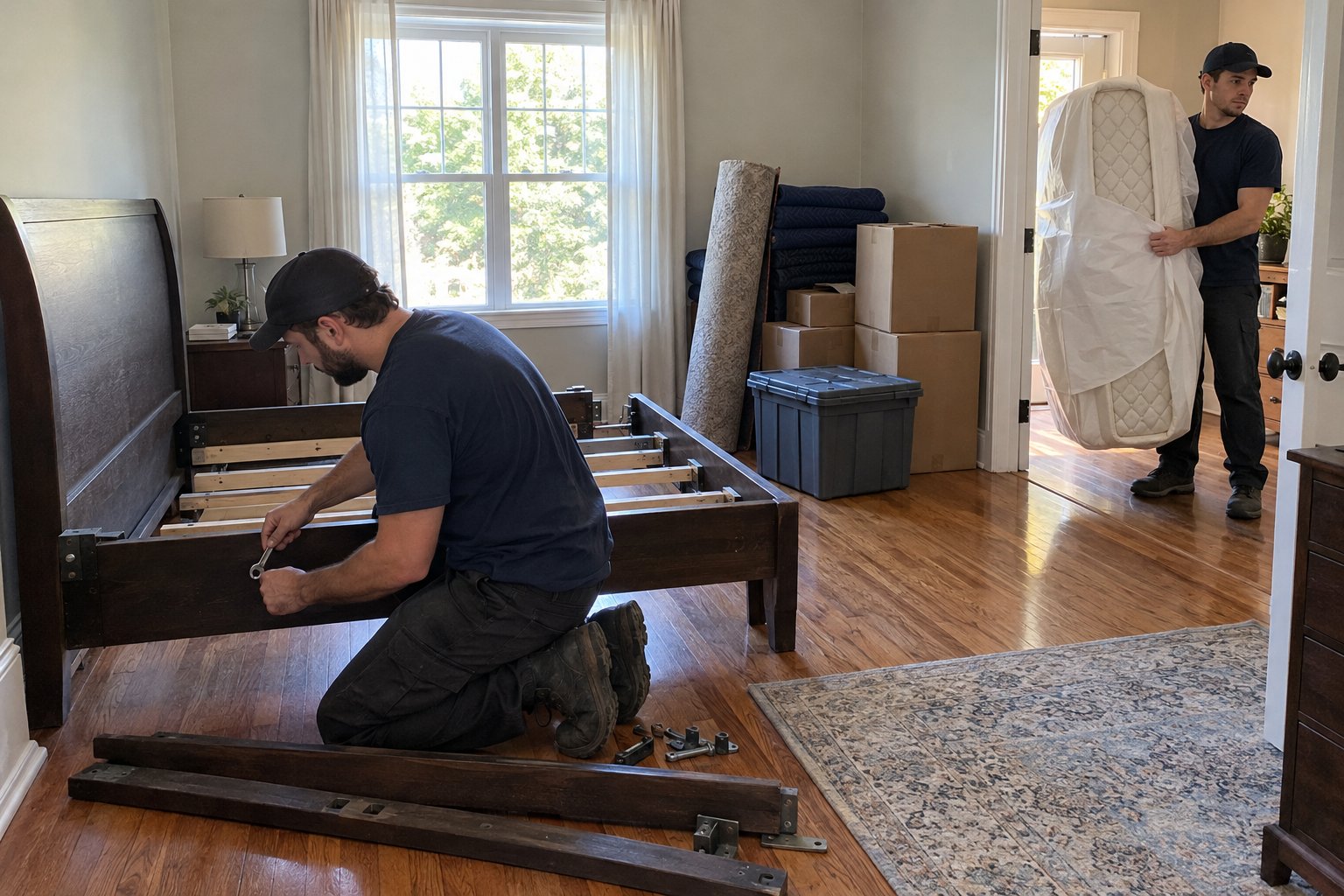
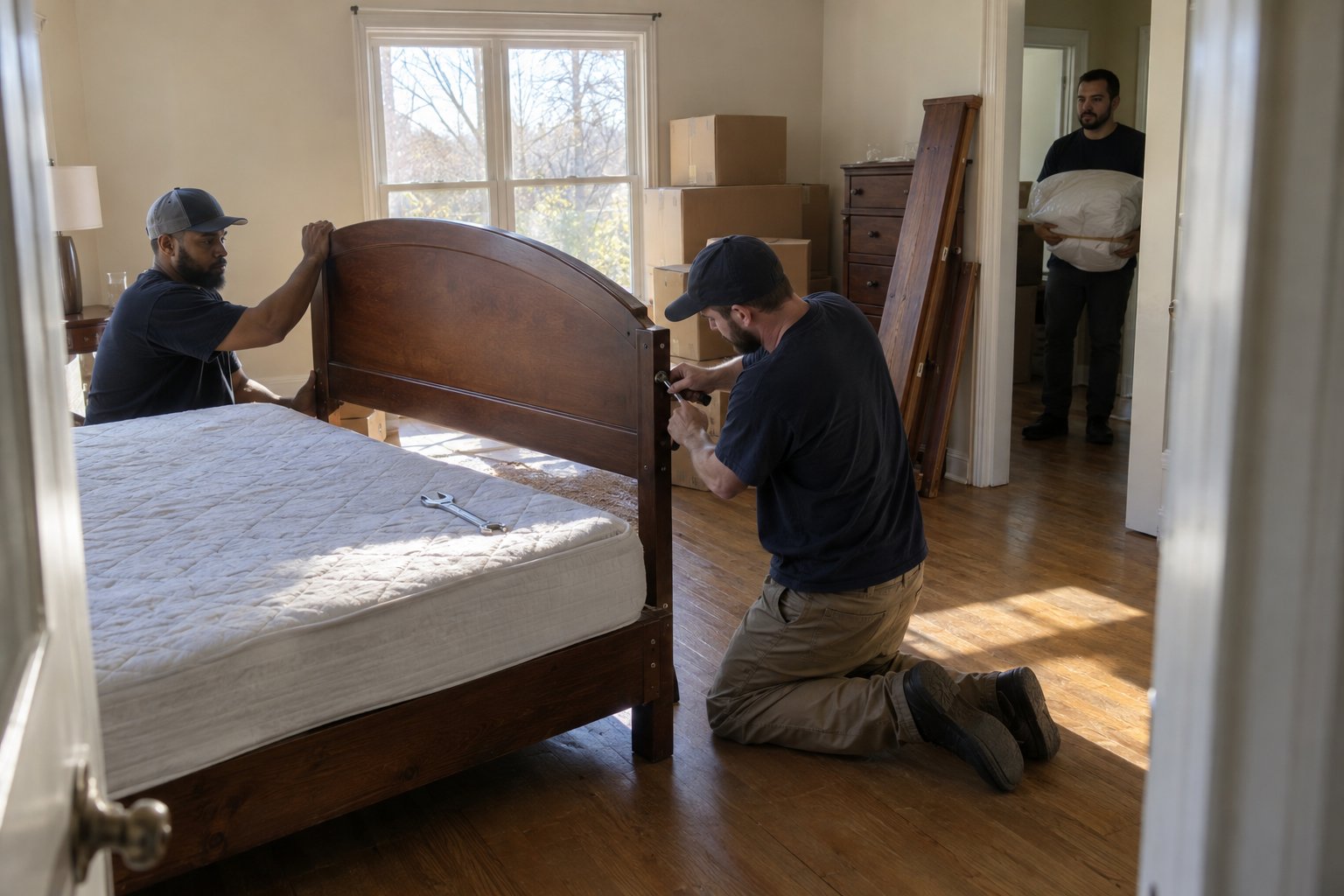
Yes, movers who offer furniture assembly and disassembly as part of their service will typically take apart beds, tables, and other large furniture so it fits through doorways and into the truck, then put it back together at your new place. Whether this happens on your move depends on the service you book and what the piece is actually made of.
That answer covers the basic case, but the real question most people are asking is narrower: will it happen automatically, or do you need to ask for it, and will every piece in your home qualify? Here's what actually determines that.
What Changes Whether Your Furniture Gets Taken Apart
The biggest factor is which service you booked. Full service moving and most local moving packages that include loading and unloading often cover basic disassembly and reassembly of standard furniture, but a bare-bones load-and-go job may not. If you booked movers specifically for furniture assembly and disassembly, that is the whole point of the service and it should be covered without you having to negotiate for it on moving day.
The second factor is the furniture itself. Platform beds, standard bed frames, dining tables with removable legs, bunk beds, and most modular bookshelves are built to come apart and go back together. A crew experienced in disassembly can usually handle these without much trouble. Furniture that was built in place, like some wall units, or furniture held together with glue rather than bolts and cam locks, is a different story. Some pieces genuinely were not designed to be disassembled at all, and forcing them apart risks cracking the wood or stripping the hardware.
The third factor is what you tell the crew ahead of time. A mover who knows in advance that you have a sleigh bed with a tricky headboard mount, or a table with a leaf mechanism nobody has touched in years, can bring the right tools and plan the time for it. A crew that discovers it mid-move has to improvise, and improvising takes longer for everyone.
Will Movers Take Apart a Bed Frame Without Being Asked?
Most crews will ask about beds specifically because they are one of the most common pieces that need disassembly to clear a doorway or stairwell. But "most crews ask" is not the same as "every crew will catch every piece," so it is worth telling them directly rather than assuming it is covered.
Walk through your home before moving day and make a short list of anything large enough that it might not fit as-is: the bed frame, any table that does not fold or doesn't have removable legs, large shelving units, and anything bolted together rather than one solid piece. Share that list with the crew when they arrive, or earlier if you're booking the move. This is also a good moment to flag anything unusual, like a headboard that attaches with hidden brackets, so nobody is guessing at the mechanism in the middle of loading. Before the crew arrives, it also helps to have furniture that needs protective wrapping cleared and ready, since wrapped pieces that still need to come apart slow the process down.
A Common Misconception: "Assembly and Disassembly" Means Every Piece in the Home
A lot of people assume that once they book a service with "assembly and disassembly" in the name, every single piece of furniture in the house gets fully broken down and rebuilt, no exceptions. That is not quite right. The service exists mainly for furniture that needs to come apart to be moved safely or to fit through tight spaces, not for furniture that can simply be lifted and carried as-is.
A dresser, a sofa, or a bookshelf that fits through your doors whole generally does not need disassembly at all, it just gets wrapped and carried. Reserving disassembly for the pieces that actually require it keeps the day moving and avoids unnecessary extra handling on furniture that was never going to be a problem in the first place.
How Long Should You Budget for Furniture Disassembly and Reassembly?
As a rough rule of thumb, plan on roughly 15 to 30 minutes per major piece for disassembly, and a similar amount for reassembly on the other end, though a simple bed frame can go faster and a bed with an attached headboard, storage drawers, or an adjustable base can take longer. If you have several large pieces that all need to come apart, that time adds up across the day, so it helps to mention the full list upfront rather than one piece at a time.
Specialty pieces are a separate category. Items like pianos, gun safes, and hot tubs are not part of standard furniture disassembly and need the kind of handling covered under specialty item moving rather than a general assembly and disassembly service.
What to Do If a Piece Can't Be Put Back Together the Same Way
Occasionally, a piece of furniture comes apart more easily than it goes back together, especially older furniture where the hardware has worn down or stripped over the years. If this happens, a good crew will tell you honestly rather than forcing it, and will either use replacement hardware if they're carrying some or let you know what to pick up before the piece can be fully reassembled.
This is less likely to be an issue with furniture that was built for disassembly in the first place, which is one more reason to flag anything unusual about your furniture before moving day rather than after.
Preparing Your Home Before the Crew Arrives
If your home in Fountain, CO or Colorado Springs, CO has narrow hallways, a tight stairwell, or furniture that barely fit through the door on move-in day, mention that when you book. That detail changes how a crew plans the disassembly order and which pieces they prioritize first.
It also helps to empty drawers and remove anything sitting on top of furniture that needs to come apart, since a crew cannot safely take apart a dresser that is still full or a table with a lamp sitting on it. A few minutes of prep on your end means the crew spends their time on the actual disassembly rather than clearing the piece first.
Where Furniture Fits Into Your Overall Moving Timeline
Disassembly and reassembly rarely happen in isolation. They're one piece of a longer moving day sequence that includes loading, transport, and unloading, and the order matters. Beds and tables that need to come apart are usually handled early, before the bulk of loading starts, so the rest of the day is not held up waiting on one piece. If you want a fuller picture of how that sequencing works across an entire move, it's worth reviewing a moving day timeline that lays out when each task typically happens.
For anything shipped separately, like a portable storage container, the same disassembly questions apply, just on a different schedule. It's worth understanding how a portable container move compares to standard furniture assembly and disassembly if you're deciding between the two.
A Note on Change-of-Address Tasks Around the Same Time
While you're planning which furniture needs to come apart, it's also a good moment to handle the paperwork side of the move. Filing a change of address with USPS ahead of time means your mail starts following you before moving day instead of after, which takes one more thing off your plate while the crew is focused on the furniture.
Planning your move? Request a quote from Men On Mission.
Have Questions About Your Move?
Do I need to empty my dresser drawers before movers disassemble it?
Yes. A crew cannot safely take apart or carry a dresser that still has weight in the drawers, so empty them ahead of time and pack the contents separately.
Can movers reassemble furniture that was disassembled by someone else before the move?
It depends on whether the hardware was kept together and labeled. If you disassembled a piece yourself, bag the screws and brackets and tell the crew which piece they belong to so reassembly goes smoothly.
What furniture usually can't be taken apart by movers?
Furniture built in place or held together with glue rather than bolts and cam locks often cannot be safely disassembled. Some wall units and older furniture fall into this category, so ask ahead of time if you're unsure about a specific piece.
Should I tell movers about furniture that was tricky to assemble originally?
Yes. If a piece had an unusual mounting bracket or a mechanism that was hard to figure out when you set it up, mention it before moving day so the crew can plan the right tools and time for it.
How do movers keep track of screws and hardware during disassembly?
Most crews bag and label hardware by piece as they go, so everything needed for reassembly stays together and makes it to the truck without getting lost or mixed up with another piece's parts.