Furniture assembly and disassembly on a moving timeline comes down to one question for every piece: does it need to come apart to leave the house safely, and if so, how early can that happen without leaving you without a bed or a table to use in the meantime? Most moves lose time here because the disassembly gets pushed to moving morning for everything at once, when half of it could have been handled days earlier.
This timeline splits furniture into what to take apart ahead of time, what to leave until the day itself, and what to put back together first once you arrive. The goal is to avoid the two most common mistakes: breaking down furniture you still need to sleep or eat on too early, and leaving so much disassembly for moving day that the crew is waiting on you instead of loading the truck.
What Should You Disassemble Before Moving Day?
Anything you will not use again before you leave, and that does not block daily life, can come apart in the days before the move. This includes furniture in rooms you have already packed up, spare bedroom sets, bookshelves, and anything bulky that is faster to deal with when you are not racing the clock.
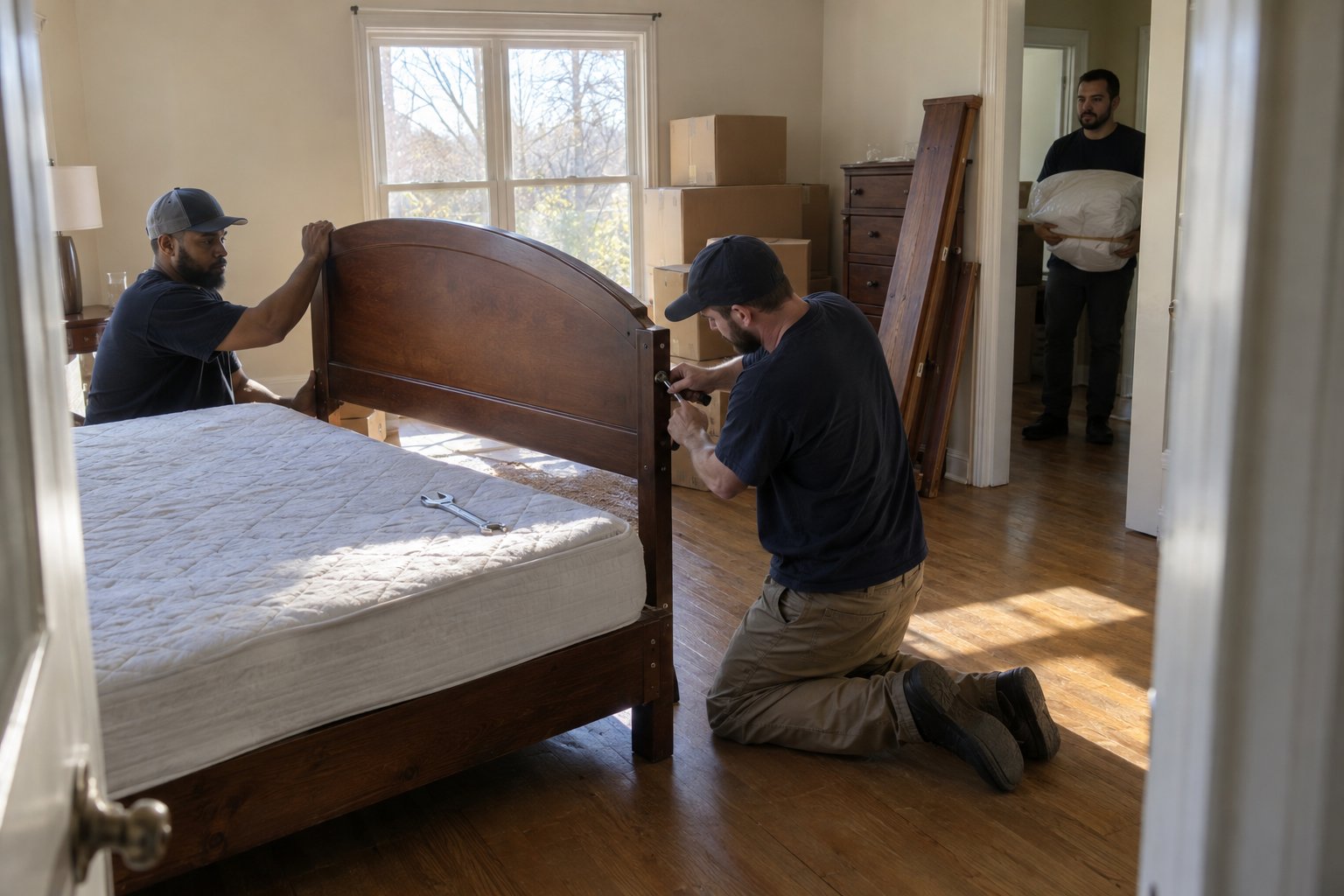
- Guest room and spare bedroom furniture. If nobody is sleeping in it this week, take the bed frame apart now. Bag the hardware and tape it to a rail or a headboard panel so it travels with the right piece.
- Bookshelves, shelving units, and modular storage. These are usually held together with cam locks or dowels that are easy to lose track of. Breaking them down early gives you time to label parts without rushing.
- Desks and large bookcases in rooms you're done using. Once a home office is packed, the desk can come apart. Keep drawers separate if they detach, since a loaded drawer is heavier and harder to carry than the frame.
- Patio and outdoor furniture. Outdoor pieces are often bolted rather than designed for quick reassembly, so give yourself extra time and keep bolts in a labeled bag taped to the frame.
As a rule of thumb, plan on a day to handle disassembly for a room's worth of furniture if you're doing it yourself, more if hardware is rusted or stripped. That is enough time to work carefully without rushing the last pieces the night before the truck arrives.
What Should Wait Until Moving Day Itself?
Furniture you are still using should stay assembled until the last possible moment. This mainly means your primary bed, the dining table if you're still eating at it, and any desk or workstation you need up until you leave.
- Your main bed frame. Keep it together until the morning of the move or the night before at the earliest, so you still have somewhere to sleep.
- The dining table and chairs. If you're still having meals at it, leave it assembled until moving day. Chairs can usually come off earlier since you can eat standing at a counter for a day or two.
- Entertainment centers and media furniture. These often connect to cables and electronics you're using until the last night, so disassembly waits until everything else is packed.
- Any furniture holding items you haven't finished packing. A dresser or cabinet still half full needs to be emptied before it comes apart, so it naturally falls into the moving day batch.
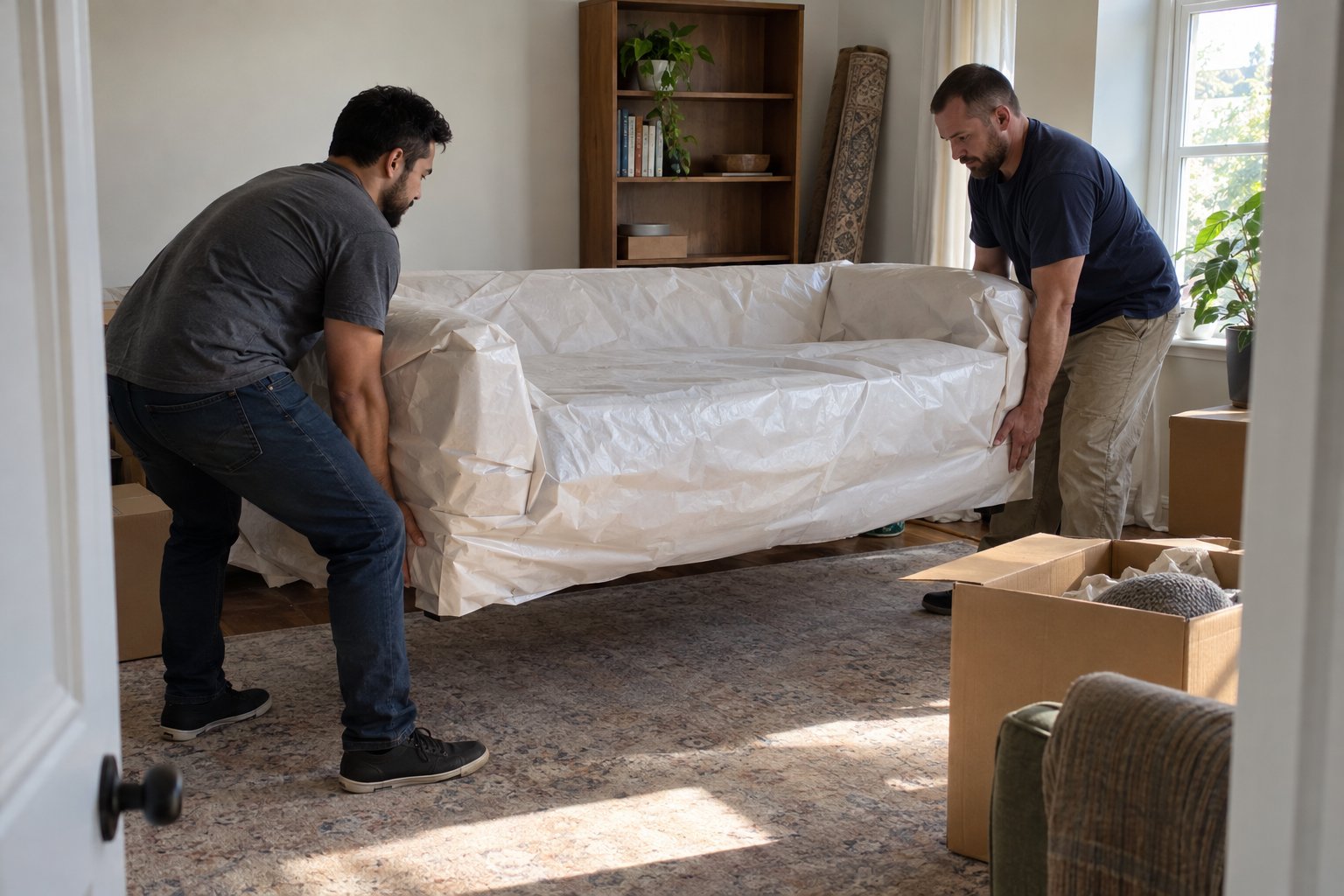
Having a crew handle furniture assembly and disassembly on the day itself is where this step saves the most time, since standard pieces like beds and tables can be broken down and wrapped while the rest of the home is still being loaded around them.
How Do You Keep Hardware From Getting Lost?
The single biggest reason reassembly goes badly is missing or mixed-up hardware, not damaged furniture. A simple labeling system solves most of this before it becomes a problem at the new place.
- Bag hardware by piece, not by type. All the bolts, screws, and brackets for one bed frame go in one bag, not mixed with another piece's hardware.
- Tape the bag to the furniture itself. Taping it to a rail, drawer, or panel from the same piece means it cannot end up in the wrong box or get left behind.
- Keep small tools with the hardware. If a piece needs a specific hex key, tape that into the bag too rather than relying on finding it again later.
- Photograph complex pieces before disassembly. A quick photo of how shelving or a bed frame fits together is faster than guessing at reassembly weeks later.
What's the Right Order for Reassembling Furniture at the New Place?
Reassemble in the order you'll actually need things, not in the order boxes come off the truck. Beds go first, then whatever room you'll spend the most time in that first night.
- Beds first. After a full day of moving, you want somewhere to sleep without hunting for hardware at 10pm.
- Kitchen and dining furniture next. A table to set bags and food on makes the rest of unpacking easier.
- Shelving and storage pieces after that. These give you somewhere to put things as you unpack boxes, so put them together before the boxes pile up around them.
- Everything else as you get to each room. There's no need to rush a spare room's furniture back together on day one.
If your new home in Woodland Park, CO or Colorado Springs, CO has stairs or narrow hallways, it's worth deciding which large pieces get reassembled in their final room versus a central space first, since moving an assembled bed frame through a tight stairwell is harder than carrying the pieces up separately.
Moving Day Checklist for Furniture Assembly and Disassembly
Use this as a quick reference the morning of the move, after the advance disassembly above is already done.
- Confirm all advance-disassembled furniture is labeled and its hardware bags are taped on.
- Disassemble remaining pieces (main bed, dining table, entertainment center) once you're done using them.
- Walk through each room to check no hardware bags were left behind on shelves or floors.
- Load disassembled pieces with their hardware kept together, not separated across boxes.
- At the new home, reassemble beds first, then kitchen and dining furniture, then everything else.
Before you start any of this, it helps to have a general plan written down. Our guide on writing a full moving checklist covers how to sequence tasks like this one against packing and logistics so nothing gets left for the last minute. If you're also deciding what to load into a truck yourself versus what to leave to a crew, see our piece on choosing between full-service movers and doing it yourself.
If you're changing your mailing address around the same time as your furniture, it's worth filing your change of address with USPS early in this process so mail starts redirecting before moving day arrives.
Planning your move? Request a quote from Men On Mission.
Frequently Asked Questions
Do movers need to know in advance which furniture requires disassembly?
Yes, telling a crew ahead of time which pieces need to come apart, like bed frames with unusual hardware or modular shelving, lets them bring the right tools and plan their time instead of discovering it on the spot.
How do I keep track of screws and bolts during a move?
Bag hardware by piece rather than by type, and tape each bag directly to the furniture it belongs to so it travels with the right item and doesn't end up mixed into a box of unrelated parts.
Should I disassemble furniture the night before or the morning of a move?
Furniture you're still using, like your main bed or dining table, should stay together until the morning of the move or the night before at the earliest. Everything else can come apart days ahead of time.
What tools should I keep handy for furniture reassembly?
Keep a basic set of screwdrivers and an adjustable or hex wrench set accessible rather than packed away, along with any piece-specific tools taped into that item's hardware bag.
Is it normal for flat-pack furniture to be harder to reassemble after a move?
Flat-pack furniture with cam locks and dowels can get looser with repeated assembly, so it helps to photograph the original setup beforehand and avoid over-tightening when you put it back together.
Furniture assembly and disassembly on a moving timeline comes down to one question for every piece: does it need to come apart to leave the house safely, and if so, how early can that happen without leaving you without a bed or a table to use in the meantime? Most moves lose time here because the disassembly gets pushed to moving morning for everything at once, when half of it could have been handled days earlier.
This timeline splits furniture into what to take apart ahead of time, what to leave until the day itself, and what to put back together first once you arrive. The goal is to avoid the two most common mistakes: breaking down furniture you still need to sleep or eat on too early, and leaving so much disassembly for moving day that the crew is waiting on you instead of loading the truck.
What Should You Disassemble Before Moving Day?
Anything you will not use again before you leave, and that does not block daily life, can come apart in the days before the move. This includes furniture in rooms you have already packed up, spare bedroom sets, bookshelves, and anything bulky that is faster to deal with when you are not racing the clock.
- Guest room and spare bedroom furniture. If nobody is sleeping in it this week, take the bed frame apart now. Bag the hardware and tape it to a rail or a headboard panel so it travels with the right piece.
- Bookshelves, shelving units, and modular storage. These are usually held together with cam locks or dowels that are easy to lose track of. Breaking them down early gives you time to label parts without rushing.
- Desks and large bookcases in rooms you're done using. Once a home office is packed, the desk can come apart. Keep drawers separate if they detach, since a loaded drawer is heavier and harder to carry than the frame.
- Patio and outdoor furniture. Outdoor pieces are often bolted rather than designed for quick reassembly, so give yourself extra time and keep bolts in a labeled bag taped to the frame.
As a rule of thumb, plan on a day to handle disassembly for a room's worth of furniture if you're doing it yourself, more if hardware is rusted or stripped. That is enough time to work carefully without rushing the last pieces the night before the truck arrives.
What Should Wait Until Moving Day Itself?
Furniture you are still using should stay assembled until the last possible moment. This mainly means your primary bed, the dining table if you're still eating at it, and any desk or workstation you need up until you leave.
- Your main bed frame. Keep it together until the morning of the move or the night before at the earliest, so you still have somewhere to sleep.
- The dining table and chairs. If you're still having meals at it, leave it assembled until moving day. Chairs can usually come off earlier since you can eat standing at a counter for a day or two.
- Entertainment centers and media furniture. These often connect to cables and electronics you're using until the last night, so disassembly waits until everything else is packed.
- Any furniture holding items you haven't finished packing. A dresser or cabinet still half full needs to be emptied before it comes apart, so it naturally falls into the moving day batch.
Having a crew handle furniture assembly and disassembly on the day itself is where this step saves the most time, since standard pieces like beds and tables can be broken down and wrapped while the rest of the home is still being loaded around them.
How Do You Keep Hardware From Getting Lost?
The single biggest reason reassembly goes badly is missing or mixed-up hardware, not damaged furniture. A simple labeling system solves most of this before it becomes a problem at the new place.
- Bag hardware by piece, not by type. All the bolts, screws, and brackets for one bed frame go in one bag, not mixed with another piece's hardware.
- Tape the bag to the furniture itself. Taping it to a rail, drawer, or panel from the same piece means it cannot end up in the wrong box or get left behind.
- Keep small tools with the hardware. If a piece needs a specific hex key, tape that into the bag too rather than relying on finding it again later.
- Photograph complex pieces before disassembly. A quick photo of how shelving or a bed frame fits together is faster than guessing at reassembly weeks later.
What's the Right Order for Reassembling Furniture at the New Place?
Reassemble in the order you'll actually need things, not in the order boxes come off the truck. Beds go first, then whatever room you'll spend the most time in that first night.
- Beds first. After a full day of moving, you want somewhere to sleep without hunting for hardware at 10pm.
- Kitchen and dining furniture next. A table to set bags and food on makes the rest of unpacking easier.
- Shelving and storage pieces after that. These give you somewhere to put things as you unpack boxes, so put them together before the boxes pile up around them.
- Everything else as you get to each room. There's no need to rush a spare room's furniture back together on day one.
If your new home in Woodland Park, CO or Colorado Springs, CO has stairs or narrow hallways, it's worth deciding which large pieces get reassembled in their final room versus a central space first, since moving an assembled bed frame through a tight stairwell is harder than carrying the pieces up separately.
Moving Day Checklist for Furniture Assembly and Disassembly
Use this as a quick reference the morning of the move, after the advance disassembly above is already done.
- Confirm all advance-disassembled furniture is labeled and its hardware bags are taped on.
- Disassemble remaining pieces (main bed, dining table, entertainment center) once you're done using them.
- Walk through each room to check no hardware bags were left behind on shelves or floors.
- Load disassembled pieces with their hardware kept together, not separated across boxes.
- At the new home, reassemble beds first, then kitchen and dining furniture, then everything else.
Before you start any of this, it helps to have a general plan written down. Our guide on writing a full moving checklist covers how to sequence tasks like this one against packing and logistics so nothing gets left for the last minute. If you're also deciding what to load into a truck yourself versus what to leave to a crew, see our piece on choosing between full-service movers and doing it yourself.
If you're changing your mailing address around the same time as your furniture, it's worth filing your change of address with USPS early in this process so mail starts redirecting before moving day arrives.
Planning your move? Request a quote from Men On Mission.
Have Questions About Your Move?
Do movers need to know in advance which furniture requires disassembly?
Yes, telling a crew ahead of time which pieces need to come apart, like bed frames with unusual hardware or modular shelving, lets them bring the right tools and plan their time instead of discovering it on the spot.
How do I keep track of screws and bolts during a move?
Bag hardware by piece rather than by type, and tape each bag directly to the furniture it belongs to so it travels with the right item and doesn't end up mixed into a box of unrelated parts.
Should I disassemble furniture the night before or the morning of a move?
Furniture you're still using, like your main bed or dining table, should stay together until the morning of the move or the night before at the earliest. Everything else can come apart days ahead of time.
What tools should I keep handy for furniture reassembly?
Keep a basic set of screwdrivers and an adjustable or hex wrench set accessible rather than packed away, along with any piece-specific tools taped into that item's hardware bag.
Is it normal for flat-pack furniture to be harder to reassemble after a move?
Flat-pack furniture with cam locks and dowels can get looser with repeated assembly, so it helps to photograph the original setup beforehand and avoid over-tightening when you put it back together.