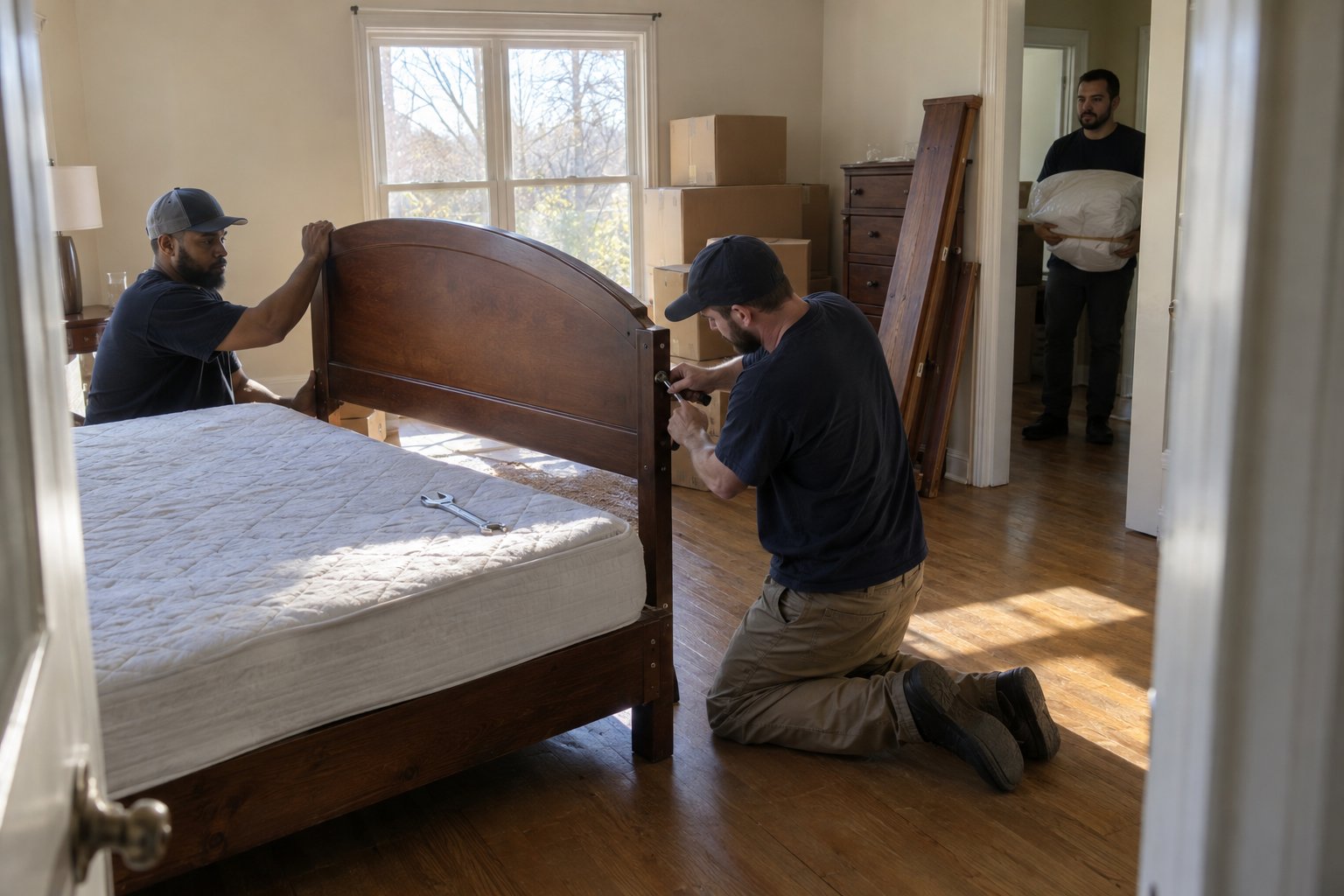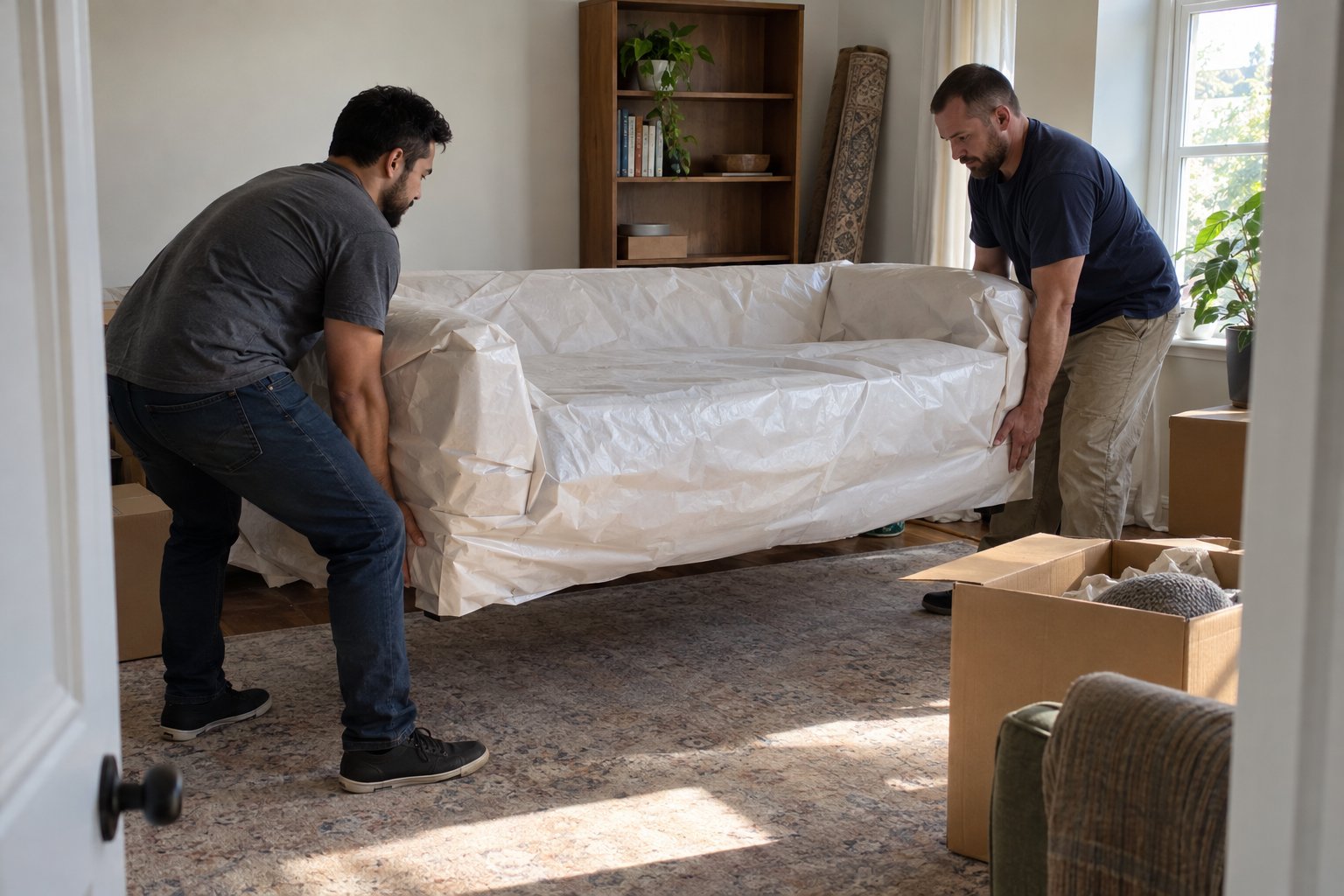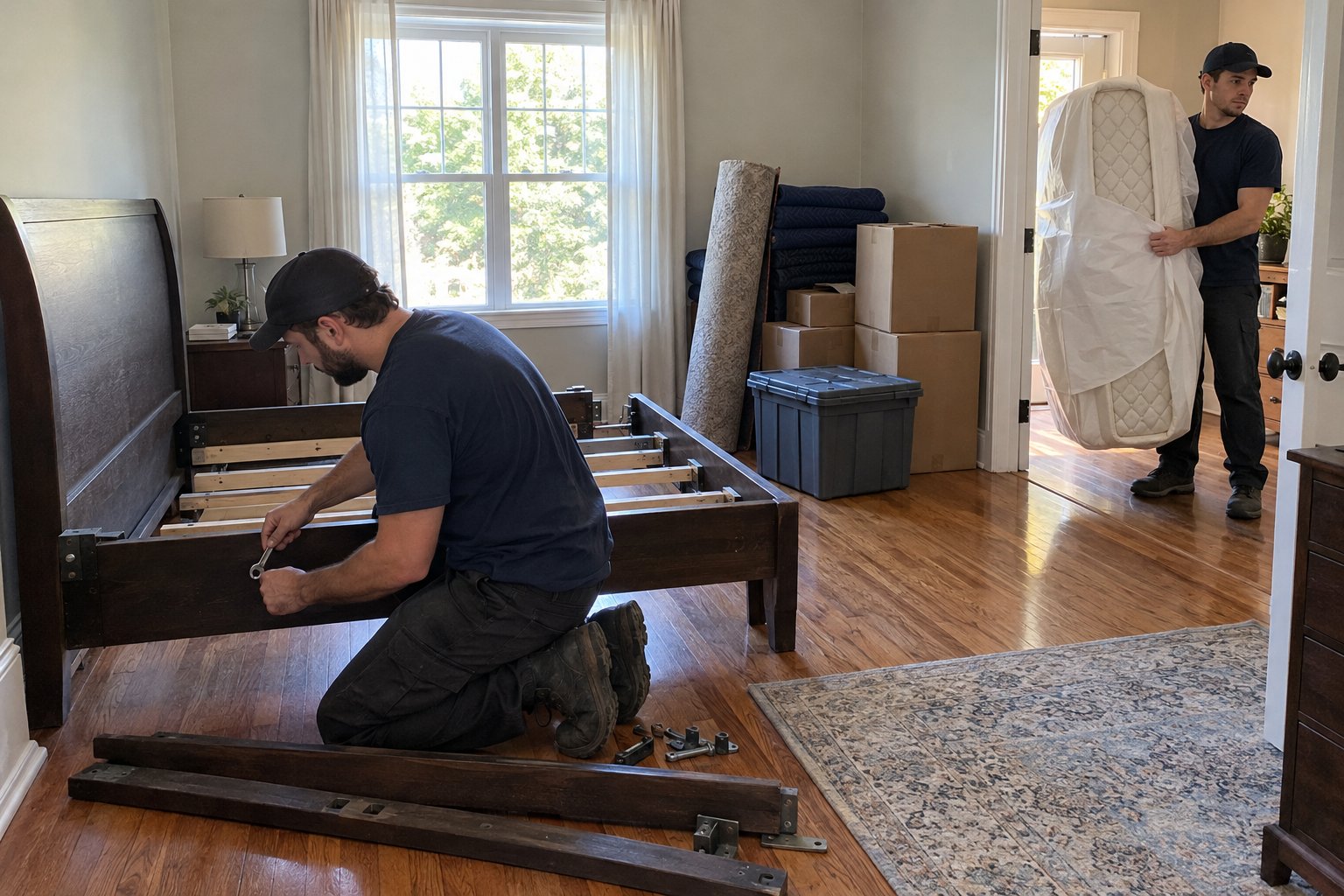
U-Box hauling and furniture assembly and disassembly solve two completely different problems, and the confusion usually comes from treating them like competing options instead of two things a move might need at the same time. U-Box hauling gets a portable storage container loaded, picked up, and hauled to wherever it needs to go. Furniture assembly and disassembly is about taking apart beds, tables, and other large pieces so they fit through doorways and into a truck or container, then putting them back together on the other end. One is about the container and the trip. The other is about the furniture itself.
If you are trying to figure out which service applies to your situation, or whether you need both, this comparison breaks down what each one actually covers, who tends to need which, and how to think about a move that involves a portable container full of furniture that still has to come apart to get there.
What Does U-Box Hauling Actually Involve?
U-Box hauling means a crew handles the pickup and transport of a portable moving container, usually one you packed yourself or had packed for you, getting it from one location to another without you having to drive it. It solves a logistics problem: you have a container, and you need it moved, but you do not want to deal with hauling an oversized trailer yourself.
This service is built for people who like the flexibility of a portable container, pack on their own schedule, but want the hauling itself handled by someone experienced with loading and transporting that kind of load. It does not inherently include breaking down furniture before it goes into the container. If your dresser does not fit through the door as-is, that is a separate task.
What Does Furniture Assembly and Disassembly Actually Involve?
Furniture assembly and disassembly means a crew takes apart beds, tables, shelving units, and other large furniture that will not fit through a doorway or hallway intact, then reassembles those same pieces once they arrive at the new location. It solves a different problem entirely: getting bulky furniture out of a house without damaging walls, doorframes, or the furniture itself.
This service matters most for people with furniture that was assembled in place, bed frames with headboards bolted together, large sectional pieces, dining tables with leaves and bases that need separating. Whether that furniture then goes into a truck, a portable container, or gets carried down the street, disassembly is a separate step that has to happen before loading and gets reversed after unloading.
Comparing the Two on Time, Effort, Risk, and Fit
Here is where the two actually sit side by side, because the honest answer to "which one do I need" is usually both, applied to different parts of the same move.
Time
U-Box hauling adds time mainly around scheduling and the pickup and delivery window itself. Furniture assembly and disassembly adds time on the front and back end of loading day: budget roughly a day for a typical household's worth of large furniture to come apart, with reassembly taking a similar stretch once everything is unloaded.
Effort
With U-Box hauling, the packing effort is still largely yours unless you add packing help separately. With furniture assembly and disassembly, the physical effort and the risk of stripped screws or a cracked headboard shift to the crew doing the work, which is the main reason people choose it over doing it themselves at midnight before loading day.
Risk
The risk profile differs too. U-Box hauling carries transport risk, securing a loaded container properly so nothing shifts in transit. Furniture assembly and disassembly carries a different risk: losing hardware, mismatching parts, or damaging a doorframe trying to force an assembled piece through an opening it was never meant to pass.
Fit
U-Box hauling fits people who want control over packing and timing but not over driving a loaded trailer. Furniture assembly and disassembly fits anyone with furniture that was built in place, regardless of whether that furniture is headed into a container, a truck, or just down the hall to another room.
Who Should Choose Which (or Both)?
A household with mostly boxes and furniture that is already broken down or fits through doorways as-is may only need U-Box hauling. A household moving within the area and only rearranging large furniture between rooms may only need assembly and disassembly, with no hauling involved at all.
Most moves that use a portable container and also own a real bed frame, a sectional, or a large dining set end up needing both: disassembly before the container is loaded, hauling to get the container where it needs to go, and reassembly once it arrives. For the most common case, a household move involving both a portable container and furniture that will not fit through doors intact, plan for both services rather than assuming one covers the other.
How to Decide Before Moving Day
Walk through your home and note which pieces were assembled after they were already inside, a bed frame built in the bedroom, a wardrobe put together in a closet. Those pieces almost always need disassembly regardless of what you decide about hauling. Separately, decide whether a portable container fits your timeline better than a truck rented for a single loading day. If your plans change or your moving date shifts, the FMCSA's Protect Your Move resources are worth a look for understanding your rights and avoiding scams regardless of which service combination you land on.
If you are weighing a portable container against renting your own truck for the whole move, our comparison of U-Box hauling and full-service moving walks through that decision in more detail. And if your move includes a detailed breakdown of what to take apart and when, our moving day timeline for furniture assembly lays out the order room by room.
Portable containers are often used for moves that involve storage gaps between a move-out and move-in date, which is often where the "do I need hauling, disassembly, or both" question comes up in the first place. If your situation involves either, it is worth sorting out which pieces need to come apart before you book anything.
For a full look at how these services fit alongside everything else offered for a move, the U-Box hauling page and the furniture assembly and disassembly page both outline what is included.
Planning your move? Request a quote from Men On Mission.
Have Questions About Your Move?

Can furniture be disassembled before a U-Box container arrives for pickup?
Yes, disassembly can happen any time before the container is loaded. Many people prefer to take apart large furniture a day or two ahead so loading day itself goes faster and nothing is rushed.
Does a portable container need to be loaded a certain way if furniture is taken apart?
Disassembled furniture pieces like bed rails and headboards should be grouped together and padded separately from boxes so they do not shift or get scratched during transport. Tell the crew which pieces came apart so they can load accordingly.
What should I tell the crew before they start taking apart furniture?
Point out any pieces with known issues, stripped screws, a wobbly leg, a drawer that sticks, before work starts. It helps the crew plan the right approach and flag anything that might need extra care.
How long does reassembly usually take after a move?
For a typical household's worth of furniture, reassembly often takes close to the same amount of time as the original disassembly, roughly a day, depending on how many large pieces are involved.
Is hardware kept separate for each piece of furniture during disassembly?
Hardware should be bagged and labeled by piece as it comes apart so screws, bolts, and brackets do not get mixed up. Ask about labeling practices before the work starts if this matters to you.