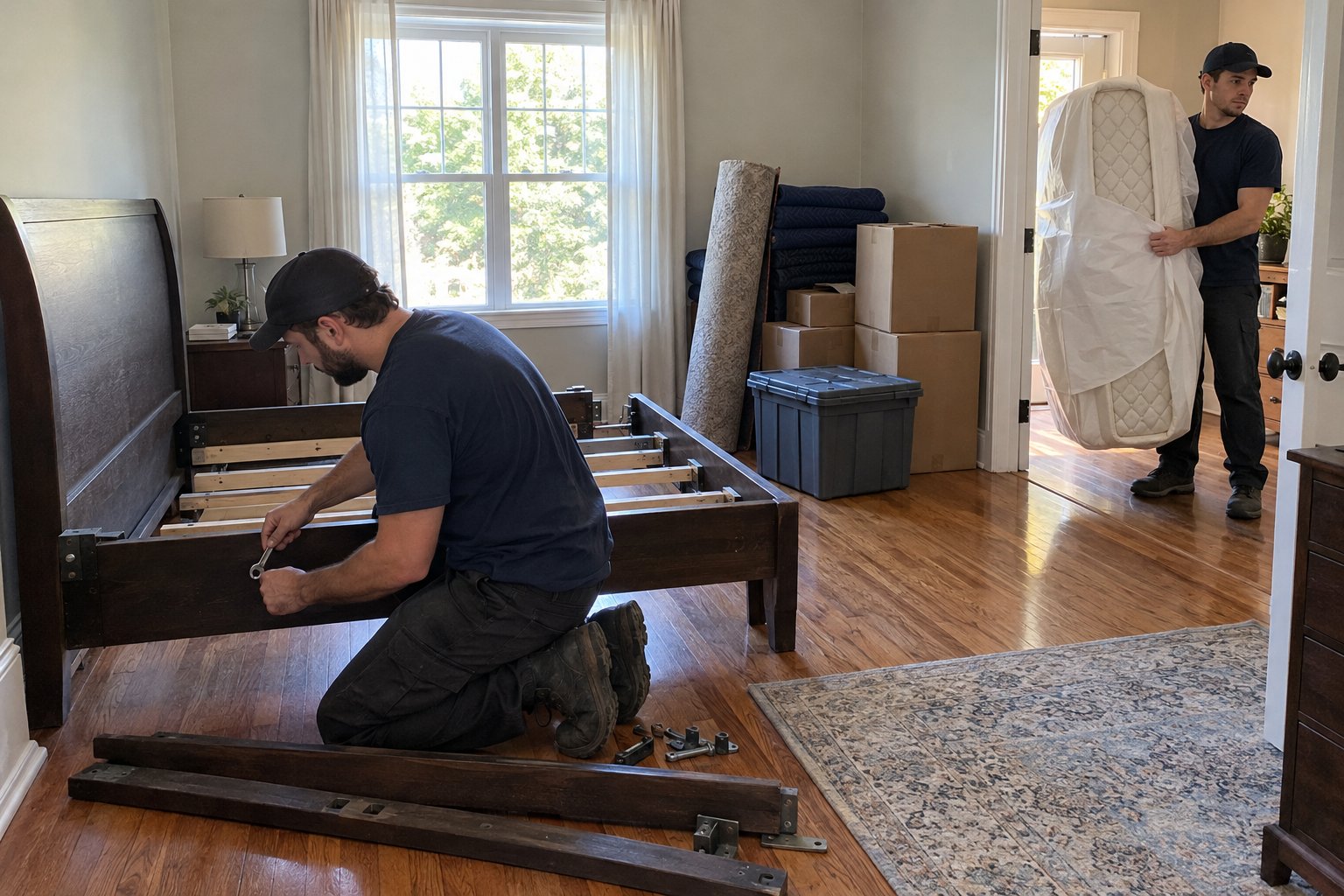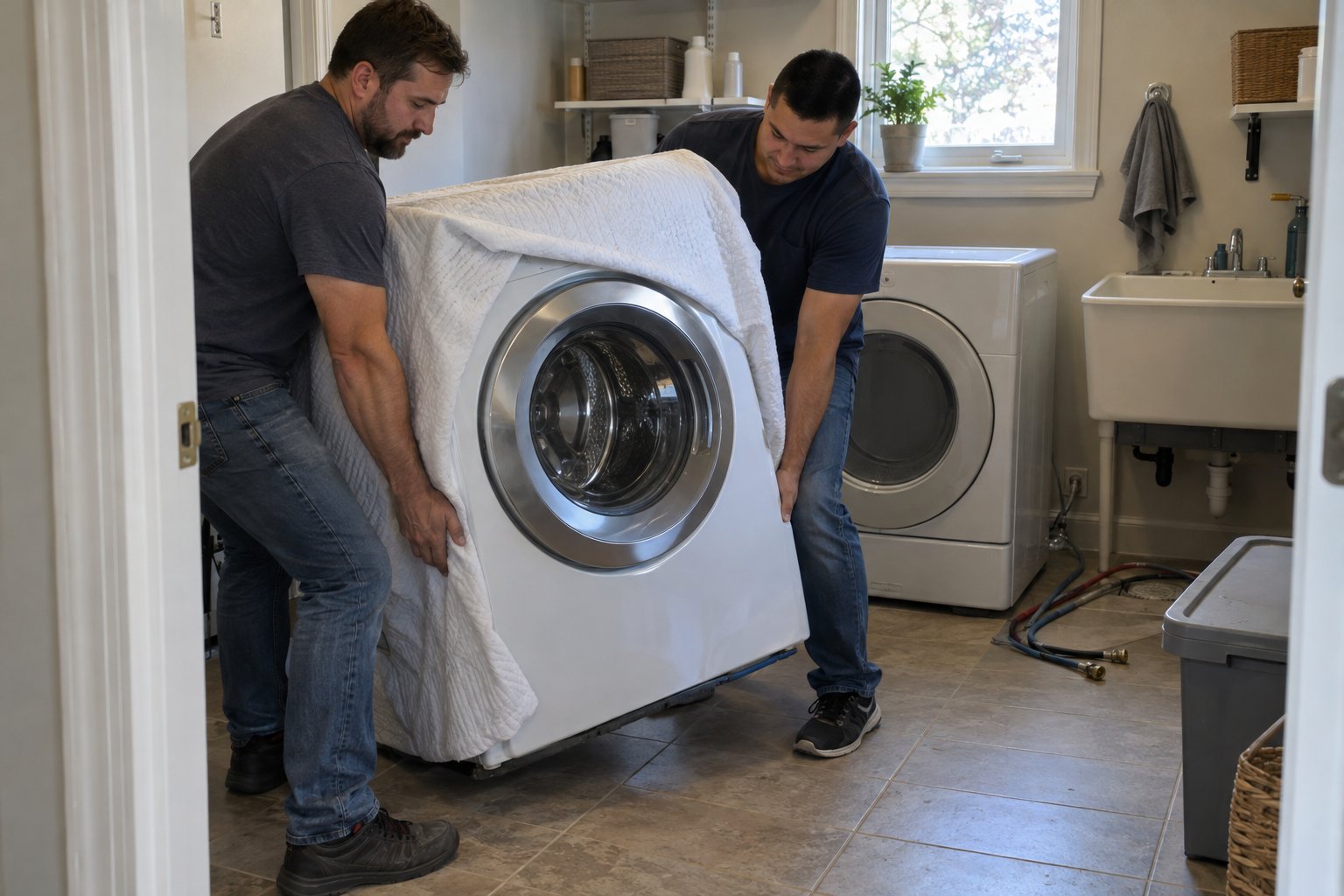
Movers who offer furniture assembly and disassembly do take apart bed frames as part of a standard moving service, but reconnecting a washer and dryer is a different job entirely, and most moving crews will not do it. The hookups involve water lines, a gas line in some setups, and a drain, and getting any of those wrong risks a leak or worse. A mover can usually disconnect, move, and set the unit in place, but the final hookup is typically left to the homeowner or a plumber.
That short answer covers the general rule, but the actual situation depends on what kind of connection you have, which service you booked, and whether your new place even has the same setup as your old one. Here is what actually determines whether your laundry room ends up running again the same day or waiting a day or two.
What Changes Whether a Mover Will Reconnect Your Washer and Dryer
The biggest factor is the connection type, not the mover's willingness. A standard electric dryer and a washer with accessible shutoff valves are far simpler to handle than a gas dryer or a stacked unit built into a closet. Movers who provide loading and unloading and furniture wrapping are generally focused on getting appliances disconnected enough to transport safely, protected from dents and scratches, and placed in the new laundry space. Full reconnection, especially anything involving a gas line, falls outside what most moving crews are insured or trained to do.
Booking a full service move does not automatically mean every hookup gets redone. Ask directly what the crew will and will not reconnect before moving day, so you are not standing in a half-finished laundry room wondering who to call next.
Is It Safe to Move a Gas Dryer Yourself?
No, disconnecting and reconnecting a gas dryer line is not something to handle without the right tools and a clear understanding of gas fittings. A loose or improperly sealed connection can leak gas, and that is not a risk worth taking to save a phone call. If your dryer runs on gas, plan to have a licensed plumber or your gas utility handle the disconnection and reconnection on both ends of the move.
Electric dryers are more forgiving. Unplugging and plugging back in a standard electric dryer cord is within reach for most homeowners, as long as the outlet at the new place matches the plug type. Older homes sometimes have different outlet configurations, so check this before the truck even arrives.
The Common Misconception: "They'll Hook It All Back Up"
A lot of people assume that if movers took something apart, they will automatically put it back together exactly as it was, including reconnecting it. That is true for furniture like bed frames and tables, which is why furniture assembly and disassembly is a core part of many moving packages, but appliances with plumbing or gas lines are treated differently by most crews because the liability is higher. The appliance itself still gets wrapped and loaded like any other item; the hookup on the other end usually does not.
If reconnecting the washer and dryer matters to your timeline, say so out loud when you book. Do not assume it is bundled in just because other furniture gets fully reassembled.
How Long Should You Plan for the Washer and Dryer to Be Out of Service?
As a rule of thumb, budget about a full day between disconnecting the unit at your old place and having it running again at the new one, longer if you need to schedule a plumber or wait on a gas utility inspection. That window covers disconnecting water and power, transporting the unit, and getting it reconnected properly rather than rushed.
If you are moving locally within the area, that timeline can compress if you line up a plumber or electrician ahead of moving day instead of trying to find one afterward. Waiting until the truck is unloaded to start calling around almost always stretches that window longer than it needs to be.
What to Prepare Before the Crew Arrives
Preparing the appliances yourself the night before saves time and avoids surprises. Run the washer empty to clear out any standing water, disconnect hoses if you are comfortable doing so, and let the dryer vent cool down if it was recently used. Tape down any loose hoses or cords so they do not drag or get damaged during loading, a step covered in more detail in a full washer and dryer prep checklist.
It also helps to know your new home's setup in advance. If the laundry area uses a different connection style than your current home, such as a gas hookup replacing an electric one, you will want that sorted out before move-in day rather than discovering it while the crew is unloading.
Where This Fits Into Your Larger Moving Plan
Appliance logistics are just one piece of a bigger timeline that includes packing, loading, transport, and getting settled into the new place. It helps to map out when the washer and dryer need to be disconnected relative to everything else getting packed, so the laundry room is not the last thing standing in an otherwise empty house. A broader moving day timeline can help you sequence this alongside furniture and boxes so nothing gets left to the last minute.
While you are coordinating appliance hookups, it is also worth handling administrative tasks on the same timeline. Updating your address with USPS before the move means mail and any utility correspondence follows you without a gap, which matters if a plumber or utility company needs to reach you to confirm an appointment. If your move takes you through Fountain, CO or Falcon, CO, confirming your new address early also makes it easier to schedule local service appointments before you arrive.
Planning your move? Request a quote from Men On Mission.
Have Questions About Your Move?
Do movers disconnect the water lines before loading a washer?
Many crews will disconnect basic water supply lines so the washer can be safely transported, but confirm this when booking since it is not guaranteed on every service level. If your valves are old or corroded, it may be safer to have a plumber handle the disconnection instead.
Can a stacked washer and dryer unit be moved without separating it?
Stacked units are usually unbolted and separated for transport even if they are reassembled as a stack at the new place, since moving them as one tall piece raises the risk of tipping or damage. Ask the crew ahead of time how they plan to handle a stacked setup.
What should I tell the moving crew about my washer and dryer before moving day?
Let them know the connection type (gas or electric), whether the unit is stacked or front-loading, and if there is any existing damage or leak history. This helps the crew plan how to wrap and position the appliances in the truck.
How do I know if my new home's laundry hookup matches my old one?
Check with the landlord, builder, or previous owner about whether the laundry area has gas or electric dryer service and standard water shutoff valves. Mismatched hookups are one of the most common reasons a washer and dryer sit unused for a few extra days after a move.
Is it normal for a dryer vent to need adjustment after a move?
Yes, many homes have vent setups in slightly different positions, so the dryer may need a different length of venting hose or a repositioned exhaust connection. This is a reasonable task to handle yourself or ask a handyman about if it is not something the moving crew covers.