Prepping a washer and dryer for a move means shutting off the water supply, draining the hoses, locking the drum with shipping bolts or towels, and letting the dryer vent and lint trap dry out completely before anything gets loaded. Skip any one of these steps and you risk a soaked floor at your old place, a cracked drum at the new one, or a dryer that smells like mildew the first time you run it. None of this takes more than thirty minutes if you do it in the right order.
Most people treat the washer and dryer like any other box on the truck. They are not. A washer has a suspended drum that swings freely during normal use and needs to be locked down before it travels, and both machines have hoses and vents that hold water or lint that will leak or spill if you do not deal with them first. This guide walks through the prep work in the order it should actually happen, not the order most checklists list it in.
How Far in Advance Should You Start Prepping Appliances?
Start the night before moving day, not the morning of. Run a final load through the washer so it is empty and clean, then let the dryer run its last cycle so the drum and vent have time to cool and dry overnight. Trying to disconnect a washer that still has water sitting in the drum or a dryer that is still warm just adds risk and mess you do not need on an already busy day.
If your move is a long-distance one and the appliances will sit in a truck for more than a day, give yourself even more lead time. A drum that is not fully dry can start to smell musty after 24 to 48 hours sealed up, and that smell is much harder to get out once it sets in.
Disconnecting the Washer Without Making a Mess
Turn off both the hot and cold water shutoff valves behind the washer before you touch a single hose. Then run a quick rinse cycle with the valves closed to relieve pressure in the lines, which keeps water from spraying when you finally disconnect.
Draining and Removing the Hoses
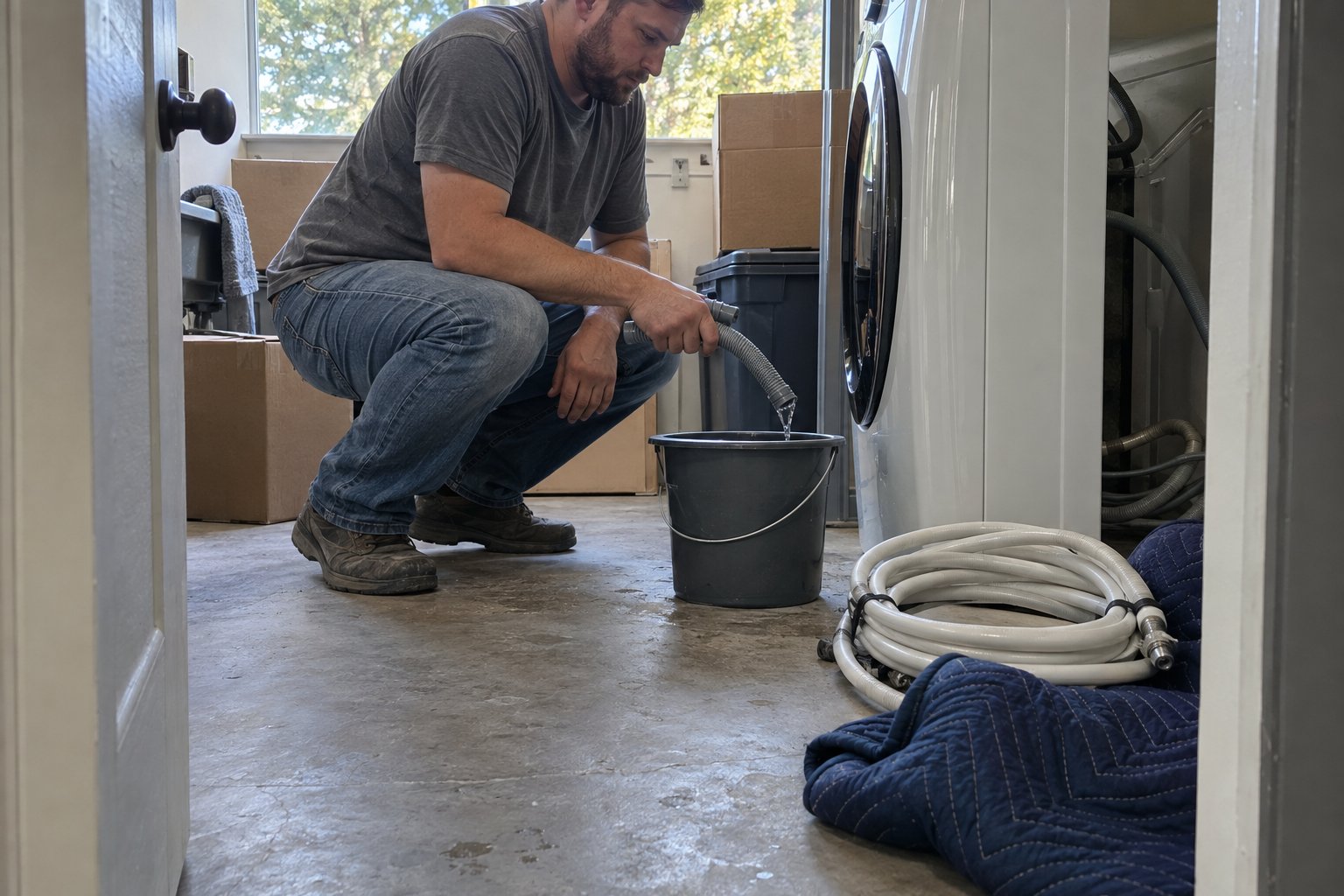
Once the valves are off, disconnect the hoses at the wall first, then at the machine, holding each one over a towel or shallow bucket since there will still be residual water in the line. Coil each hose and secure it with a twist tie or rubber band, then either tape it to the back of the washer or pack it in a labeled bag so it does not get separated from the machine.
Locking the Drum for Transport
If your washer came with shipping bolts or a transit bracket, now is the time to reinstall them. These bolts lock the drum in place so it cannot swing and bang against the cabinet during transport, which is one of the more common ways a washer gets internally damaged on a move. If you no longer have the original bolts, wedge thick towels tightly around the drum through the door opening to limit movement, though factory bolts are always the better option when you have them.
Preparing the Dryer Before It Gets Loaded
A dryer needs far less plumbing work than a washer, but the venting and lint system still need attention. Disconnect the exhaust duct from the back of the dryer and from the wall vent, then clean out any lint sitting in either opening before you cap or tape them shut for the move.
Pull the lint trap itself and clean it thoroughly, since trapped lint left for weeks in storage or transit can hold moisture and odor. If your dryer is gas-powered, this is also the point where the gas line needs to be shut off and disconnected, which is worth having a professional handle if you are not confident doing it yourself. Electric dryers just need the power cord coiled and secured once the unit is unplugged.
Securing Both Machines for the Ride
Once hoses, cords, and vents are disconnected, both appliances need to be strapped and padded so they do not shift or tip in the truck. Use moving straps or furniture dollies rated for heavy appliances, since washers in particular are front-heavy and awkward to tilt on stairs or thresholds.
Keep both units upright throughout the move whenever possible. Laying a washer on its side can shift internal components and stress the suspension system that holds the drum, and most manufacturers specifically warn against it. If tipping is unavoidable to clear a doorway, set it back upright as soon as you are past the obstacle rather than leaving it on its side for the ride.
Reconnecting Safely at the New Home
Give the washer and dryer a few hours to sit at room temperature before you reconnect anything, especially if they spent time in a cold truck. Reconnect the water hoses at the wall and machine, turn the valves back on slowly, and check both connections for drips before you walk away. Remove the shipping bolts from the washer drum before running a first cycle, since leaving them in place can damage the machine during operation.
For the dryer, reattach the vent duct securely at both ends and confirm it is not crushed or kinked behind the unit, since a pinched vent is a common cause of poor drying performance and a long-term fire risk. Run a short test cycle on each machine before you consider the job done.
Appliances like washers and dryers are heavy, awkward to maneuver, and unforgiving of shortcuts, which is why many households choose to have them loaded and unloaded by an experienced moving crew rather than wrestling them through doorways alone. If you are weighing the appliance prep above against bringing in help for the heavy lifting, our comparison of DIY and full-service moving walks through what each option actually involves. And if your move includes other large household items beyond the laundry room, our guide on moving heavy furniture without injuring yourself or damaging your home covers the techniques that apply just as well to appliances.
Whenever you are ready to put the heavy lifting in someone else's hands, get a moving quote from our team and we will plan around your appliances along with everything else in the house.
Frequently Asked Questions
Do you need to drain the washer hoses completely before a move?
Yes. Even after shutting off the water supply, there is usually residual water left in the hoses. Disconnect them over a towel or bucket and let them drain fully before coiling and packing them, otherwise you risk dripping water in the truck or on your floors.
Can you move a washing machine without shipping bolts?
You can, but it is riskier. Without shipping bolts, the drum can swing and knock against the cabinet during transport. If you no longer have the originals, pack thick towels tightly around the drum opening to restrict movement as a substitute, though factory bolts are always the safer choice.
Is it safe to lay a washer or dryer on its side during a move?
It is best to keep both appliances upright for the entire move. Laying a washer on its side can stress the suspension system holding the drum, and most manufacturers advise against it. If you must tilt one briefly to clear a doorway, set it back upright immediately.
How long should a washer and dryer sit before you reconnect them at a new home?
Give both machines a few hours to reach room temperature after being in a moving truck, especially in cold weather, before reconnecting water, power, or gas lines. This helps avoid stressing seals and components that may have stiffened during transport.
What happens if you forget to clean the dryer vent before moving?
Leftover lint in the vent or trap can hold moisture and develop a musty smell during transit or storage, and a clogged vent left connected can also be a fire hazard once the dryer is reconnected and running at the new home.
Prepping a washer and dryer for a move means shutting off the water supply, draining the hoses, locking the drum with shipping bolts or towels, and letting the dryer vent and lint trap dry out completely before anything gets loaded. Skip any one of these steps and you risk a soaked floor at your old place, a cracked drum at the new one, or a dryer that smells like mildew the first time you run it. None of this takes more than thirty minutes if you do it in the right order.
Most people treat the washer and dryer like any other box on the truck. They are not. A washer has a suspended drum that swings freely during normal use and needs to be locked down before it travels, and both machines have hoses and vents that hold water or lint that will leak or spill if you do not deal with them first. This guide walks through the prep work in the order it should actually happen, not the order most checklists list it in.
How Far in Advance Should You Start Prepping Appliances?
Start the night before moving day, not the morning of. Run a final load through the washer so it is empty and clean, then let the dryer run its last cycle so the drum and vent have time to cool and dry overnight. Trying to disconnect a washer that still has water sitting in the drum or a dryer that is still warm just adds risk and mess you do not need on an already busy day.
If your move is a long-distance one and the appliances will sit in a truck for more than a day, give yourself even more lead time. A drum that is not fully dry can start to smell musty after 24 to 48 hours sealed up, and that smell is much harder to get out once it sets in.
Disconnecting the Washer Without Making a Mess
Turn off both the hot and cold water shutoff valves behind the washer before you touch a single hose. Then run a quick rinse cycle with the valves closed to relieve pressure in the lines, which keeps water from spraying when you finally disconnect.
Draining and Removing the Hoses
Once the valves are off, disconnect the hoses at the wall first, then at the machine, holding each one over a towel or shallow bucket since there will still be residual water in the line. Coil each hose and secure it with a twist tie or rubber band, then either tape it to the back of the washer or pack it in a labeled bag so it does not get separated from the machine.
Locking the Drum for Transport
If your washer came with shipping bolts or a transit bracket, now is the time to reinstall them. These bolts lock the drum in place so it cannot swing and bang against the cabinet during transport, which is one of the more common ways a washer gets internally damaged on a move. If you no longer have the original bolts, wedge thick towels tightly around the drum through the door opening to limit movement, though factory bolts are always the better option when you have them.
Preparing the Dryer Before It Gets Loaded
A dryer needs far less plumbing work than a washer, but the venting and lint system still need attention. Disconnect the exhaust duct from the back of the dryer and from the wall vent, then clean out any lint sitting in either opening before you cap or tape them shut for the move.
Pull the lint trap itself and clean it thoroughly, since trapped lint left for weeks in storage or transit can hold moisture and odor. If your dryer is gas-powered, this is also the point where the gas line needs to be shut off and disconnected, which is worth having a professional handle if you are not confident doing it yourself. Electric dryers just need the power cord coiled and secured once the unit is unplugged.
Securing Both Machines for the Ride
Once hoses, cords, and vents are disconnected, both appliances need to be strapped and padded so they do not shift or tip in the truck. Use moving straps or furniture dollies rated for heavy appliances, since washers in particular are front-heavy and awkward to tilt on stairs or thresholds.
Keep both units upright throughout the move whenever possible. Laying a washer on its side can shift internal components and stress the suspension system that holds the drum, and most manufacturers specifically warn against it. If tipping is unavoidable to clear a doorway, set it back upright as soon as you are past the obstacle rather than leaving it on its side for the ride.
Reconnecting Safely at the New Home
Give the washer and dryer a few hours to sit at room temperature before you reconnect anything, especially if they spent time in a cold truck. Reconnect the water hoses at the wall and machine, turn the valves back on slowly, and check both connections for drips before you walk away. Remove the shipping bolts from the washer drum before running a first cycle, since leaving them in place can damage the machine during operation.
For the dryer, reattach the vent duct securely at both ends and confirm it is not crushed or kinked behind the unit, since a pinched vent is a common cause of poor drying performance and a long-term fire risk. Run a short test cycle on each machine before you consider the job done.
Appliances like washers and dryers are heavy, awkward to maneuver, and unforgiving of shortcuts, which is why many households choose to have them loaded and unloaded by an experienced moving crew rather than wrestling them through doorways alone. If you are weighing the appliance prep above against bringing in help for the heavy lifting, our comparison of DIY and full-service moving walks through what each option actually involves. And if your move includes other large household items beyond the laundry room, our guide on moving heavy furniture without injuring yourself or damaging your home covers the techniques that apply just as well to appliances.
Whenever you are ready to put the heavy lifting in someone else's hands, get a moving quote from our team and we will plan around your appliances along with everything else in the house.
Have Questions About Your Move?
Do you need to drain the washer hoses completely before a move?
Yes. Even after shutting off the water supply, there is usually residual water left in the hoses. Disconnect them over a towel or bucket and let them drain fully before coiling and packing them, otherwise you risk dripping water in the truck or on your floors.
Can you move a washing machine without shipping bolts?
You can, but it is riskier. Without shipping bolts, the drum can swing and knock against the cabinet during transport. If you no longer have the originals, pack thick towels tightly around the drum opening to restrict movement as a substitute, though factory bolts are always the safer choice.
Is it safe to lay a washer or dryer on its side during a move?
It is best to keep both appliances upright for the entire move. Laying a washer on its side can stress the suspension system holding the drum, and most manufacturers advise against it. If you must tilt one briefly to clear a doorway, set it back upright immediately.
How long should a washer and dryer sit before you reconnect them at a new home?
Give both machines a few hours to reach room temperature after being in a moving truck, especially in cold weather, before reconnecting water, power, or gas lines. This helps avoid stressing seals and components that may have stiffened during transport.
What happens if you forget to clean the dryer vent before moving?
Leftover lint in the vent or trap can hold moisture and develop a musty smell during transit or storage, and a clogged vent left connected can also be a fire hazard once the dryer is reconnected and running at the new home.