How to Pack a Bedroom for Moving Without the Chaos
Packing a bedroom takes more planning than most expect. This guide covers what to sort, pack, protect, and label so nothing is broken or left behind.
Knowing how to pack a bedroom for moving is more involved than most people expect \u2014 and underestimating it is one of the most reliable ways to blow your moving day timeline. Bedrooms look deceptively simple: a bed, a dresser, a closet. But when you actually start packing, you discover clothing that needs to be handled carefully, furniture that has to be disassembled, fragile items on every shelf, and a closet that has quietly collected years of belongings you completely forgot about. It does not have to go that way.
If you would rather have experienced professionals handle the heavy lifting while you focus on the details, call our team at 719-357-9048 to lock in your move date.
Whether you are packing a master bedroom, a child's room, or a spare guest room, the strategy below will walk you through the entire process \u2014 from the first drawer you open to the last box you tape shut \u2014 so nothing gets lost, broken, or forgotten in the shuffle.
Why Bedroom Packing Goes Wrong More Often Than It Should
The bedroom is typically the last room people pack, which means it is packed under the most time pressure and with the least energy. By the time someone gets to the bedroom, the kitchen is done, the living room is boxed up, and exhaustion has set in. That combination produces careless packing decisions that show up on the other end as wrinkled clothes, broken d\u00e9cor, and furniture that arrives in worse shape than it left.
Three specific patterns cause most bedroom packing problems:
- Leaving it too late \u2014 because you sleep in the bedroom every night, it feels like it has to be the last thing packed. But most of a bedroom can be packed several days before the move, leaving only the bare essentials for moving morning.
- Treating the closet as an afterthought \u2014 closets contain a surprising volume of items, many of them oddly shaped or seasonally stored. A closet that is not sorted before packing day becomes a time sink on moving day.
- Skipping furniture disassembly prep \u2014 beds, wardrobes, and large dressers often need to be broken down before they can move safely through doorways and down stairs. Discovering this on moving morning, without the right tools, costs significant time.
The fix is a sequenced plan that works backward from moving day \u2014 packing what you use least first, protecting what is most fragile, and leaving only a small overnight bag's worth of items for the final morning.
Step One: Sort and Declutter Before a Single Box Opens
The most valuable thing you can do before packing a bedroom is reduce what needs to be packed in the first place. Moving is one of the best natural opportunities to audit what you own, and the bedroom \u2014 with its closets, drawers, and under-bed storage \u2014 is typically full of items that have not been touched in years.
Clothing and Accessories
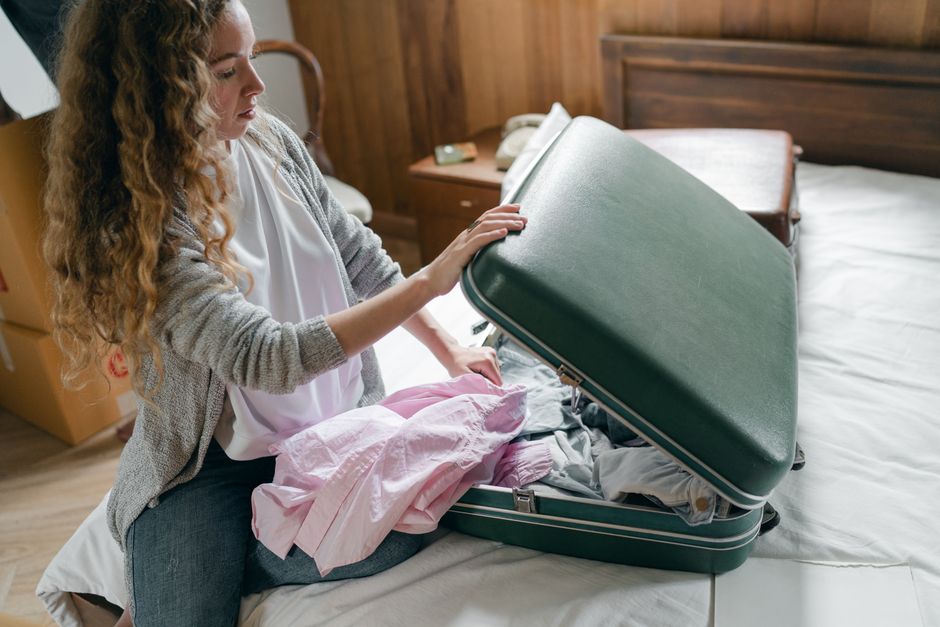
Pull everything out of your closet and drawers before packing a single item. Sort clothing into three groups: things you actively wear, things you keep for sentimental or seasonal reasons, and things you have not touched in more than a year. That third pile is your donation stack. Moving clothes you do not wear to a new home simply means storing them in a new location \u2014 it does not solve anything.
For clothing you are keeping, a vacuum storage bag is one of the most space-efficient tools available. Bulky sweaters, comforters, and off-season jackets compress dramatically and take up far less room in boxes or on the truck. Hanging clothes can often travel directly from closet rod to wardrobe box without being folded at all, which saves both packing time and ironing time on the other end.
D\u00e9cor, Books, and Personal Items
Nightstand contents, framed photos, decorative items on shelves, and books accumulate in bedrooms over time. Sort these the same way: keep what matters, donate or discard what does not. Books are particularly heavy \u2014 a box of books that feels manageable when half-full becomes very difficult to carry when it is full. Use small boxes for books and save the larger boxes for lighter items like pillows and linens.
Step Two: Pack in the Right Order
Once you have sorted and reduced, pack in sequence \u2014 lowest priority items first, highest priority items last. This keeps the bedroom functional for as long as possible without sacrificing packing momentum.
Pack First: Items You Will Not Need Before the Move
Start with out-of-season clothing, extra bedding, decorative pillows, books, and any d\u00e9cor that lives on shelves or walls. These items can typically be boxed up a week or more before moving day with zero disruption to your daily routine. Wrap fragile items \u2014 small sculptures, picture frames, ceramic d\u00e9cor \u2014 individually in packing paper before placing them in boxes, and fill any empty space with crumpled paper or soft clothing to prevent shifting.
Pack Second: Furniture Contents and Secondary Items
A few days before the move, empty dresser drawers and pack their contents into boxes. Many professional movers will transport a dresser with its drawers still in place if the contents are light enough \u2014 but clothing adds significant weight, and removing it protects both the furniture and the moving team. If you are leaving drawers in, tape them shut so they do not slide open during the move.
This is also the time to begin disassembling furniture that needs it. Most bed frames break down into a manageable set of components, and doing this a day or two before the move means you are not scrambling for tools on moving morning. Keep all screws, bolts, and hardware in a labeled zip-lock bag taped directly to the corresponding piece of furniture.
Pack Last: Everyday Essentials
The night before your move, pack everything you will need for your first night in the new place \u2014 toiletries, one set of clothing, phone chargers, medications, and anything else that would be genuinely disruptive to dig through boxes to find. Pack these items in a clearly labeled overnight bag or a designated "open first" box that travels in your personal vehicle rather than on the truck. Your bed linens and pillows can be the very last things to come off the bed on moving morning, placed in a clearly marked box so the bedroom is functional again on night one.
Step Three: Protect Furniture and Fragile Items Properly
Bedroom furniture takes more damage during moves than most people realize \u2014 not from dramatic drops, but from the slow accumulation of scrapes, dings, and scratches that happen when items are moved through doorways, loaded onto trucks, and shifted during transit.
Protecting the Bed
Mattresses should always travel in a mattress bag or mattress cover. These are inexpensive, available at most moving supply retailers, and they protect against moisture, dust, and tears during loading and unloading. A mattress that travels without a cover arrives dirty at minimum and damaged at worst. Box springs deserve the same treatment.
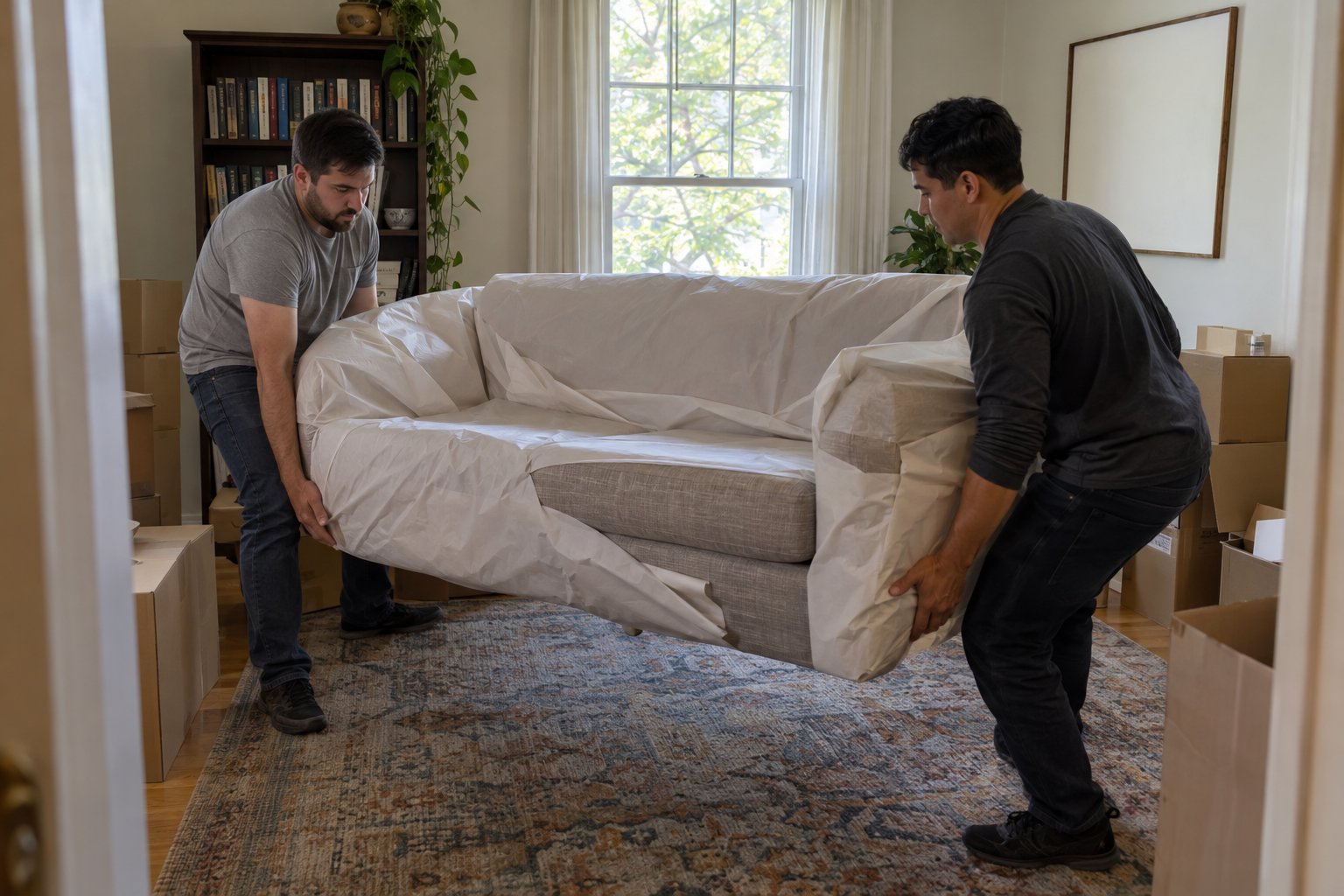
Bed frame components \u2014 headboards especially \u2014 should be wrapped in moving blankets or furniture pads before going on the truck. Headboards are among the most commonly scratched items in a household move, partly because of their size and partly because their finish is often lacquered or painted rather than raw wood.
Protecting Dressers, Nightstands, and Wardrobes
Wood furniture corners are particularly vulnerable during moves. Corner protectors \u2014 foam or cardboard \u2014 can be purchased inexpensively and dramatically reduce the chance of a dinged corner or cracked edge. Wrap glass mirror surfaces in packing paper first, then blankets, and secure them with stretch wrap rather than tape directly on the surface. Tape adhesive can strip finish from painted or lacquered furniture.
Protecting Artwork and Mirrors
Framed wall art and mirrors are among the most commonly broken items in a household move. Large mirrors should travel vertically, not flat \u2014 flat transport puts the full weight on the glass. Use mirror boxes (telescoping flat boxes designed specifically for this purpose), wrap the surface in packing paper, and mark the box "FRAGILE \u2014 GLASS" on every side and the top.
Step Four: Label Everything With Enough Detail to Actually Help
A box labeled "Bedroom" is only marginally more helpful than a box with no label at all. When you have three or four bedroom boxes stacked together on the truck, knowing which room they belong to does not tell you which one to open first. Effective labeling adds one layer of detail beyond just the room name.
- Write the room and the general contents on at least two sides of every box \u2014 for example, "Bedroom \u2014 Winter Clothes" or "Bedroom \u2014 Books and D\u00e9cor."
- Mark any box with fragile items on the top and all four sides, and add a directional arrow so handlers know which way is up.
- Designate your "open first" box clearly so it is not buried under everything else when you arrive.
- Consider color-coding \u2014 a strip of colored tape on boxes from each room makes sorting at the destination faster and requires no reading at all.
Good labeling is one of the highest-return-per-minute investments in any move. The five seconds it takes to write a more descriptive label saves significantly more time on the unpacking end.
When to Call in Professional Help
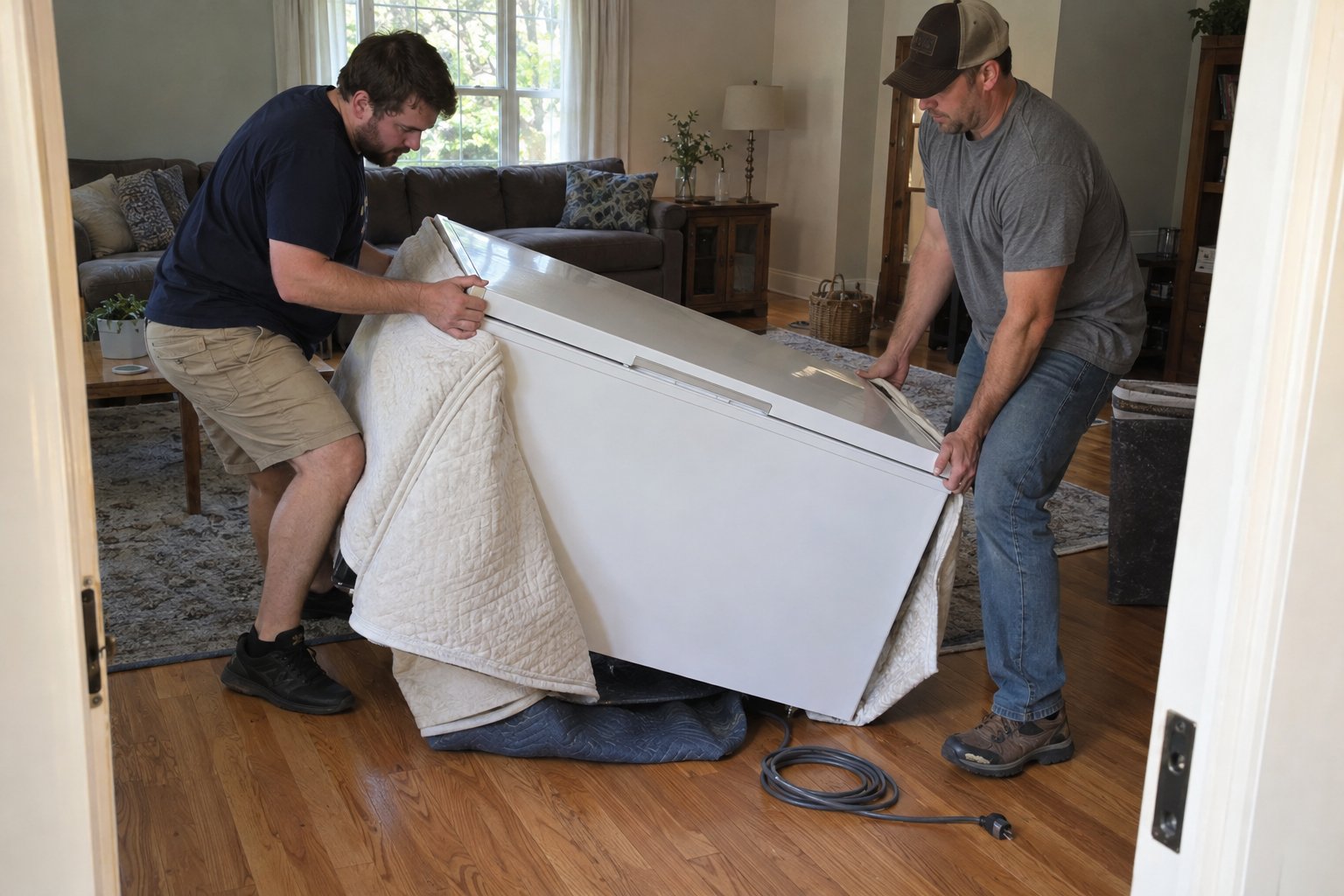
Some bedroom packing challenges go beyond what a careful DIY effort can handle. Heavy furniture, large mirrors, and antique pieces all carry enough risk \u2014 of injury and of damage \u2014 that professional handling is worth considering. A team that moves furniture and fragile items every day has developed techniques and equipment that are genuinely difficult to replicate without experience.
Beyond the physical risk, there is also the time equation. Packing an entire bedroom properly \u2014 sorting, wrapping, boxing, disassembling, labeling \u2014 takes far longer than most people estimate. If you are also working around children, pets, or a job, having experienced movers handle the physical work frees you to manage the hundred other details that a relocation demands.
Men on Mission is a Colorado Springs moving company built around exactly this kind of work. If you would like a team that treats your belongings with the same care you would, call 719-357-9048 or get a free quote online to start the conversation.
Frequently Asked Questions
How far in advance should I start packing my bedroom before a move?
Most of a bedroom can be packed five to seven days before moving day without disrupting your routine. Start with out-of-season clothing, extra bedding, books, and decorative items. Leave only your daily essentials — one or two outfits, toiletries, and chargers — for the final night, and pack those into a separate overnight bag that travels with you rather than on the truck.
Should I leave clothes in dresser drawers when moving?
It depends on the weight. Some professional movers will transport a dresser with lightweight items still inside the drawers, with the drawers taped shut. However, if the drawers are full of heavy clothing, removing the contents and boxing them separately protects both the furniture and the movers. When in doubt, empty the drawers — it also makes the dresser significantly easier to carry.
What is the best way to move hanging clothes?
Wardrobe boxes are the most efficient solution for hanging clothes. They include a hanging rod, which lets you transfer clothes directly from your closet rod without removing them from hangers. This eliminates folding, prevents wrinkles, and makes setting up your new closet much faster. If wardrobe boxes are not in your budget, grouping hangers together and covering the clothes with a large trash bag secured at the top is a practical alternative for short moves.
How do I protect a mattress during a move?
Use a mattress bag or mattress cover — they are inexpensive and available at most moving supply stores or online retailers. A mattress bag keeps the surface clean and protected from tears, moisture, and contact with the truck floor or walls during transit. Always transport a mattress vertically along the wall of the truck rather than flat, which prevents it from sagging or being used as a surface for stacking other items.
What should I pack in my 'open first' bedroom box?
Your open-first box for the bedroom should contain everything you need to function on your first night without digging through other boxes. This typically includes one complete set of bed linens and pillowcases, pajamas or a change of clothes, any medications you take daily, phone and device chargers, and a basic toiletry kit. Label this box clearly on all sides and make sure it travels in your personal vehicle so it is always accessible — never buried at the back of the moving truck.
Knowing how to pack a bedroom for moving is more involved than most people expect \u2014 and underestimating it is one of the most reliable ways to blow your moving day timeline. Bedrooms look deceptively simple: a bed, a dresser, a closet. But when you actually start packing, you discover clothing that needs to be handled carefully, furniture that has to be disassembled, fragile items on every shelf, and a closet that has quietly collected years of belongings you completely forgot about. It does not have to go that way.
If you would rather have experienced professionals handle the heavy lifting while you focus on the details, call our team at 719-357-9048 to lock in your move date.
Whether you are packing a master bedroom, a child's room, or a spare guest room, the strategy below will walk you through the entire process \u2014 from the first drawer you open to the last box you tape shut \u2014 so nothing gets lost, broken, or forgotten in the shuffle.
Why Bedroom Packing Goes Wrong More Often Than It Should
The bedroom is typically the last room people pack, which means it is packed under the most time pressure and with the least energy. By the time someone gets to the bedroom, the kitchen is done, the living room is boxed up, and exhaustion has set in. That combination produces careless packing decisions that show up on the other end as wrinkled clothes, broken d\u00e9cor, and furniture that arrives in worse shape than it left.
Three specific patterns cause most bedroom packing problems:
- Leaving it too late \u2014 because you sleep in the bedroom every night, it feels like it has to be the last thing packed. But most of a bedroom can be packed several days before the move, leaving only the bare essentials for moving morning.
- Treating the closet as an afterthought \u2014 closets contain a surprising volume of items, many of them oddly shaped or seasonally stored. A closet that is not sorted before packing day becomes a time sink on moving day.
- Skipping furniture disassembly prep \u2014 beds, wardrobes, and large dressers often need to be broken down before they can move safely through doorways and down stairs. Discovering this on moving morning, without the right tools, costs significant time.
The fix is a sequenced plan that works backward from moving day \u2014 packing what you use least first, protecting what is most fragile, and leaving only a small overnight bag's worth of items for the final morning.
Step One: Sort and Declutter Before a Single Box Opens
The most valuable thing you can do before packing a bedroom is reduce what needs to be packed in the first place. Moving is one of the best natural opportunities to audit what you own, and the bedroom \u2014 with its closets, drawers, and under-bed storage \u2014 is typically full of items that have not been touched in years.
Clothing and Accessories
Pull everything out of your closet and drawers before packing a single item. Sort clothing into three groups: things you actively wear, things you keep for sentimental or seasonal reasons, and things you have not touched in more than a year. That third pile is your donation stack. Moving clothes you do not wear to a new home simply means storing them in a new location \u2014 it does not solve anything.
For clothing you are keeping, a vacuum storage bag is one of the most space-efficient tools available. Bulky sweaters, comforters, and off-season jackets compress dramatically and take up far less room in boxes or on the truck. Hanging clothes can often travel directly from closet rod to wardrobe box without being folded at all, which saves both packing time and ironing time on the other end.
D\u00e9cor, Books, and Personal Items
Nightstand contents, framed photos, decorative items on shelves, and books accumulate in bedrooms over time. Sort these the same way: keep what matters, donate or discard what does not. Books are particularly heavy \u2014 a box of books that feels manageable when half-full becomes very difficult to carry when it is full. Use small boxes for books and save the larger boxes for lighter items like pillows and linens.
Step Two: Pack in the Right Order
Once you have sorted and reduced, pack in sequence \u2014 lowest priority items first, highest priority items last. This keeps the bedroom functional for as long as possible without sacrificing packing momentum.
Pack First: Items You Will Not Need Before the Move
Start with out-of-season clothing, extra bedding, decorative pillows, books, and any d\u00e9cor that lives on shelves or walls. These items can typically be boxed up a week or more before moving day with zero disruption to your daily routine. Wrap fragile items \u2014 small sculptures, picture frames, ceramic d\u00e9cor \u2014 individually in packing paper before placing them in boxes, and fill any empty space with crumpled paper or soft clothing to prevent shifting.
Pack Second: Furniture Contents and Secondary Items
A few days before the move, empty dresser drawers and pack their contents into boxes. Many professional movers will transport a dresser with its drawers still in place if the contents are light enough \u2014 but clothing adds significant weight, and removing it protects both the furniture and the moving team. If you are leaving drawers in, tape them shut so they do not slide open during the move.
This is also the time to begin disassembling furniture that needs it. Most bed frames break down into a manageable set of components, and doing this a day or two before the move means you are not scrambling for tools on moving morning. Keep all screws, bolts, and hardware in a labeled zip-lock bag taped directly to the corresponding piece of furniture.
Pack Last: Everyday Essentials
The night before your move, pack everything you will need for your first night in the new place \u2014 toiletries, one set of clothing, phone chargers, medications, and anything else that would be genuinely disruptive to dig through boxes to find. Pack these items in a clearly labeled overnight bag or a designated "open first" box that travels in your personal vehicle rather than on the truck. Your bed linens and pillows can be the very last things to come off the bed on moving morning, placed in a clearly marked box so the bedroom is functional again on night one.
Step Three: Protect Furniture and Fragile Items Properly
Bedroom furniture takes more damage during moves than most people realize \u2014 not from dramatic drops, but from the slow accumulation of scrapes, dings, and scratches that happen when items are moved through doorways, loaded onto trucks, and shifted during transit.
Protecting the Bed
Mattresses should always travel in a mattress bag or mattress cover. These are inexpensive, available at most moving supply retailers, and they protect against moisture, dust, and tears during loading and unloading. A mattress that travels without a cover arrives dirty at minimum and damaged at worst. Box springs deserve the same treatment.
Bed frame components \u2014 headboards especially \u2014 should be wrapped in moving blankets or furniture pads before going on the truck. Headboards are among the most commonly scratched items in a household move, partly because of their size and partly because their finish is often lacquered or painted rather than raw wood.
Protecting Dressers, Nightstands, and Wardrobes
Wood furniture corners are particularly vulnerable during moves. Corner protectors \u2014 foam or cardboard \u2014 can be purchased inexpensively and dramatically reduce the chance of a dinged corner or cracked edge. Wrap glass mirror surfaces in packing paper first, then blankets, and secure them with stretch wrap rather than tape directly on the surface. Tape adhesive can strip finish from painted or lacquered furniture.
Protecting Artwork and Mirrors
Framed wall art and mirrors are among the most commonly broken items in a household move. Large mirrors should travel vertically, not flat \u2014 flat transport puts the full weight on the glass. Use mirror boxes (telescoping flat boxes designed specifically for this purpose), wrap the surface in packing paper, and mark the box "FRAGILE \u2014 GLASS" on every side and the top.
Step Four: Label Everything With Enough Detail to Actually Help
A box labeled "Bedroom" is only marginally more helpful than a box with no label at all. When you have three or four bedroom boxes stacked together on the truck, knowing which room they belong to does not tell you which one to open first. Effective labeling adds one layer of detail beyond just the room name.
- Write the room and the general contents on at least two sides of every box \u2014 for example, "Bedroom \u2014 Winter Clothes" or "Bedroom \u2014 Books and D\u00e9cor."
- Mark any box with fragile items on the top and all four sides, and add a directional arrow so handlers know which way is up.
- Designate your "open first" box clearly so it is not buried under everything else when you arrive.
- Consider color-coding \u2014 a strip of colored tape on boxes from each room makes sorting at the destination faster and requires no reading at all.
Good labeling is one of the highest-return-per-minute investments in any move. The five seconds it takes to write a more descriptive label saves significantly more time on the unpacking end.
When to Call in Professional Help
Some bedroom packing challenges go beyond what a careful DIY effort can handle. Heavy furniture, large mirrors, and antique pieces all carry enough risk \u2014 of injury and of damage \u2014 that professional handling is worth considering. A team that moves furniture and fragile items every day has developed techniques and equipment that are genuinely difficult to replicate without experience.
Beyond the physical risk, there is also the time equation. Packing an entire bedroom properly \u2014 sorting, wrapping, boxing, disassembling, labeling \u2014 takes far longer than most people estimate. If you are also working around children, pets, or a job, having experienced movers handle the physical work frees you to manage the hundred other details that a relocation demands.
Men on Mission is a Colorado Springs moving company built around exactly this kind of work. If you would like a team that treats your belongings with the same care you would, call 719-357-9048 or get a free quote online to start the conversation.
Have Questions About Your Move?
How far in advance should I start packing my bedroom before a move?
Most of a bedroom can be packed five to seven days before moving day without disrupting your routine. Start with out-of-season clothing, extra bedding, books, and decorative items. Leave only your daily essentials — one or two outfits, toiletries, and chargers — for the final night, and pack those into a separate overnight bag that travels with you rather than on the truck.
Should I leave clothes in dresser drawers when moving?
It depends on the weight. Some professional movers will transport a dresser with lightweight items still inside the drawers, with the drawers taped shut. However, if the drawers are full of heavy clothing, removing the contents and boxing them separately protects both the furniture and the movers. When in doubt, empty the drawers — it also makes the dresser significantly easier to carry.
What is the best way to move hanging clothes?
Wardrobe boxes are the most efficient solution for hanging clothes. They include a hanging rod, which lets you transfer clothes directly from your closet rod without removing them from hangers. This eliminates folding, prevents wrinkles, and makes setting up your new closet much faster. If wardrobe boxes are not in your budget, grouping hangers together and covering the clothes with a large trash bag secured at the top is a practical alternative for short moves.
How do I protect a mattress during a move?
Use a mattress bag or mattress cover — they are inexpensive and available at most moving supply stores or online retailers. A mattress bag keeps the surface clean and protected from tears, moisture, and contact with the truck floor or walls during transit. Always transport a mattress vertically along the wall of the truck rather than flat, which prevents it from sagging or being used as a surface for stacking other items.
What should I pack in my 'open first' bedroom box?
Your open-first box for the bedroom should contain everything you need to function on your first night without digging through other boxes. This typically includes one complete set of bed linens and pillowcases, pajamas or a change of clothes, any medications you take daily, phone and device chargers, and a basic toiletry kit. Label this box clearly on all sides and make sure it travels in your personal vehicle so it is always accessible — never buried at the back of the moving truck.