How to Pack a Sunroom for Moving Without Damaging Your Most Delicate Space
Packing a sunroom means protecting glass, wicker, and plants at once. This guide covers every category so nothing arrives cracked, crushed, or wilted.
Knowing how to pack a sunroom for moving is one of those tasks that looks straightforward right up until you are standing in the middle of a room that is mostly glass, wicker, and living plants and wondering exactly how any of it is supposed to survive a truck ride. Sunrooms are designed to feel open, light, and effortless — and that airy quality is precisely what makes them so difficult to pack. Nearly everything in the room is fragile, awkward, or both. Glass-topped tables, rattan furniture with no flat surfaces, large potted plants that took years to reach their current size, hanging pendant lights with exposed bulbs, and walls or ceilings made of insulated glass panels all demand individual attention. It does not have to go that way.
If you would rather have experienced professionals handle the heavy lifting while you focus on keeping your household running, call our team at 719-357-9048 to lock in your move date.
Whether your sunroom is a fully enclosed four-season addition with a tile floor, built-in shelving, and a ceiling fan, a three-season screened porch furnished with a mix of indoor and outdoor pieces, or a converted conservatory filled with tropical plants and wrought-iron furniture — the strategy below will walk you through every category, from your most fragile glass surfaces and rattan pieces to your heaviest planters and most awkward floor lamps, so everything arrives safely and your new sunroom comes together exactly the way you envision it.
Why Packing a Sunroom Goes Wrong More Often Than It Should
A sunroom is one of the most consistently underestimated packing challenges in any household move. The room looks relaxed — that is its entire personality — and that casual atmosphere fools people into treating it like a secondary space that can be packed quickly at the end. The result is predictable: glass tabletops get scratched or cracked because they were not wrapped properly, wicker and rattan pieces get crushed or deformed because they were stacked without support, and beloved houseplants either arrive wilted or do not make the move at all because no one planned for them.
Three specific patterns cause the majority of sunroom packing failures:
- Treating glass furniture like regular furniture — Glass tabletops, mirrored shelving units, and glass-paned cabinet doors are not the same as solid wood or upholstered pieces. They require individual wrapping with moving blankets or multiple layers of packing paper, corner protectors, and vertical transport whenever possible. Stacking them flat under other items, or sliding them into a box without padding every edge, almost always results in damage.
- Leaving plants until moving day — Plants cannot be last-minute items. They need to be assessed weeks in advance: which ones are moving, which ones are being rehomed, which ones are too large to transport safely. The ones that are moving need their own preparation — watering schedules adjusted, pots stabilized, and transport conditions planned. A plant that has been in a 90-degree truck for four hours rarely recovers.
- Underestimating how awkward wicker and rattan are to move — Wicker chairs, rattan sofas, and woven side tables have no flat surfaces, no uniform shape, and no obvious stacking point. Without the right wrapping and padding strategy, they get compressed, splintered, or deformed during loading. Because they are bulky but lightweight, movers sometimes treat them carelessly — and the damage shows up immediately.
Start With a Sunroom Audit Before You Touch a Single Item
The most effective sunroom move begins not with boxes but with a clear inventory. Walk through the room before you pack anything and sort every item into one of three categories: moving to the new home, donating or selling, or discarding. Sunrooms are notorious for accumulating decorative objects, seasonal cushions, and gardening tools that have outlived their usefulness. This is the moment to be honest about what you actually want in your new space.
Once you have established what is making the trip, photograph the room thoroughly — every corner, every shelf arrangement, every plant grouping. This takes five minutes and will save you significant time when you are trying to reconstruct the space at your new home. Pay particular attention to any built-in lighting fixtures, ceiling fans, or mounted shelving that will need to be disassembled, since these tend to involve hardware that is easy to lose.
For any items you are letting go of, consider using a practical decluttering framework to work through the decision efficiently rather than making ad-hoc calls under pressure on moving day.
How to Pack Sunroom Furniture: Glass, Wicker, Rattan, and Metal
Glass-Topped Tables and Glass Shelving
Glass tabletops should always be removed from their bases before moving. Once removed, wrap each glass surface in at least two layers of packing paper, followed by a moving blanket or bubble wrap secured with tape. Apply foam corner protectors to every corner — corners are where glass fractures under pressure. Transport glass vertically whenever possible; a pane of glass laid flat under load is far more vulnerable than one standing on edge against a padded truck wall. Label every wrapped glass piece clearly so no one accidentally stacks something on top of it during loading.
Wicker, Rattan, and Woven Furniture
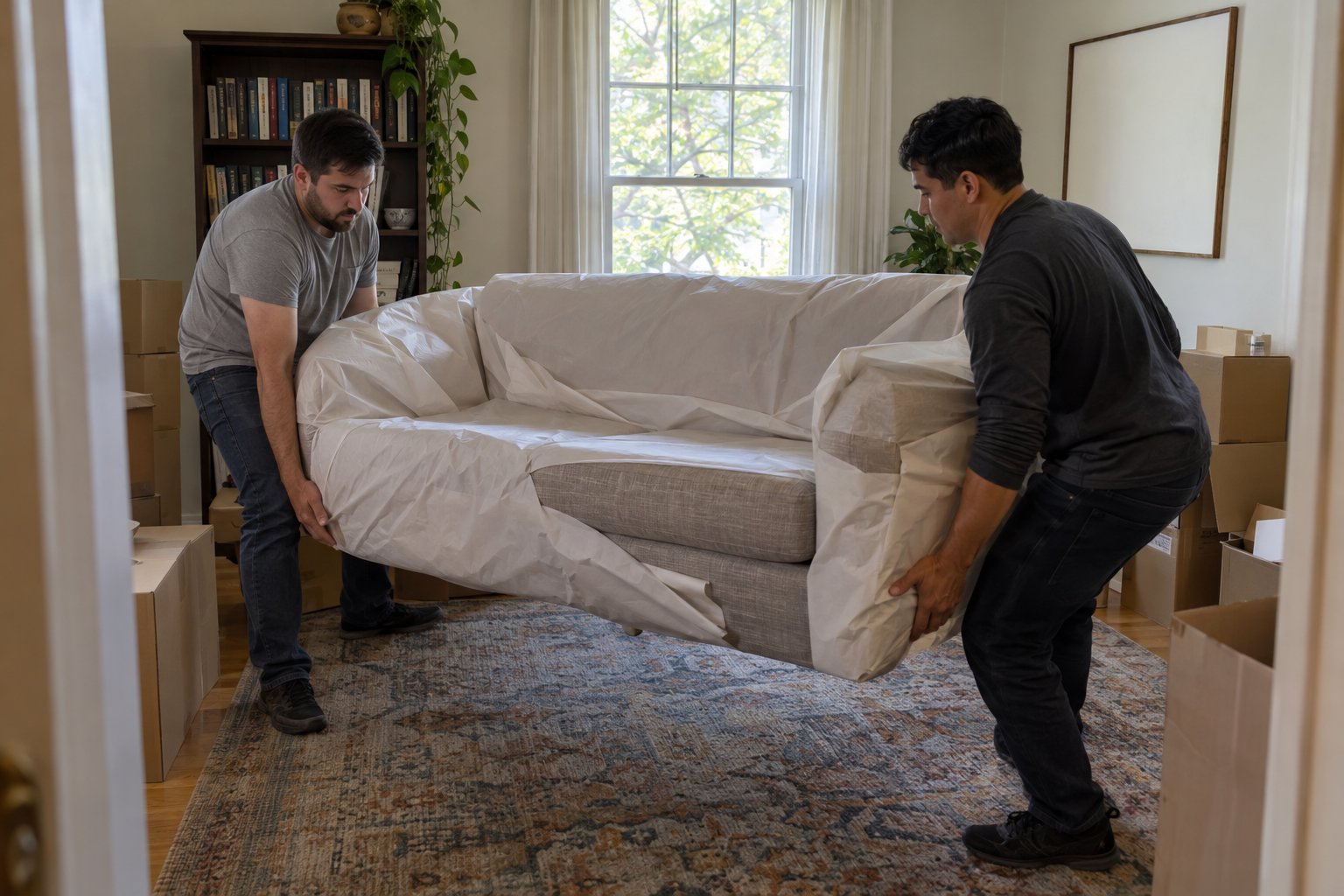
Wicker and rattan furniture requires padding inside and out. Stuff the seats and cavities of chairs with crumpled packing paper or rolled towels to help the piece hold its shape under compression. Wrap the exterior with moving blankets and secure with stretch wrap — but do not wrap so tightly that you compress the weave. For sofas and loveseats, remove cushions separately, bag them in large plastic bags or wrap them in furniture covers, and label them with the piece they belong to. Never stack heavy items on wicker surfaces during the move.
Wrought Iron and Metal Furniture
Wrought iron pieces are heavy and their decorative edges can scratch floors, walls, and other furniture during transport. Wrap metal furniture thoroughly in moving blankets, pay extra attention to any protruding decorative elements, and consider wrapping legs individually with foam tubing. Disassemble anything that comes apart — tabletops, shelf inserts, umbrella poles — and move the components separately. If you need guidance on moving large, heavy items safely, our post on moving heavy furniture without injuries covers the techniques in detail.
How to Pack Sunroom Plants for Moving
Plants are one of the most logistically complex categories in any sunroom move, and they require planning that starts well before packing day. Here is a practical approach by category:
Small and Medium Potted Plants
For plants in pots up to about twelve inches in diameter, the most reliable approach is to place each pot inside a slightly larger box lined with crumpled packing paper. Pack paper around the base of the pot to stabilize it, and place additional crumpled paper around the sides so the plant cannot tip. Leave the top open if the move is short — for longer moves, loosely drape a plastic bag over the foliage to retain humidity without suffocating the plant. Water plants two to three days before the move, not the morning of — wet soil is significantly heavier and more prone to spilling.
Large Floor Planters
Very large planters — ceramic, terracotta, or concrete — present both a fragility and a weight challenge. Terracotta in particular is prone to cracking if it is dropped or if the rim takes a direct impact. Wrap large planters in moving blankets, secure with stretch wrap, and load them last so they do not get buried. If a planter is too large or heavy to transport safely without risking the plant or the pot, consider whether it can be replanted into a lighter container before the move.
Hanging Plants and Mounted Planters
Remove all hanging plants from their hooks well in advance of moving day. Wrap the hook hardware in a small labeled bag and tape it to the bottom of the pot. For hanging basket plants, remove any drip trays, wrap the basket in plastic to contain soil, and transport upright in a box with stabilizing paper on all sides. Mounted wall planters should be uninstalled carefully — photograph the wall placement first if you want to recreate it — and transported separately from the plants they held.
How to Pack Sunroom Lighting, Decor, and Accessories
Pendant Lights and Ceiling Fans
Any ceiling-mounted lighting or fans that are being removed and relocated should be disassembled carefully. Remove glass shades and wrap each one individually in packing paper and bubble wrap, then pack them upright in a box clearly labeled "Fragile — Glass Shades." Keep all mounting hardware, screws, and canopy covers in a labeled zip-lock bag taped to the fixture box. Ceiling fan blades should be wrapped individually and packed flat in a box — do not try to transport fan assemblies intact, as blade warping under pressure is common.
Decorative Objects, Ceramics, and Artwork
Sunrooms often accumulate decorative ceramics, garden sculptures, framed botanical prints, and nature-themed artwork. Each of these deserves individual wrapping — packing paper first, then bubble wrap for anything with raised detail or thin sections. Pack ceramics upright or on their sides in small boxes, never upside down, and fill every void in the box with crumpled paper so nothing can shift in transit. For framed artwork, use corner protectors, wrap in moving blankets, and transport vertically rather than flat. For a comprehensive approach to protecting your most breakable items, review our guide on how to pack fragile items for moving.
Cushions, Rugs, and Soft Goods
Sunroom cushions are often weather-treated and bulkier than standard indoor cushions. Store them in large plastic bags or vacuum compression bags to reduce volume. Roll outdoor rugs rather than folding them — folding creates permanent creases in outdoor rug materials that are difficult to remove. Secure rolled rugs with zip ties or rope and label each one. If cushion covers are removable, take them off, wash them before the move if needed, and pack the covers and inserts separately to save space.
Loading and Unloading Your Sunroom Items Safely
The order in which sunroom items go onto the truck matters. Large, padded furniture pieces — the wicker sofa, the rattan chairs, any metal furniture — should go in first against the truck walls where they can be secured with straps. Glass items go last in, first out, standing vertically against a padded wall, never flat on the floor under other items. Plants should be the absolute last items loaded and the first unloaded, transported in a temperature-controlled vehicle when possible and never left in a closed truck in hot weather, even briefly.
Label every box clearly with both the room destination and a brief content description. A system like "Sunroom — Ceramic Decor — Fragile" takes seconds to write and saves significant unpacking time at the new home. For a labeling system that makes unpacking genuinely easy, see our guide on how to label moving boxes effectively.
If the scale of your sunroom move feels like more than you want to manage alone — particularly if you have large glass pieces, a significant plant collection, or delicate wicker furniture that cannot afford to be damaged — our team at Men on Mission handles exactly these kinds of high-care moves every day. Call 719-357-9048 or get a free quote online to discuss your specific needs before your move date.
Frequently Asked Questions
Can I move large potted plants in my sunroom during a long-distance move?
Moving large potted plants across long distances is challenging and sometimes not practical. Plants cannot survive extended periods in a sealed, temperature-uncontrolled truck. For local moves, transport plants in a climate-controlled vehicle with ventilation and plan to unload them first. For long-distance moves, consider whether large specimen plants could be rehomed or replanted into lighter, more transportable containers. Always water plants two to three days before the move — not the morning of — to reduce soil weight and prevent spills.
How do I protect a glass tabletop when moving a sunroom?
Remove glass tabletops from their bases before moving. Wrap each piece in at least two layers of packing paper, followed by a moving blanket or bubble wrap, and apply foam corner protectors to all four corners. Transport glass vertically — standing on edge against a padded truck wall — rather than flat on the floor, where pressure from other items can cause cracking. Label every glass piece clearly so no one stacks anything on top of it during loading or unloading.
What is the best way to pack wicker and rattan furniture for a move?
Stuff the interior cavities of wicker chairs and sofas with crumpled packing paper or rolled towels to help each piece hold its shape under any compression during transport. Wrap the exterior with moving blankets secured with stretch wrap — but not so tightly that the weave is compressed. Remove cushions and pack them separately in plastic bags or furniture covers labeled with the piece they belong to. Never stack heavy items on wicker surfaces in the truck.
Should I disassemble sunroom ceiling fans and pendant lights before moving?
Yes. Ceiling fans and pendant lights should be disassembled before the move. Remove glass shades and wrap each one individually in packing paper and bubble wrap, packing them upright in a clearly labeled box. Store all mounting hardware, screws, and canopy pieces in a labeled zip-lock bag taped to the fixture box. Fan blades should be removed, wrapped individually, and packed flat. Attempting to move assembled ceiling fixtures intact risks blade warping and shade breakage.
How do I prepare outdoor rugs and cushions from a sunroom for moving?
Roll outdoor rugs rather than folding them — folding creates permanent creases in the materials used for most outdoor rugs. Secure rolled rugs with zip ties or rope. For cushions, store them in large plastic bags or vacuum compression bags to reduce bulk. If cushion covers are removable, take them off and pack covers and inserts separately. Wash cushion covers before the move if needed so they arrive at your new home fresh and ready to use.
Knowing how to pack a sunroom for moving is one of those tasks that looks straightforward right up until you are standing in the middle of a room that is mostly glass, wicker, and living plants and wondering exactly how any of it is supposed to survive a truck ride. Sunrooms are designed to feel open, light, and effortless — and that airy quality is precisely what makes them so difficult to pack. Nearly everything in the room is fragile, awkward, or both. Glass-topped tables, rattan furniture with no flat surfaces, large potted plants that took years to reach their current size, hanging pendant lights with exposed bulbs, and walls or ceilings made of insulated glass panels all demand individual attention. It does not have to go that way.
If you would rather have experienced professionals handle the heavy lifting while you focus on keeping your household running, call our team at 719-357-9048 to lock in your move date.
Whether your sunroom is a fully enclosed four-season addition with a tile floor, built-in shelving, and a ceiling fan, a three-season screened porch furnished with a mix of indoor and outdoor pieces, or a converted conservatory filled with tropical plants and wrought-iron furniture — the strategy below will walk you through every category, from your most fragile glass surfaces and rattan pieces to your heaviest planters and most awkward floor lamps, so everything arrives safely and your new sunroom comes together exactly the way you envision it.
Why Packing a Sunroom Goes Wrong More Often Than It Should
A sunroom is one of the most consistently underestimated packing challenges in any household move. The room looks relaxed — that is its entire personality — and that casual atmosphere fools people into treating it like a secondary space that can be packed quickly at the end. The result is predictable: glass tabletops get scratched or cracked because they were not wrapped properly, wicker and rattan pieces get crushed or deformed because they were stacked without support, and beloved houseplants either arrive wilted or do not make the move at all because no one planned for them.
Three specific patterns cause the majority of sunroom packing failures:
- Treating glass furniture like regular furniture — Glass tabletops, mirrored shelving units, and glass-paned cabinet doors are not the same as solid wood or upholstered pieces. They require individual wrapping with moving blankets or multiple layers of packing paper, corner protectors, and vertical transport whenever possible. Stacking them flat under other items, or sliding them into a box without padding every edge, almost always results in damage.
- Leaving plants until moving day — Plants cannot be last-minute items. They need to be assessed weeks in advance: which ones are moving, which ones are being rehomed, which ones are too large to transport safely. The ones that are moving need their own preparation — watering schedules adjusted, pots stabilized, and transport conditions planned. A plant that has been in a 90-degree truck for four hours rarely recovers.
- Underestimating how awkward wicker and rattan are to move — Wicker chairs, rattan sofas, and woven side tables have no flat surfaces, no uniform shape, and no obvious stacking point. Without the right wrapping and padding strategy, they get compressed, splintered, or deformed during loading. Because they are bulky but lightweight, movers sometimes treat them carelessly — and the damage shows up immediately.
Start With a Sunroom Audit Before You Touch a Single Item
The most effective sunroom move begins not with boxes but with a clear inventory. Walk through the room before you pack anything and sort every item into one of three categories: moving to the new home, donating or selling, or discarding. Sunrooms are notorious for accumulating decorative objects, seasonal cushions, and gardening tools that have outlived their usefulness. This is the moment to be honest about what you actually want in your new space.
Once you have established what is making the trip, photograph the room thoroughly — every corner, every shelf arrangement, every plant grouping. This takes five minutes and will save you significant time when you are trying to reconstruct the space at your new home. Pay particular attention to any built-in lighting fixtures, ceiling fans, or mounted shelving that will need to be disassembled, since these tend to involve hardware that is easy to lose.
For any items you are letting go of, consider using a practical decluttering framework to work through the decision efficiently rather than making ad-hoc calls under pressure on moving day.
How to Pack Sunroom Furniture: Glass, Wicker, Rattan, and Metal
Glass-Topped Tables and Glass Shelving
Glass tabletops should always be removed from their bases before moving. Once removed, wrap each glass surface in at least two layers of packing paper, followed by a moving blanket or bubble wrap secured with tape. Apply foam corner protectors to every corner — corners are where glass fractures under pressure. Transport glass vertically whenever possible; a pane of glass laid flat under load is far more vulnerable than one standing on edge against a padded truck wall. Label every wrapped glass piece clearly so no one accidentally stacks something on top of it during loading.
Wicker, Rattan, and Woven Furniture
Wicker and rattan furniture requires padding inside and out. Stuff the seats and cavities of chairs with crumpled packing paper or rolled towels to help the piece hold its shape under compression. Wrap the exterior with moving blankets and secure with stretch wrap — but do not wrap so tightly that you compress the weave. For sofas and loveseats, remove cushions separately, bag them in large plastic bags or wrap them in furniture covers, and label them with the piece they belong to. Never stack heavy items on wicker surfaces during the move.
Wrought Iron and Metal Furniture
Wrought iron pieces are heavy and their decorative edges can scratch floors, walls, and other furniture during transport. Wrap metal furniture thoroughly in moving blankets, pay extra attention to any protruding decorative elements, and consider wrapping legs individually with foam tubing. Disassemble anything that comes apart — tabletops, shelf inserts, umbrella poles — and move the components separately. If you need guidance on moving large, heavy items safely, our post on moving heavy furniture without injuries covers the techniques in detail.
How to Pack Sunroom Plants for Moving
Plants are one of the most logistically complex categories in any sunroom move, and they require planning that starts well before packing day. Here is a practical approach by category:
Small and Medium Potted Plants
For plants in pots up to about twelve inches in diameter, the most reliable approach is to place each pot inside a slightly larger box lined with crumpled packing paper. Pack paper around the base of the pot to stabilize it, and place additional crumpled paper around the sides so the plant cannot tip. Leave the top open if the move is short — for longer moves, loosely drape a plastic bag over the foliage to retain humidity without suffocating the plant. Water plants two to three days before the move, not the morning of — wet soil is significantly heavier and more prone to spilling.
Large Floor Planters
Very large planters — ceramic, terracotta, or concrete — present both a fragility and a weight challenge. Terracotta in particular is prone to cracking if it is dropped or if the rim takes a direct impact. Wrap large planters in moving blankets, secure with stretch wrap, and load them last so they do not get buried. If a planter is too large or heavy to transport safely without risking the plant or the pot, consider whether it can be replanted into a lighter container before the move.
Hanging Plants and Mounted Planters
Remove all hanging plants from their hooks well in advance of moving day. Wrap the hook hardware in a small labeled bag and tape it to the bottom of the pot. For hanging basket plants, remove any drip trays, wrap the basket in plastic to contain soil, and transport upright in a box with stabilizing paper on all sides. Mounted wall planters should be uninstalled carefully — photograph the wall placement first if you want to recreate it — and transported separately from the plants they held.
How to Pack Sunroom Lighting, Decor, and Accessories
Pendant Lights and Ceiling Fans
Any ceiling-mounted lighting or fans that are being removed and relocated should be disassembled carefully. Remove glass shades and wrap each one individually in packing paper and bubble wrap, then pack them upright in a box clearly labeled "Fragile — Glass Shades." Keep all mounting hardware, screws, and canopy covers in a labeled zip-lock bag taped to the fixture box. Ceiling fan blades should be wrapped individually and packed flat in a box — do not try to transport fan assemblies intact, as blade warping under pressure is common.
Decorative Objects, Ceramics, and Artwork
Sunrooms often accumulate decorative ceramics, garden sculptures, framed botanical prints, and nature-themed artwork. Each of these deserves individual wrapping — packing paper first, then bubble wrap for anything with raised detail or thin sections. Pack ceramics upright or on their sides in small boxes, never upside down, and fill every void in the box with crumpled paper so nothing can shift in transit. For framed artwork, use corner protectors, wrap in moving blankets, and transport vertically rather than flat. For a comprehensive approach to protecting your most breakable items, review our guide on how to pack fragile items for moving.
Cushions, Rugs, and Soft Goods
Sunroom cushions are often weather-treated and bulkier than standard indoor cushions. Store them in large plastic bags or vacuum compression bags to reduce volume. Roll outdoor rugs rather than folding them — folding creates permanent creases in outdoor rug materials that are difficult to remove. Secure rolled rugs with zip ties or rope and label each one. If cushion covers are removable, take them off, wash them before the move if needed, and pack the covers and inserts separately to save space.
Loading and Unloading Your Sunroom Items Safely
The order in which sunroom items go onto the truck matters. Large, padded furniture pieces — the wicker sofa, the rattan chairs, any metal furniture — should go in first against the truck walls where they can be secured with straps. Glass items go last in, first out, standing vertically against a padded wall, never flat on the floor under other items. Plants should be the absolute last items loaded and the first unloaded, transported in a temperature-controlled vehicle when possible and never left in a closed truck in hot weather, even briefly.
Label every box clearly with both the room destination and a brief content description. A system like "Sunroom — Ceramic Decor — Fragile" takes seconds to write and saves significant unpacking time at the new home. For a labeling system that makes unpacking genuinely easy, see our guide on how to label moving boxes effectively.
If the scale of your sunroom move feels like more than you want to manage alone — particularly if you have large glass pieces, a significant plant collection, or delicate wicker furniture that cannot afford to be damaged — our team at Men on Mission handles exactly these kinds of high-care moves every day. Call 719-357-9048 or get a free quote online to discuss your specific needs before your move date.
Have Questions About Your Move?
Can I move large potted plants in my sunroom during a long-distance move?
Moving large potted plants across long distances is challenging and sometimes not practical. Plants cannot survive extended periods in a sealed, temperature-uncontrolled truck. For local moves, transport plants in a climate-controlled vehicle with ventilation and plan to unload them first. For long-distance moves, consider whether large specimen plants could be rehomed or replanted into lighter, more transportable containers. Always water plants two to three days before the move — not the morning of — to reduce soil weight and prevent spills.
How do I protect a glass tabletop when moving a sunroom?
Remove glass tabletops from their bases before moving. Wrap each piece in at least two layers of packing paper, followed by a moving blanket or bubble wrap, and apply foam corner protectors to all four corners. Transport glass vertically — standing on edge against a padded truck wall — rather than flat on the floor, where pressure from other items can cause cracking. Label every glass piece clearly so no one stacks anything on top of it during loading or unloading.
What is the best way to pack wicker and rattan furniture for a move?
Stuff the interior cavities of wicker chairs and sofas with crumpled packing paper or rolled towels to help each piece hold its shape under any compression during transport. Wrap the exterior with moving blankets secured with stretch wrap — but not so tightly that the weave is compressed. Remove cushions and pack them separately in plastic bags or furniture covers labeled with the piece they belong to. Never stack heavy items on wicker surfaces in the truck.
Should I disassemble sunroom ceiling fans and pendant lights before moving?
Yes. Ceiling fans and pendant lights should be disassembled before the move. Remove glass shades and wrap each one individually in packing paper and bubble wrap, packing them upright in a clearly labeled box. Store all mounting hardware, screws, and canopy pieces in a labeled zip-lock bag taped to the fixture box. Fan blades should be removed, wrapped individually, and packed flat. Attempting to move assembled ceiling fixtures intact risks blade warping and shade breakage.
How do I prepare outdoor rugs and cushions from a sunroom for moving?
Roll outdoor rugs rather than folding them — folding creates permanent creases in the materials used for most outdoor rugs. Secure rolled rugs with zip ties or rope. For cushions, store them in large plastic bags or vacuum compression bags to reduce bulk. If cushion covers are removable, take them off and pack covers and inserts separately. Wash cushion covers before the move if needed so they arrive at your new home fresh and ready to use.