How to Prepare Your Home for Moving Day: A Room-by-Room Guide
Preparing your home room by room before the truck arrives protects floors, walls, and belongings — and keeps your move on schedule.
Knowing how to prepare your home for moving day is one of the most overlooked steps in any relocation. Most households spend weeks deciding what to pack and how to label boxes, then arrive at the day itself to discover the house was never actually ready to be moved out of. Doorways get scuffed, floors get scratched, and the movers lose time navigating clutter that could have been cleared the night before. A little targeted preparation — room by room — changes all of that.
If you would rather have experienced professionals handle the heavy lifting while you focus on getting your home ready, call our team at 719-357-9048 to lock in your move date.
Whether you are moving across Colorado Springs or relocating to another state entirely, the room-by-room framework below is designed to work for any household size. Work through it the evening before your move date and you will hand the keys over to your movers — or to the next residents — without a single last-minute scramble.
Why Preparing Your Home Matters as Much as Packing
Packing gets all the attention before a move, and for good reason — it is genuinely time-consuming. But packing is only half of the equation. The other half is making sure the home itself is set up to support a fast, damage-free move-out. When that preparation is missing, three predictable problems emerge.
- Damage to your property — movers carrying furniture through an unprotected hallway will inevitably scrape painted walls. A hardwood floor with no protective covering will collect scratches from dragged boxes.
- Lost time — every minute your moving crew spends navigating cluttered hallways, shifting boxes out of the way, or waiting for you to finish clearing a room is time you are paying for.
- Security deposit risk — if you are renting, damage caused during move-out can cost you money that proper preparation would have protected.
The good news is that preparing your home for moving day does not take long. It is a set of deliberate, once-over tasks that, done in sequence the evening before, leave your home in the best possible shape for a smooth, efficient move-out.
Entry, Hallways, and Stairways
Your entry points and hallways are the highest-traffic areas on moving day. Every single item leaving your home will pass through them. That makes protecting and clearing these spaces the single most valuable thing you can do before the crew arrives.
Clear a path from every major room to the exit
Walk the route from your primary packing areas to the front door or loading exit. Remove anything that narrows the path: floor lamps, side tables, decorative items, rugs that curl at the edges, and any boxes that have accumulated in the corridor. Your movers need a clear, unobstructed lane to carry furniture and heavy items safely and quickly.
Protect floors and walls
Lay moving blankets, cardboard sheets, or purpose-made floor runners along the main travel path. Pay particular attention to hardwood floors, tile thresholds, and carpeted stairs — these are the surfaces most likely to show damage. Use corner guards or folded cardboard to protect door frames and wall corners at tight turns. These small steps take about fifteen minutes and save significant repair costs.
Prop open doors
Use a doorstop or wedge to keep exterior doors and interior corridor doors fully open. A door swinging shut mid-carry is a leading cause of damage to both the door itself and whatever is being carried through it.
Living Room and Dining Room
Large furniture rooms require the most pre-move coordination. By the evening before moving day, the living and dining areas should already be largely packed — but a few specific preparation steps still apply.
Disassemble what you can
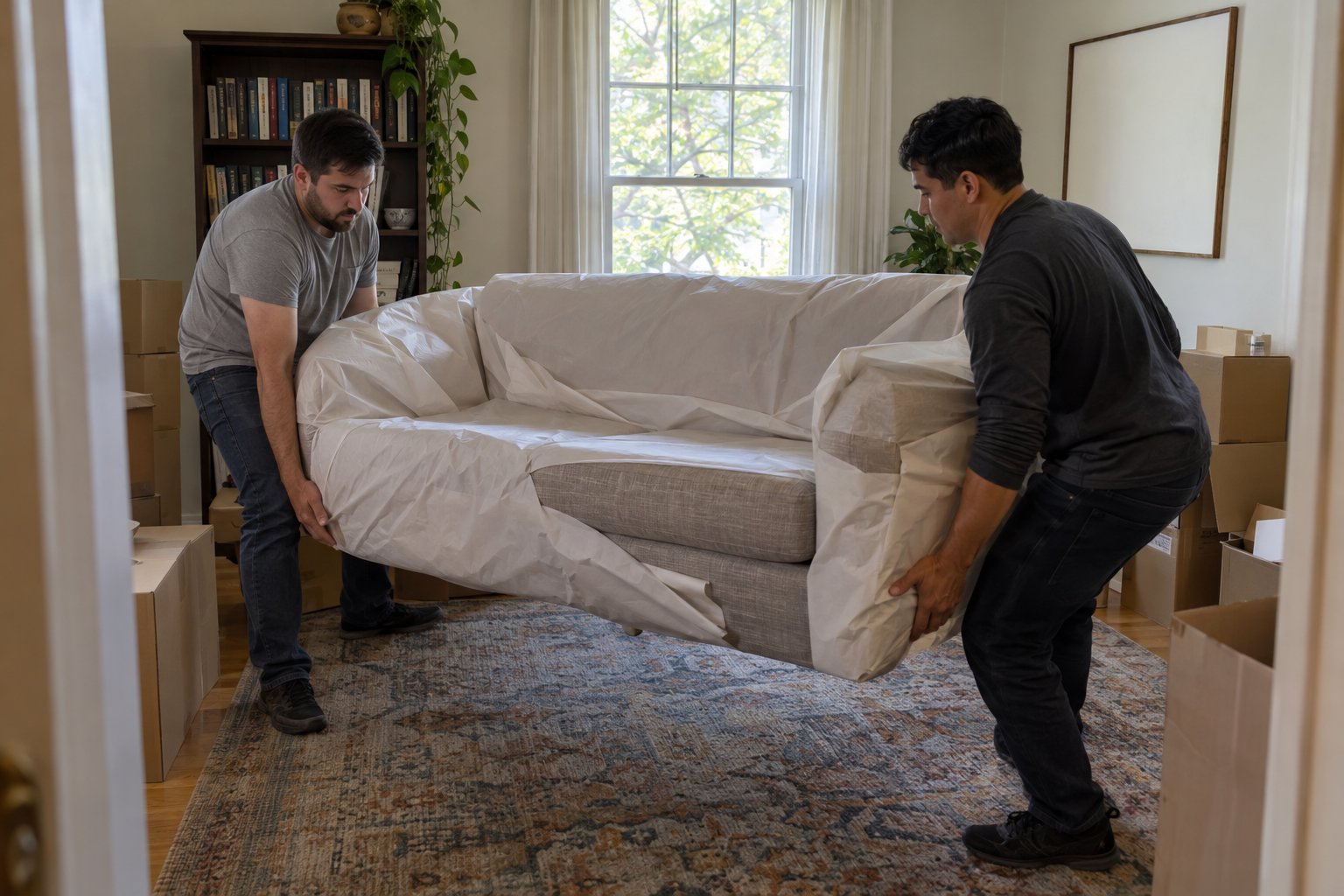
Dining tables, sectional sofas, entertainment centers, and bed frames are almost always easier to move disassembled. Remove table legs where possible, detach shelving units from their bases, and pull apart sectional pieces. Keep hardware (screws, bolts, cam locks) in labeled zip-lock bags taped to the relevant piece of furniture. Your movers can disassemble most furniture, but if it is done before they arrive, you save time and reduce the risk of scratches during the disassembly process.
Group packed boxes by destination room
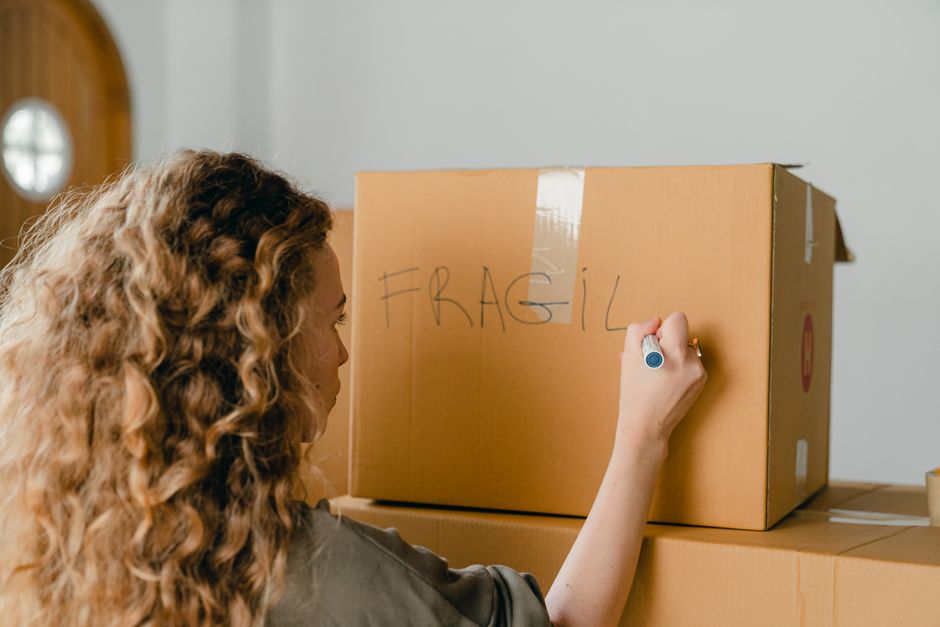
Stack your packed and labeled boxes against one wall, organized by which room they are going to in the new home. This lets the crew load the truck in a deliberate order rather than pulling from a random mix — which means a faster unload at the other end.
Remove wall art and hardware
Take down any remaining wall art, mirrors, and clocks. Remove nails and anchors from walls where you are responsible for patching, and do that patching the evening before if possible — spackling compound needs a few hours to dry before painting. Leaving holes in rental walls is one of the most common sources of security deposit deductions.
Kitchen
Kitchens are logistically complex because they combine heavy appliances, fragile items, and perishable food — all of which need different handling before the truck pulls up.
Defrost the refrigerator and freezer
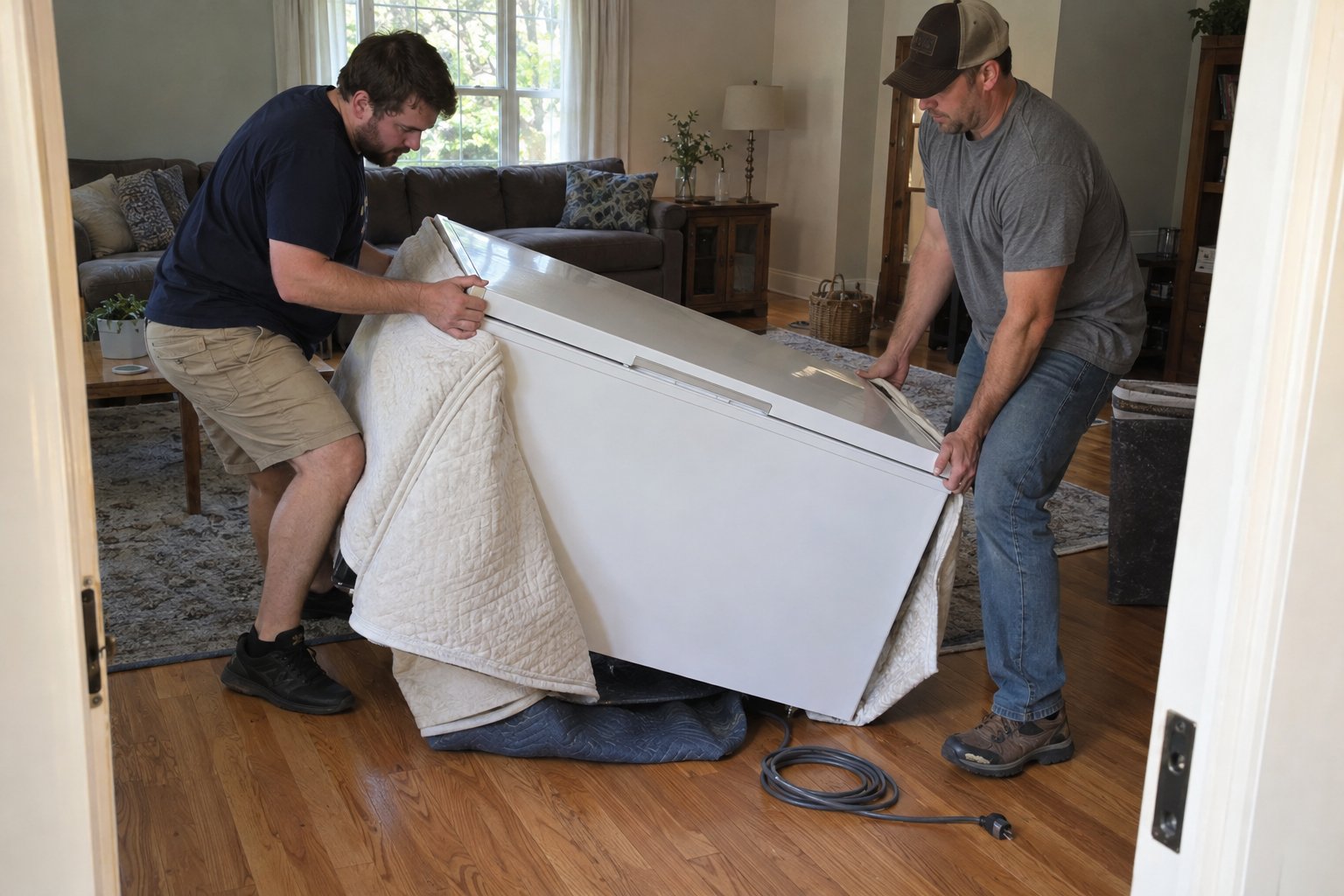
If your refrigerator is moving with you, it needs to be defrosted, emptied, and thoroughly dried at least 24 hours before the move. A wet refrigerator is a mold risk in the truck and a heavy lifting hazard. Unplug it the night before, prop the doors open, and lay towels around the base to absorb drainage. Wipe down the interior with a clean cloth once defrosting is complete.
Disconnect and prepare appliances
Pull the refrigerator away from the wall and disconnect the water line if your model has an ice maker. Tape the refrigerator doors closed with painter's tape so they do not swing open during the carry-out. If your washing machine is moving, disconnect the water supply hoses and let them drain. For dishwashers, run one final cycle, disconnect the water line, and leave the door ajar overnight to dry out the interior.
Pack and dispose of perishables
Use up, donate, or discard perishable food in the days leading up to the move. On the morning of the move, pack a small cooler with anything you intend to keep for the drive. What you do not want is a half-full refrigerator that needs to be emptied at the last minute while the crew is waiting.
Bedrooms and Bathrooms
Bedrooms and bathrooms tend to be the last rooms packed, which means they are also the rooms most likely to be chaotic on moving morning. Getting them organized the night before makes a significant difference.
Set aside a moving day bag for each person
Every member of your household should have a bag packed with everything they need for the next 48 to 72 hours: a change of clothes, toiletries, phone chargers, medications, important documents, and any valuables you want to keep with you rather than on the truck. Place these bags in a car or in a clearly marked spot that the movers know not to load. Nothing is more frustrating than arriving at a new home and realizing your toothbrush is in box number forty-seven.
Disassemble bed frames
Bed frames should be disassembled and leaned against the wall before the crew arrives. Strip all bedding, pack it, and clear mattresses for easy carry-out. If you have mattress bags (large plastic sleeves available at most moving supply stores), use them — mattresses attract scuffs and dirt during a move.
Clear bathroom surfaces and cabinets
Make sure all medicine cabinets and bathroom shelves are completely cleared and packed. Bathrooms are easy to overlook during the final walkthrough because they are small — but a forgotten bottle of shampoo or a shower caddy left on a hook is the kind of thing you find on a return trip to the old address, not in your new bathroom cabinet.
Garage, Basement, and Outdoor Spaces
Garages, basements, and outdoor areas are frequently the most disorganized zones in any household — and the most time-consuming to move if they have not been properly sorted before moving day.
Dispose of prohibited items before moving day
Professional movers typically cannot transport hazardous materials: propane tanks, paint cans, automotive fluids, pesticides, and similar items. Check with your moving company about their specific restrictions and make arrangements to properly dispose of prohibited items before the truck arrives. Trying to sort this out on moving morning wastes time for everyone.
Drain and prepare outdoor equipment
Lawn mowers, generators, and other gas-powered equipment should have their fuel tanks emptied before loading. An item with fuel in the tank is a fire risk inside an enclosed moving truck. Drain tanks and run the engine until it stalls, or siphon remaining fuel into a proper container for disposal.
Group and label outdoor items clearly
Outdoor furniture, garden tools, hoses, and planters should be grouped together and, where possible, boxed or bundled. Loose items rolling around a moving truck are a recipe for damage — both to themselves and to everything around them.
Final Walkthrough: The Last Thing You Do Before the Truck Leaves
Once every room has been cleared and every box has been loaded, do a complete final walkthrough before the truck pulls away. Open every cabinet, every closet, every drawer, and every shelf. Check under beds and behind doors. Look at bathroom hooks, kitchen pantries, attic hatches, and outdoor storage sheds. It is remarkably easy to leave something behind when you have been focused on the big furniture moves all day.
Take photos of every room once it is empty. If you are a renter, these photos are your documentation that the property was left in good condition. If you own the home, they are a useful record for any disputes with buyers over the condition of the property at handover.
Once the walkthrough is complete and you are satisfied nothing has been left, do a final check that all windows are locked, all lights are off, and the thermostat is set appropriately for a vacant property. Hand over the keys, and you are done.
Moving day does not have to be the most stressful day of a relocation. When your home is prepared — floors protected, paths cleared, appliances disconnected, and every room sorted the night before — the actual move becomes a smooth, focused operation rather than a frantic improvisation. That preparation is what separates a move that runs on schedule from one that runs two hours over.
If you would like a professional moving crew that treats your home with the same care you would, get a free quote from Men on Mission and lock in your move date today.
Frequently Asked Questions
How far in advance should I start preparing my home for moving day?
Most of the physical preparation — protecting floors, disassembling furniture, clearing pathways — should happen the evening before moving day. However, tasks like defrosting the refrigerator, draining gas-powered equipment, and disposing of hazardous materials should be done at least 24 to 48 hours in advance to allow enough time for drying, draining, and proper disposal.
Do I need to be home when the movers arrive to prepare the space?
It helps to be present, especially at the start of the move, so you can direct the crew, answer questions about item handling, and confirm which boxes go in which rooms. That said, if your home has been properly prepared the night before — paths cleared, doors propped, floors protected, and boxes organized by destination — the crew can work efficiently even with minimal direction from you.
What floor protection should I use on moving day?
For hardwood and tile floors, moving blankets, cardboard runners, or purpose-made floor protection film all work well. For carpeted areas, plastic carpet film keeps dirt and moisture from foot traffic from grinding into the fibers. For doorframes and wall corners at tight turns, folded cardboard or foam corner guards prevent scuffs and dents from furniture edges.
What items should I keep off the moving truck entirely?
Keep irreplaceable documents (passports, birth certificates, financial records), jewelry, medications, valuables, and electronics you need immediately in a bag that travels with you rather than on the truck. Also keep moving-day essentials — phone chargers, a change of clothes, toiletries, and snacks — accessible so you are not hunting through boxes on your first night in the new home.
Can professional movers help with home preparation, or do I have to do it myself?
Many professional moving companies, including Men on Mission, offer services beyond just loading and unloading — such as furniture disassembly and reassembly. However, tasks like defrosting the refrigerator, draining equipment, disposing of hazardous materials, and packing a personal essentials bag are best handled by the homeowner in advance. The more preparation you complete before the crew arrives, the faster and smoother the move will go.
Knowing how to prepare your home for moving day is one of the most overlooked steps in any relocation. Most households spend weeks deciding what to pack and how to label boxes, then arrive at the day itself to discover the house was never actually ready to be moved out of. Doorways get scuffed, floors get scratched, and the movers lose time navigating clutter that could have been cleared the night before. A little targeted preparation — room by room — changes all of that.
If you would rather have experienced professionals handle the heavy lifting while you focus on getting your home ready, call our team at 719-357-9048 to lock in your move date.
Whether you are moving across Colorado Springs or relocating to another state entirely, the room-by-room framework below is designed to work for any household size. Work through it the evening before your move date and you will hand the keys over to your movers — or to the next residents — without a single last-minute scramble.
Why Preparing Your Home Matters as Much as Packing
Packing gets all the attention before a move, and for good reason — it is genuinely time-consuming. But packing is only half of the equation. The other half is making sure the home itself is set up to support a fast, damage-free move-out. When that preparation is missing, three predictable problems emerge.
- Damage to your property — movers carrying furniture through an unprotected hallway will inevitably scrape painted walls. A hardwood floor with no protective covering will collect scratches from dragged boxes.
- Lost time — every minute your moving crew spends navigating cluttered hallways, shifting boxes out of the way, or waiting for you to finish clearing a room is time you are paying for.
- Security deposit risk — if you are renting, damage caused during move-out can cost you money that proper preparation would have protected.
The good news is that preparing your home for moving day does not take long. It is a set of deliberate, once-over tasks that, done in sequence the evening before, leave your home in the best possible shape for a smooth, efficient move-out.
Entry, Hallways, and Stairways
Your entry points and hallways are the highest-traffic areas on moving day. Every single item leaving your home will pass through them. That makes protecting and clearing these spaces the single most valuable thing you can do before the crew arrives.
Clear a path from every major room to the exit
Walk the route from your primary packing areas to the front door or loading exit. Remove anything that narrows the path: floor lamps, side tables, decorative items, rugs that curl at the edges, and any boxes that have accumulated in the corridor. Your movers need a clear, unobstructed lane to carry furniture and heavy items safely and quickly.
Protect floors and walls
Lay moving blankets, cardboard sheets, or purpose-made floor runners along the main travel path. Pay particular attention to hardwood floors, tile thresholds, and carpeted stairs — these are the surfaces most likely to show damage. Use corner guards or folded cardboard to protect door frames and wall corners at tight turns. These small steps take about fifteen minutes and save significant repair costs.
Prop open doors
Use a doorstop or wedge to keep exterior doors and interior corridor doors fully open. A door swinging shut mid-carry is a leading cause of damage to both the door itself and whatever is being carried through it.
Living Room and Dining Room
Large furniture rooms require the most pre-move coordination. By the evening before moving day, the living and dining areas should already be largely packed — but a few specific preparation steps still apply.
Disassemble what you can
Dining tables, sectional sofas, entertainment centers, and bed frames are almost always easier to move disassembled. Remove table legs where possible, detach shelving units from their bases, and pull apart sectional pieces. Keep hardware (screws, bolts, cam locks) in labeled zip-lock bags taped to the relevant piece of furniture. Your movers can disassemble most furniture, but if it is done before they arrive, you save time and reduce the risk of scratches during the disassembly process.
Group packed boxes by destination room
Stack your packed and labeled boxes against one wall, organized by which room they are going to in the new home. This lets the crew load the truck in a deliberate order rather than pulling from a random mix — which means a faster unload at the other end.
Remove wall art and hardware
Take down any remaining wall art, mirrors, and clocks. Remove nails and anchors from walls where you are responsible for patching, and do that patching the evening before if possible — spackling compound needs a few hours to dry before painting. Leaving holes in rental walls is one of the most common sources of security deposit deductions.
Kitchen
Kitchens are logistically complex because they combine heavy appliances, fragile items, and perishable food — all of which need different handling before the truck pulls up.
Defrost the refrigerator and freezer
If your refrigerator is moving with you, it needs to be defrosted, emptied, and thoroughly dried at least 24 hours before the move. A wet refrigerator is a mold risk in the truck and a heavy lifting hazard. Unplug it the night before, prop the doors open, and lay towels around the base to absorb drainage. Wipe down the interior with a clean cloth once defrosting is complete.
Disconnect and prepare appliances
Pull the refrigerator away from the wall and disconnect the water line if your model has an ice maker. Tape the refrigerator doors closed with painter's tape so they do not swing open during the carry-out. If your washing machine is moving, disconnect the water supply hoses and let them drain. For dishwashers, run one final cycle, disconnect the water line, and leave the door ajar overnight to dry out the interior.
Pack and dispose of perishables
Use up, donate, or discard perishable food in the days leading up to the move. On the morning of the move, pack a small cooler with anything you intend to keep for the drive. What you do not want is a half-full refrigerator that needs to be emptied at the last minute while the crew is waiting.
Bedrooms and Bathrooms
Bedrooms and bathrooms tend to be the last rooms packed, which means they are also the rooms most likely to be chaotic on moving morning. Getting them organized the night before makes a significant difference.
Set aside a moving day bag for each person
Every member of your household should have a bag packed with everything they need for the next 48 to 72 hours: a change of clothes, toiletries, phone chargers, medications, important documents, and any valuables you want to keep with you rather than on the truck. Place these bags in a car or in a clearly marked spot that the movers know not to load. Nothing is more frustrating than arriving at a new home and realizing your toothbrush is in box number forty-seven.
Disassemble bed frames
Bed frames should be disassembled and leaned against the wall before the crew arrives. Strip all bedding, pack it, and clear mattresses for easy carry-out. If you have mattress bags (large plastic sleeves available at most moving supply stores), use them — mattresses attract scuffs and dirt during a move.
Clear bathroom surfaces and cabinets
Make sure all medicine cabinets and bathroom shelves are completely cleared and packed. Bathrooms are easy to overlook during the final walkthrough because they are small — but a forgotten bottle of shampoo or a shower caddy left on a hook is the kind of thing you find on a return trip to the old address, not in your new bathroom cabinet.
Garage, Basement, and Outdoor Spaces
Garages, basements, and outdoor areas are frequently the most disorganized zones in any household — and the most time-consuming to move if they have not been properly sorted before moving day.
Dispose of prohibited items before moving day
Professional movers typically cannot transport hazardous materials: propane tanks, paint cans, automotive fluids, pesticides, and similar items. Check with your moving company about their specific restrictions and make arrangements to properly dispose of prohibited items before the truck arrives. Trying to sort this out on moving morning wastes time for everyone.
Drain and prepare outdoor equipment
Lawn mowers, generators, and other gas-powered equipment should have their fuel tanks emptied before loading. An item with fuel in the tank is a fire risk inside an enclosed moving truck. Drain tanks and run the engine until it stalls, or siphon remaining fuel into a proper container for disposal.
Group and label outdoor items clearly
Outdoor furniture, garden tools, hoses, and planters should be grouped together and, where possible, boxed or bundled. Loose items rolling around a moving truck are a recipe for damage — both to themselves and to everything around them.
Final Walkthrough: The Last Thing You Do Before the Truck Leaves
Once every room has been cleared and every box has been loaded, do a complete final walkthrough before the truck pulls away. Open every cabinet, every closet, every drawer, and every shelf. Check under beds and behind doors. Look at bathroom hooks, kitchen pantries, attic hatches, and outdoor storage sheds. It is remarkably easy to leave something behind when you have been focused on the big furniture moves all day.
Take photos of every room once it is empty. If you are a renter, these photos are your documentation that the property was left in good condition. If you own the home, they are a useful record for any disputes with buyers over the condition of the property at handover.
Once the walkthrough is complete and you are satisfied nothing has been left, do a final check that all windows are locked, all lights are off, and the thermostat is set appropriately for a vacant property. Hand over the keys, and you are done.
Moving day does not have to be the most stressful day of a relocation. When your home is prepared — floors protected, paths cleared, appliances disconnected, and every room sorted the night before — the actual move becomes a smooth, focused operation rather than a frantic improvisation. That preparation is what separates a move that runs on schedule from one that runs two hours over.
If you would like a professional moving crew that treats your home with the same care you would, get a free quote from Men on Mission and lock in your move date today.
Have Questions About Your Move?
How far in advance should I start preparing my home for moving day?
Most of the physical preparation — protecting floors, disassembling furniture, clearing pathways — should happen the evening before moving day. However, tasks like defrosting the refrigerator, draining gas-powered equipment, and disposing of hazardous materials should be done at least 24 to 48 hours in advance to allow enough time for drying, draining, and proper disposal.
Do I need to be home when the movers arrive to prepare the space?
It helps to be present, especially at the start of the move, so you can direct the crew, answer questions about item handling, and confirm which boxes go in which rooms. That said, if your home has been properly prepared the night before — paths cleared, doors propped, floors protected, and boxes organized by destination — the crew can work efficiently even with minimal direction from you.
What floor protection should I use on moving day?
For hardwood and tile floors, moving blankets, cardboard runners, or purpose-made floor protection film all work well. For carpeted areas, plastic carpet film keeps dirt and moisture from foot traffic from grinding into the fibers. For doorframes and wall corners at tight turns, folded cardboard or foam corner guards prevent scuffs and dents from furniture edges.
What items should I keep off the moving truck entirely?
Keep irreplaceable documents (passports, birth certificates, financial records), jewelry, medications, valuables, and electronics you need immediately in a bag that travels with you rather than on the truck. Also keep moving-day essentials — phone chargers, a change of clothes, toiletries, and snacks — accessible so you are not hunting through boxes on your first night in the new home.
Can professional movers help with home preparation, or do I have to do it myself?
Many professional moving companies, including Men on Mission, offer services beyond just loading and unloading — such as furniture disassembly and reassembly. However, tasks like defrosting the refrigerator, draining equipment, disposing of hazardous materials, and packing a personal essentials bag are best handled by the homeowner in advance. The more preparation you complete before the crew arrives, the faster and smoother the move will go.