How to Move Heavy Furniture Down Stairs Without Wrecking Your Back or Your Walls
Moving furniture down stairs safely takes route planning and the right gear, not just brute strength.
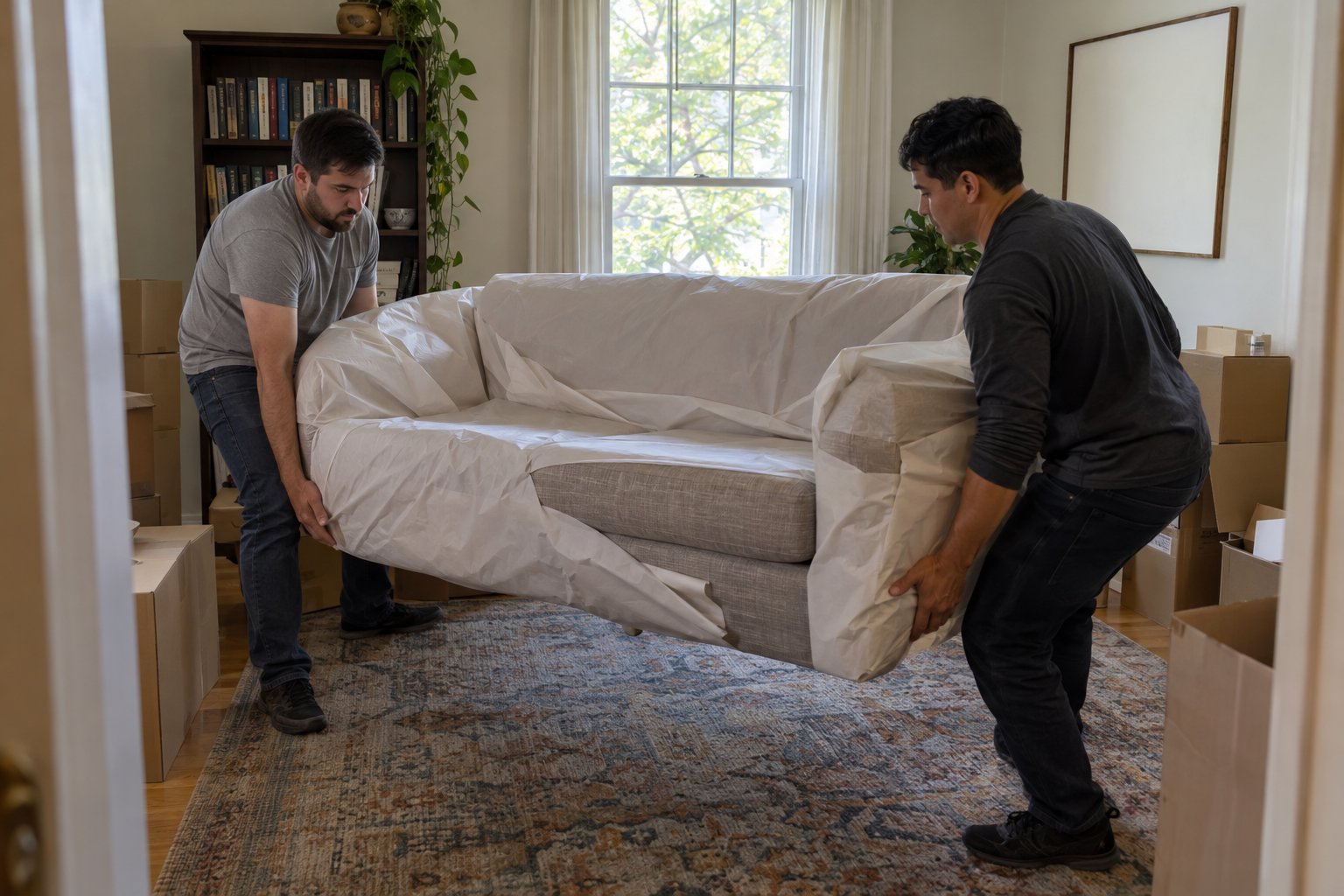
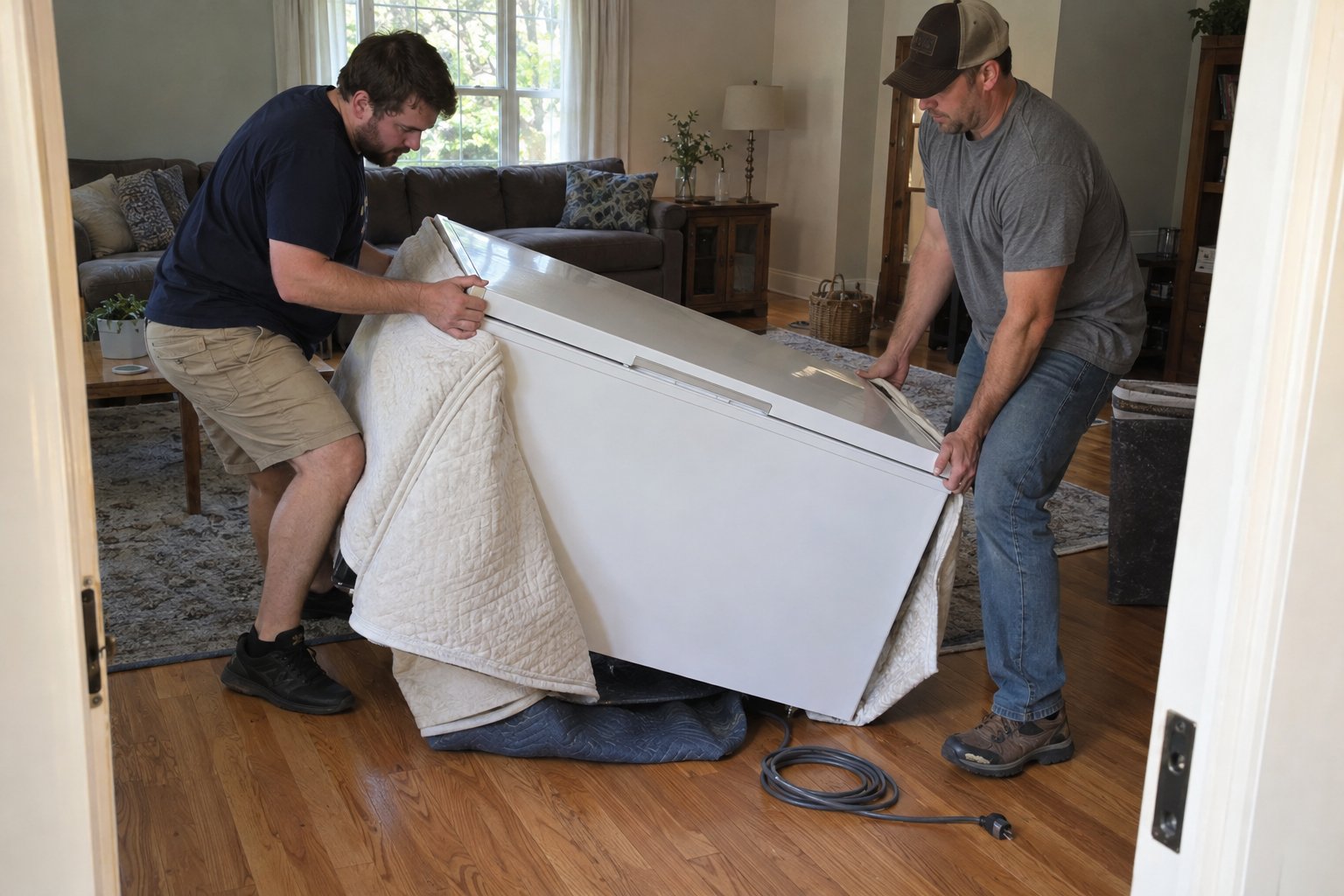
Moving heavy furniture down stairs is one of the most dangerous parts of any move, and it is where most injuries and property damage actually happen. The combination of a steep grade, blind corners, and a piece of furniture that outweighs the people carrying it turns an ordinary staircase into a real hazard. The fix is not brute strength. It is planning the path, using the right equipment, and controlling the descent instead of fighting gravity the whole way down.
This guide walks through the specific techniques for getting sofas, dressers, and other bulky items down a staircase without hurting yourself, denting a wall, or dropping the piece halfway down. If you are already deep into packing the rest of the house, it pairs well with a broader room-by-room plan like how to prepare your home for moving day, but stairs deserve their own focused approach because the risks are different from anything else in a move.
Why Stairs Are the Riskiest Part of Moving Furniture
Stairs are dangerous because they remove your ability to set an item down safely at any point in the process. On flat ground, if your grip slips or your back gives out, you can lower the piece and reset. On a staircase, gravity is already pulling the load downward, and a lost grip means the furniture (and possibly a person) is now falling instead of resting.
Add in narrow treads, low ceilings at landings, tight turns, and banisters that were never designed to bear weight, and you have a setup where a manageable object becomes genuinely hazardous. Most stairwell accidents happen not because the furniture was too heavy to move, but because nobody planned the turn at the landing or communicated clearly about pace.
What Equipment Actually Makes a Difference on Stairs
A stair-rated hand truck, forearm straps, and furniture sliders solve most of the physical problems that make stairs dangerous. Straps redistribute weight to your legs and core instead of your arms and lower back, while a stair-climbing dolly lets one person control momentum instead of two people fighting to hold a piece steady.
Moving Straps and Harnesses
Shoulder or forearm-style lifting straps loop under the item and across each mover's body, transferring weight away from the hands and spine. They are especially useful on stairs because they free up a hand to hold the railing or steady the load on turns, something you cannot do while gripping furniture edges directly.
Stair-Climbing Dollies
A stair-climbing hand truck has a tri-wheel or track design that lets it "walk" down each step in a controlled rhythm rather than being carried freestyle. For dressers, filing cabinets, and other boxy items, this is usually safer and faster than a two-person carry.
Furniture Sliders and Corner Guards
Sliders help on landings and flat stretches between flights, letting you pivot a heavy piece without lifting it fully. Corner guards and moving blankets belong on every wall corner and banister post along the route, since a single scrape on a stairwell wall is one of the most common (and avoidable) forms of moving damage.
How Do You Carry Furniture Down Stairs With Two People?
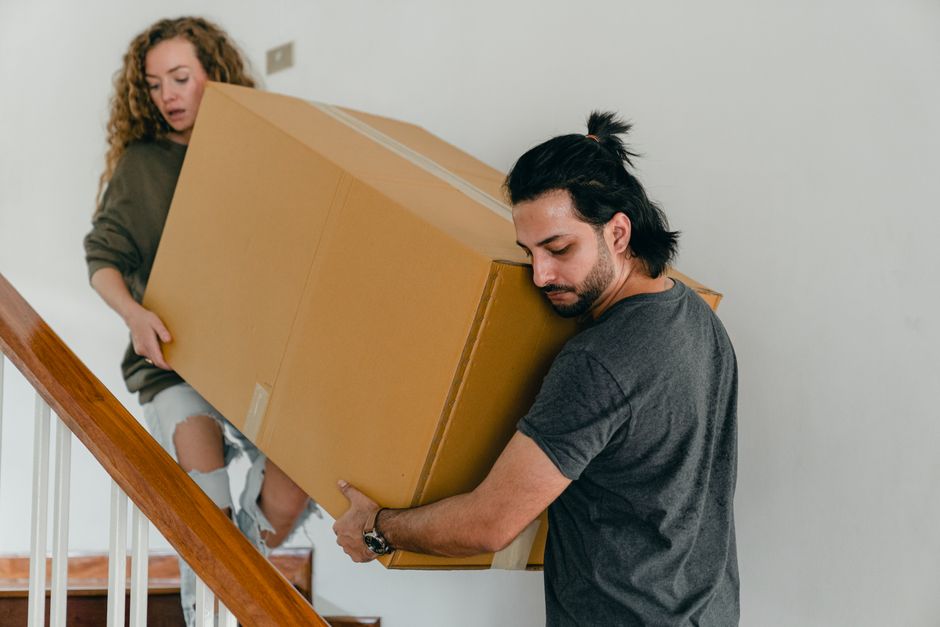
The safest two-person method puts the stronger mover on the bottom and the lighter, wider end of the furniture facing forward. The person below should never be walking backward down stairs they cannot see; instead, both movers face the same direction when possible, or the lower mover keeps constant verbal contact about each step.
Tilt the piece to its narrowest profile before starting the descent. A dresser or bookshelf carried flat-on is far more likely to catch a wall or ceiling than one angled through the stairwell. Move one step at a time, and have the top mover call out "next step" so both people shift weight together rather than one person stepping down while the other is still adjusting grip.
If the staircase has a turn or landing, stop there. Reset your grip, confirm the next angle, and proceed only when both movers agree on the plan. Rushing a turn is where most drops happen.
What Furniture Is Too Big or Heavy to Carry Down Stairs Safely?
Pieces that cannot bend, tilt, or disassemble, like a solid armoire, a king bed frame, or a piano, are usually too risky for a standard two-person carry down a staircase. These items need either disassembly, professional equipment, or a crew trained specifically for stairwell moves.
Before moving day, walk the staircase with a tape measure and check clearance against the item's dimensions at its widest angle, not just its footprint. If a piece cannot clear a landing turn even when tilted, it may need to go out a window or balcony with rigging equipment, which is a job for professionals rather than a DIY attempt. Our furniture assembly and disassembly services can also solve this problem before it becomes a stairwell emergency: removing legs, doors, or drawers often shrinks a piece just enough to clear a turn that would otherwise be impossible.
Protecting Your Stairwell Walls and Banister
Stairwell walls take more damage during a move than almost any other surface in the house, because there is no room to correct course once a piece is already tilted through a narrow turn. Padding the walls, banister, and any exposed corners before you start moving furniture prevents the scuffs and dents that show up during a final walkthrough or a security deposit inspection.
Tape moving blankets to the walls at elbow and shoulder height along the route, and wrap the banister itself if movers will be leaning on it for balance. Remove any wall art, sconces, or thermostats mounted along the stairwell ahead of time rather than trying to work around them mid-carry.
When to Call in Professional Movers for Stairs
If your move involves multiple flights, a walk-up with no elevator, or oversized furniture that will not disassemble, professional movers are usually worth the cost specifically for the stairwell portion of the job. Trained crews carry the right equipment as standard, know how to read a staircase before committing to a lift, and carry insurance if something does go wrong.
Our professional loading and unloading services are built around exactly this kind of situation, where the hardest part of the move is not the distance but the geometry of getting items out of the building safely. If you are weighing whether to handle the stairs yourself or bring in help for just that portion of the job, it is worth getting a get a moving quote before moving day so you know your options in advance rather than mid-carry.
Final Walkthrough: A Simple Pre-Move Stair Checklist
Before furniture starts moving, measure your largest pieces against your narrowest stairwell point, pad every corner and banister section, and agree on hand signals or verbal cues with whoever is helping you carry. These few minutes of prep prevent most of the accidents and damage that happen on stairs during a move.
Clear the entire path of loose rugs, shoes, and cords before the first item goes down, and keep pets and kids away from the stairwell for the duration of the heavy carries. A clear, planned route beats improvising every time.
Frequently Asked Questions
Is it safe to move a couch down stairs by yourself?
It is not recommended. Couches are long and awkward rather than simply heavy, which makes them hard to balance alone on a staircase. Use at least one other person, or a stair-climbing dolly with straps if you have no choice but to attempt it solo.
How do you get a heavy dresser down a narrow staircase?
Empty the drawers first to reduce weight and shift the center of gravity, remove the legs if possible, and tilt the dresser onto its narrowest side before starting the descent. A stair-climbing hand truck makes this significantly safer than a manual carry.
What is the best way to protect stairwell walls when moving furniture?
Tape moving blankets or foam padding along the walls at the height where furniture is likely to brush against them, and wrap any banister posts or handrail sections movers will be near. Removing wall-mounted decor ahead of time also prevents accidental damage.
Can two people safely carry a heavy piece of furniture down a staircase?
Yes, in most cases, as long as the piece can be tilted to its narrowest profile and both movers face the same direction with constant verbal communication. Items that cannot bend or angle through turns, like solid armoires or pianos, usually need professional equipment instead.
When should I hire movers just for a staircase move?
If your building has multiple flights, no elevator, or oversized furniture that will not disassemble, it is often worth hiring professionals for that portion of the move even if you are handling packing yourself. The equipment and experience reduce the risk of injury and property damage significantly.
Moving heavy furniture down stairs is one of the most dangerous parts of any move, and it is where most injuries and property damage actually happen. The combination of a steep grade, blind corners, and a piece of furniture that outweighs the people carrying it turns an ordinary staircase into a real hazard. The fix is not brute strength. It is planning the path, using the right equipment, and controlling the descent instead of fighting gravity the whole way down.
This guide walks through the specific techniques for getting sofas, dressers, and other bulky items down a staircase without hurting yourself, denting a wall, or dropping the piece halfway down. If you are already deep into packing the rest of the house, it pairs well with a broader room-by-room plan like how to prepare your home for moving day, but stairs deserve their own focused approach because the risks are different from anything else in a move.
Why Stairs Are the Riskiest Part of Moving Furniture
Stairs are dangerous because they remove your ability to set an item down safely at any point in the process. On flat ground, if your grip slips or your back gives out, you can lower the piece and reset. On a staircase, gravity is already pulling the load downward, and a lost grip means the furniture (and possibly a person) is now falling instead of resting.
Add in narrow treads, low ceilings at landings, tight turns, and banisters that were never designed to bear weight, and you have a setup where a manageable object becomes genuinely hazardous. Most stairwell accidents happen not because the furniture was too heavy to move, but because nobody planned the turn at the landing or communicated clearly about pace.
What Equipment Actually Makes a Difference on Stairs
A stair-rated hand truck, forearm straps, and furniture sliders solve most of the physical problems that make stairs dangerous. Straps redistribute weight to your legs and core instead of your arms and lower back, while a stair-climbing dolly lets one person control momentum instead of two people fighting to hold a piece steady.
Moving Straps and Harnesses
Shoulder or forearm-style lifting straps loop under the item and across each mover's body, transferring weight away from the hands and spine. They are especially useful on stairs because they free up a hand to hold the railing or steady the load on turns, something you cannot do while gripping furniture edges directly.
Stair-Climbing Dollies
A stair-climbing hand truck has a tri-wheel or track design that lets it "walk" down each step in a controlled rhythm rather than being carried freestyle. For dressers, filing cabinets, and other boxy items, this is usually safer and faster than a two-person carry.
Furniture Sliders and Corner Guards
Sliders help on landings and flat stretches between flights, letting you pivot a heavy piece without lifting it fully. Corner guards and moving blankets belong on every wall corner and banister post along the route, since a single scrape on a stairwell wall is one of the most common (and avoidable) forms of moving damage.
How Do You Carry Furniture Down Stairs With Two People?
The safest two-person method puts the stronger mover on the bottom and the lighter, wider end of the furniture facing forward. The person below should never be walking backward down stairs they cannot see; instead, both movers face the same direction when possible, or the lower mover keeps constant verbal contact about each step.
Tilt the piece to its narrowest profile before starting the descent. A dresser or bookshelf carried flat-on is far more likely to catch a wall or ceiling than one angled through the stairwell. Move one step at a time, and have the top mover call out "next step" so both people shift weight together rather than one person stepping down while the other is still adjusting grip.
If the staircase has a turn or landing, stop there. Reset your grip, confirm the next angle, and proceed only when both movers agree on the plan. Rushing a turn is where most drops happen.
What Furniture Is Too Big or Heavy to Carry Down Stairs Safely?
Pieces that cannot bend, tilt, or disassemble, like a solid armoire, a king bed frame, or a piano, are usually too risky for a standard two-person carry down a staircase. These items need either disassembly, professional equipment, or a crew trained specifically for stairwell moves.
Before moving day, walk the staircase with a tape measure and check clearance against the item's dimensions at its widest angle, not just its footprint. If a piece cannot clear a landing turn even when tilted, it may need to go out a window or balcony with rigging equipment, which is a job for professionals rather than a DIY attempt. Our furniture assembly and disassembly services can also solve this problem before it becomes a stairwell emergency: removing legs, doors, or drawers often shrinks a piece just enough to clear a turn that would otherwise be impossible.
Protecting Your Stairwell Walls and Banister
Stairwell walls take more damage during a move than almost any other surface in the house, because there is no room to correct course once a piece is already tilted through a narrow turn. Padding the walls, banister, and any exposed corners before you start moving furniture prevents the scuffs and dents that show up during a final walkthrough or a security deposit inspection.
Tape moving blankets to the walls at elbow and shoulder height along the route, and wrap the banister itself if movers will be leaning on it for balance. Remove any wall art, sconces, or thermostats mounted along the stairwell ahead of time rather than trying to work around them mid-carry.
When to Call in Professional Movers for Stairs
If your move involves multiple flights, a walk-up with no elevator, or oversized furniture that will not disassemble, professional movers are usually worth the cost specifically for the stairwell portion of the job. Trained crews carry the right equipment as standard, know how to read a staircase before committing to a lift, and carry insurance if something does go wrong.
Our professional loading and unloading services are built around exactly this kind of situation, where the hardest part of the move is not the distance but the geometry of getting items out of the building safely. If you are weighing whether to handle the stairs yourself or bring in help for just that portion of the job, it is worth getting a get a moving quote before moving day so you know your options in advance rather than mid-carry.
Final Walkthrough: A Simple Pre-Move Stair Checklist
Before furniture starts moving, measure your largest pieces against your narrowest stairwell point, pad every corner and banister section, and agree on hand signals or verbal cues with whoever is helping you carry. These few minutes of prep prevent most of the accidents and damage that happen on stairs during a move.
Clear the entire path of loose rugs, shoes, and cords before the first item goes down, and keep pets and kids away from the stairwell for the duration of the heavy carries. A clear, planned route beats improvising every time.
Have Questions About Your Move?
Is it safe to move a couch down stairs by yourself?
It is not recommended. Couches are long and awkward rather than simply heavy, which makes them hard to balance alone on a staircase. Use at least one other person, or a stair-climbing dolly with straps if you have no choice but to attempt it solo.
How do you get a heavy dresser down a narrow staircase?
Empty the drawers first to reduce weight and shift the center of gravity, remove the legs if possible, and tilt the dresser onto its narrowest side before starting the descent. A stair-climbing hand truck makes this significantly safer than a manual carry.
What is the best way to protect stairwell walls when moving furniture?
Tape moving blankets or foam padding along the walls at the height where furniture is likely to brush against them, and wrap any banister posts or handrail sections movers will be near. Removing wall-mounted decor ahead of time also prevents accidental damage.
Can two people safely carry a heavy piece of furniture down a staircase?
Yes, in most cases, as long as the piece can be tilted to its narrowest profile and both movers face the same direction with constant verbal communication. Items that cannot bend or angle through turns, like solid armoires or pianos, usually need professional equipment instead.
When should I hire movers just for a staircase move?
If your building has multiple flights, no elevator, or oversized furniture that will not disassemble, it is often worth hiring professionals for that portion of the move even if you are handling packing yourself. The equipment and experience reduce the risk of injury and property damage significantly.