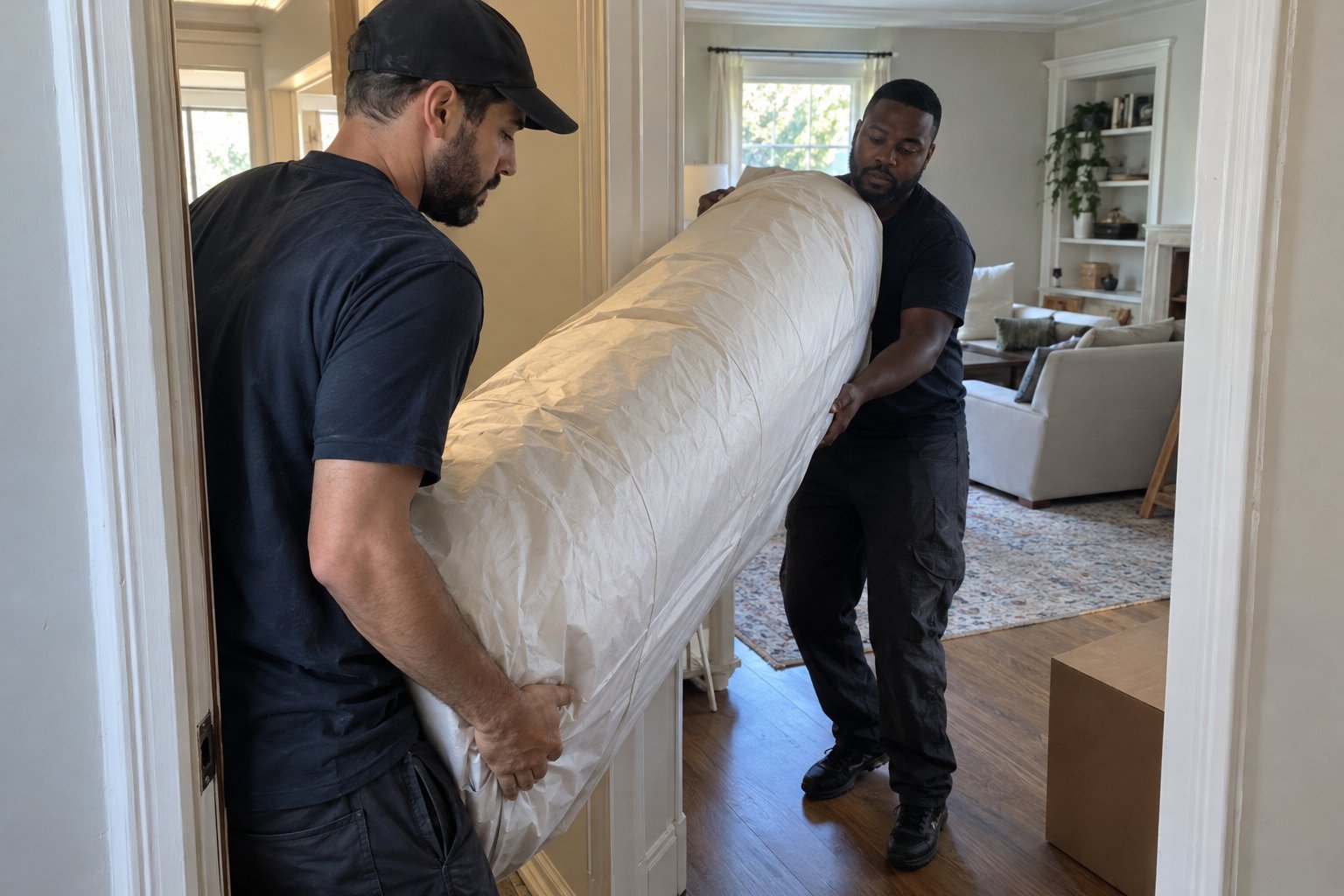
Trying to move a mattress with no plan is how box springs end up scraped against doorframes and memory foam gets left out in the weather. Whether you're comparing how to move a mattress yourself against hiring help, or trying to decide what gear to use, the right choice depends on the mattress type, the distance, and how much risk you're willing to take with your back. This breaks down the realistic paths for how to move a mattress so you can pick the one that fits your move instead of guessing.
What Are the Main Ways to Move a Mattress?
There are really three paths: move it yourself with a mattress bag and a vehicle, rent or borrow a truck and recruit help, or have a moving crew handle it as part of a larger load. Each one trades effort and risk differently, and the best fit depends on the mattress size, how far it's traveling, and whether you're moving anything else at the same time.
A twin or full mattress is manageable for two people with a bag and a plan. A queen, king, or a heavier hybrid or memory foam mattress gets considerably harder to control alone, especially around stairs, tight hallways, or a door that doesn't quite clear the frame.
Moving a Mattress Yourself vs. Having It Loaded With Professional Help
Doing it yourself works best for a short trip, a single mattress, and at least one other person to help carry. Having it moved as part of a professional loading and unloading job works better when you have a full household to move, a mattress that's awkward to maneuver alone, or stairs and doorways that make solo carrying risky.
Time
Moving a mattress yourself usually takes less overall time if it's the only item on the trip: bag it, load it, drive, unload. Once it's bundled into a full home move, having it loaded and carried alongside your other furniture is faster than making a separate trip just for the mattress.
Effort
A mattress is bulky rather than heavy, which makes it deceptively tiring to carry. Wind catches it like a sail, it blocks your view around corners, and it's easy to lose your grip on a slick plastic bag. As a rule of thumb, plan on needing a second person for anything bigger than a twin.
Risk
The biggest risks when moving a mattress yourself are back strain from awkward lifting angles, torn fabric or punctured foam on stair corners and door edges, and road debris or moisture damage if it's not fully bagged and secured during transport. A professional crew carries mattresses daily and knows how to angle them through tight turns, which lowers the physical risk to both you and the mattress.
Fit
If you're only moving a mattress and nothing else, doing it yourself with a helper and a bag is usually the simpler call. If the mattress is one piece of a bigger household move, letting it ride along with professional loading and unloading services means one less thing to coordinate and one less trip in your own vehicle.
How Do You Move a Mattress Without Damaging It?

Protecting a mattress during a move comes down to three things: a sealed mattress bag, keeping it flat or fully vertical (never folded), and securing it so it can't shift or slide during transport. Skipping any one of these is how mattresses end up stained, torn, or bent out of shape.
Slide the mattress into a plastic mattress bag and tape the opening closed. This keeps out dirt, moisture, and the grime that collects on truck beds and pickup truck liners. If you're transporting it on a roof rack or in an open truck bed, the bag also protects against rain and road spray, though a tarp and straps add another layer of security on longer drives.
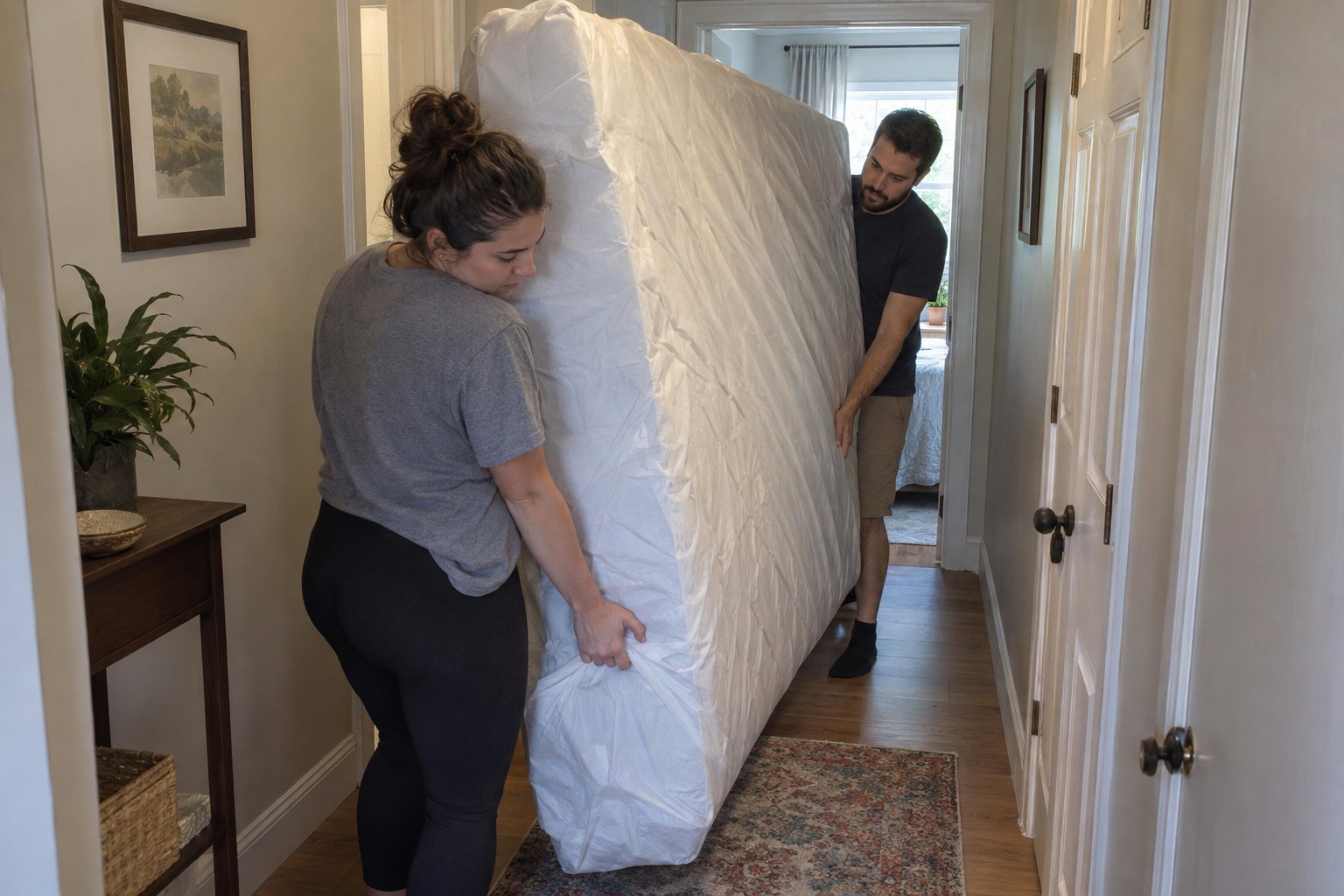
Carry the mattress vertically through doorways and stairwells whenever the hallway width allows it. Memory foam and hybrid mattresses can develop permanent indentations or internal damage if they're folded or bent sharply, so never fold a mattress to fit it through a tight space. If a doorway truly won't allow a vertical pass, it may be worth removing the door from its hinges instead of forcing the mattress through at an angle.
Which Vehicle or Equipment Should You Use to Transport a Mattress?
A cargo van or box truck is the safest option because the mattress rides fully enclosed and protected from weather. An open pickup truck bed works for shorter trips if the mattress is bagged and strapped down tightly on all sides. A car roof rack is the least reliable option and should only be a last resort for a very short, low-speed trip.
If you're using a truck bed, run straps over the mattress and anchor them to the truck's tie-down points rather than relying on the mattress's own weight to keep it in place. Highway speeds create enough lift under a flat mattress to shift or even launch it if it isn't secured. For anyone deciding between handling the whole move independently or bringing in a crew for the heavier parts, weighing DIY moving against full-service movers for the rest of the household can clarify where your own effort is best spent.
What Should You Check Before Moving Day?
Before moving day, measure your doorways, hallways, and stairwell turns against the mattress size, confirm you have a bag or cover on hand, and line up a second person if the mattress is a queen size or larger. These checks take a few minutes and prevent the two most common mattress-moving failures: getting stuck mid-doorway and discovering you can't lift it alone.
Confirm your vehicle's cargo area is clean and dry before loading, since a soiled or damp truck bed will transfer straight through a mattress bag over a long trip.
If you're moving between Colorado Springs, CO and a nearby community such as Fountain, CO or Woodland Park, CO, the drive itself is usually short enough that equipment and bagging matter more than the distance.
Our Recommendation for Most Movers
For most people moving a mattress as part of a larger household move, letting it travel with the rest of your furniture under professional full service moving is the lower-risk, lower-effort choice. It removes the awkward carrying and the separate trip, and it reduces the chance of damage from folding, scraping, or improper securing.
If the mattress is the only thing you're transporting (a dorm move, a guest bed going to a relative, a short local trip), doing it yourself with a bag, a helper, and a properly sized vehicle is a reasonable and manageable option. The deciding factors are simple: distance, mattress size, and whether you're moving anything else at the same time.
Planning your move? Request a quote from Men On Mission.
Have Questions About Your Move?
Can a mattress be transported standing up on its side?
Yes, and it's often preferable to laying it flat, since a vertical mattress takes up less space and is easier to secure against a vehicle wall. Just make sure it's fully supported so it can't tip or slide, and never fold it to force it into a smaller space.
Does a mattress need to be bagged for a short local move?
A mattress bag is worth using even for a short trip, since it protects against dirt, moisture, and stains from truck beds or vehicle interiors. The few minutes it takes to bag it are easy to justify against the risk of a soiled or torn mattress.
How many people does it usually take to carry a queen or king mattress?
Two people is the practical minimum for a queen or king mattress, especially around corners, stairs, or narrow hallways. One person can sometimes manage a twin or full mattress alone on a flat, clear path, but it's still easier with a second set of hands.
What's the best way to move a memory foam mattress without bending it?
Keep a memory foam mattress flat or fully vertical at all times and avoid folding or rolling it unless the manufacturer specifically designed it for that. Folding can create permanent indentations or damage the internal foam layers.
Should a mattress be removed from the bed frame before a move?
Yes, separate the mattress from the box spring and frame before moving day so each piece can be carried and bagged individually. This also makes it easier to check doorway and stairwell clearances for each piece separately.