Knowing how to store a flocked Christmas tree comes down to protecting one thing that regular artificial tree storage does not have to worry about: the flocking itself. That soft, snow-like coating is made of fibers glued to the branches, and it sheds, cracks, flattens, and attracts moisture in ways a plain green artificial tree never will. Fold a flocked tree the wrong way or shove it into a corner of the garage for eight months, and you will pull it out next season with bald patches, a coating of white dust on everything nearby, and branches that no longer hold their shape.
Flocked trees are also more common in a move than most people expect. If you bought one in the last few years, there is a decent chance it is still in decent shape and worth protecting rather than replacing, especially if you are relocating in the off-season and need it to survive a garage, a storage unit, or a moving truck for months rather than weeks. Here is how to keep the flocking, the branches, and the structure intact.
Why Flocked Trees Need Different Handling Than Regular Artificial Trees
Flocked trees fail in storage for one main reason: the flocking material is not part of the branch, it is a coating applied on top of it, and anything that presses, bends, or brushes against it will pull some of it away. A regular PVC or PE artificial tree can be folded, stacked, and bagged with almost no consequence. A flocked tree cannot.
Heat is the other major threat. Flocking is typically adhered with a glue-based process, and prolonged exposure to high temperatures, like an attic in summer or a hot garage, can soften that bond and cause the fibers to shed even faster than normal handling would. Humidity is a close second: damp storage conditions can make flocking clump, discolor, or in worse cases develop mold at the base where moisture collects.
How Do You Prepare a Flocked Tree Before Boxing It Up?
Preparation means separating the tree into its sections, giving each one room to breathe, and removing anything that will crush the flocking during transport or storage. Skipping this step is the single most common reason flocked trees look worn out after just one storage cycle.
Separate and Inspect Each Section
Take the tree apart into its factory sections (most flocked trees come in two or three pieces) and inspect each one for loose or already-shedding areas. Gently shake out any loose flocking now, in a garage or outdoors, so you are not doing it for the first time when you unpack next season.
Fluff Branches Before Storing, Not After
Bent or compressed branches hold their shape a lot better if you fluff them out before storage rather than leaving them flattened from the last time they were packed. Flocking that has been compressed for months is far more likely to crack and flake than flocking that was stored with the branches already spread.
What Is the Best Way to Box or Bag a Flocked Tree?
The best storage method keeps each section upright or minimally compressed, wrapped loosely enough that nothing rubs against the flocking directly. A tight bag or a box that is too small does more damage than no protection at all.
Use a Tree Storage Bag Sized for the Full, Undivided Sections
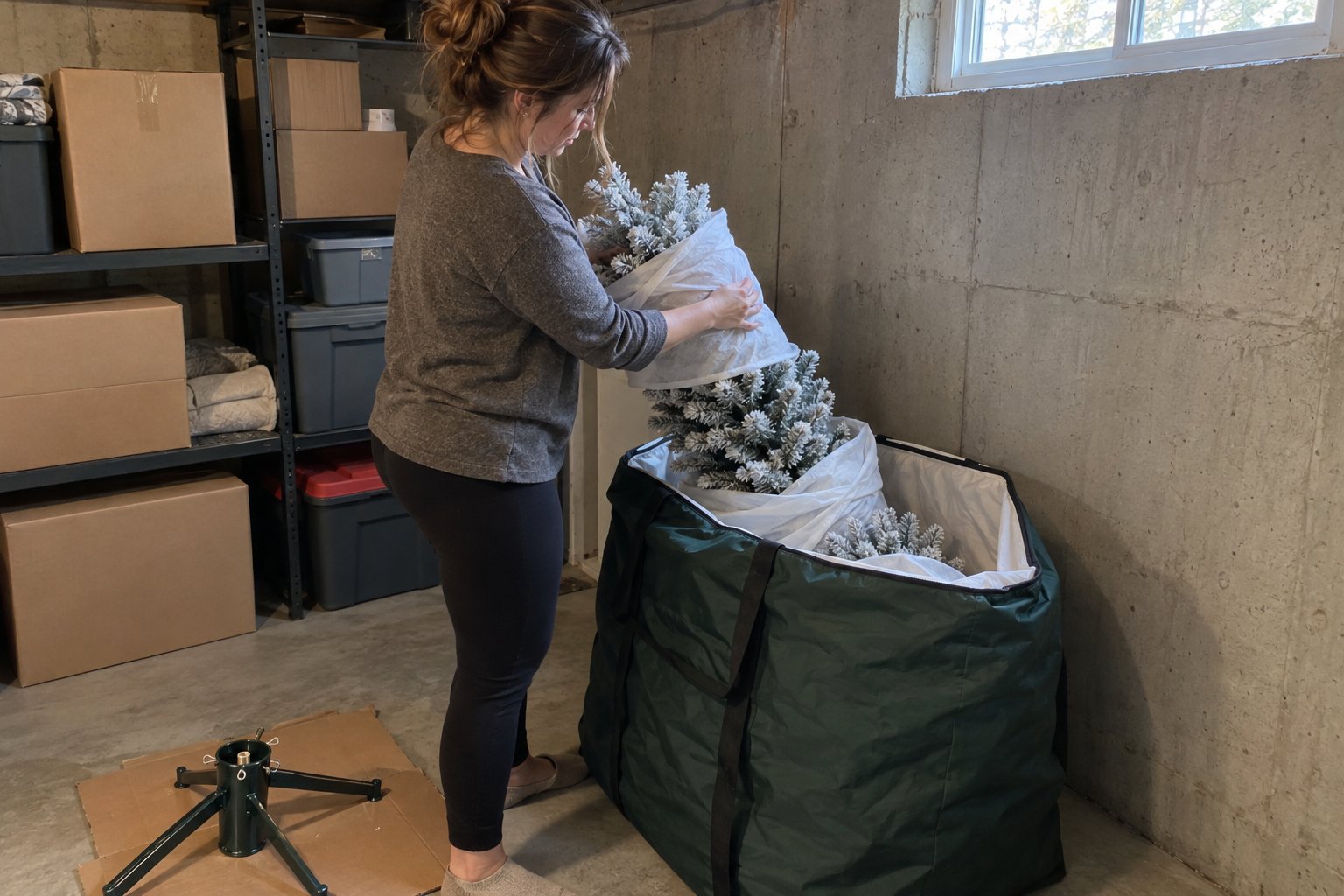
Purpose-built upright tree storage bags work better for flocked trees than flat boxes because they let the branches keep their natural shape instead of folding them flat. Look for a bag sized generously for each section rather than one that requires compressing the branches to zip it closed.
Line the Interior With Breathable Fabric, Not Plastic
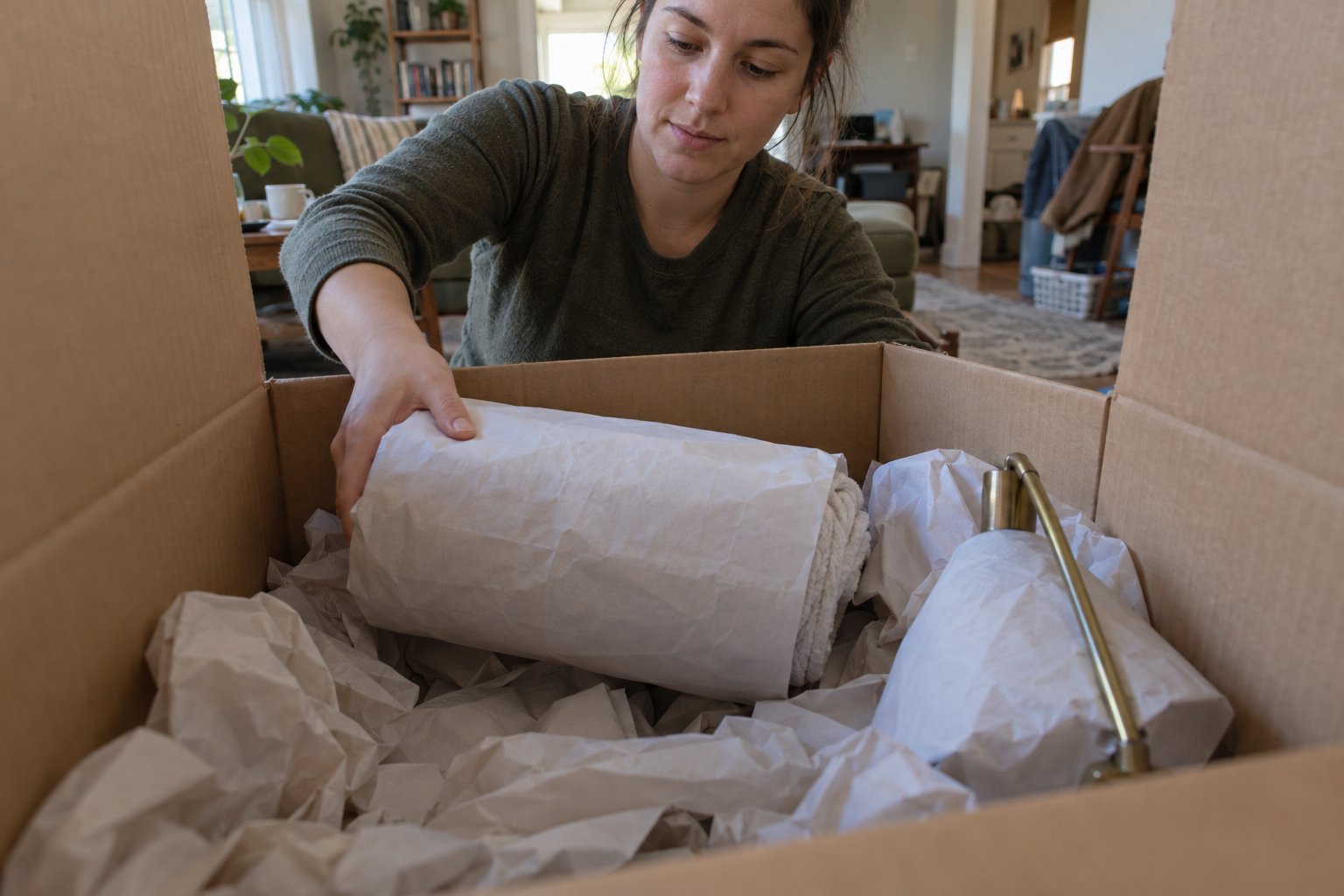
Wrap each section loosely in an old sheet or breathable moving blanket before placing it in its bag or box. Plastic sheeting can trap humidity against the flocking and encourage mildew, especially in a storage unit or garage without climate control. If you already have moving blankets from a prior move, they work well here.
Support the Base and Widest Branches
The bottom section of a flocked tree is usually the widest and the heaviest, and it takes the brunt of pressure if anything is stacked on top of it. Store it on its own, ideally standing upright or laid flat on a wide, flat surface rather than propped at an angle that puts uneven weight on one side.
Where Should a Flocked Tree Be Stored?
A flocked tree needs a storage spot with stable temperature and low humidity, away from direct sunlight and away from anything that could compress it. Attics, uninsulated garages, and damp basements all create the exact conditions that cause flocking to shed, yellow, or mold.
If you are storing the tree during a move, whether it is sitting in a POD, a storage unit, or a temporary spot in a new garage, try to choose a climate-controlled option if the tree will be there through a hot summer or a humid stretch. This matters even more for a move that spans a season change, since a tree loaded onto a truck in June and unloaded in a hot storage unit for three months will take on much more damage than one boxed up in October and unpacked in November. Our guide on what items need climate controlled storage covers which other seasonal and delicate belongings are worth the extra protection.
Avoid stacking anything on top of a boxed or bagged flocked tree, even lightweight items. The weight compresses the flocking over time even through a protective bag, and it is one of the more common reasons trees look flattened and patchy after a year or two of storage.
How Do You Move a Flocked Tree Without It Shedding in the Truck?
Moving a flocked tree safely means treating it more like a fragile, oddly shaped item than a simple box. It should ride upright when possible, be positioned last onto the truck so nothing is loaded on top of it, and stay away from anything that could rub against its surface during transit.
If you are working with movers, mention the tree specifically ahead of time so it gets placed thoughtfully rather than wedged into a gap. A crew doing professional packing for the rest of the home can usually accommodate an oddly shaped, delicate item like this with the right heads-up, and it saves you from unpacking a tree that looks nothing like it did before the move.
Frequently Asked Questions
Frequently Asked Questions
Can a flocked Christmas tree be stored in an attic?
It is not ideal. Attics swing between extreme heat and cold throughout the year, and that temperature stress softens the glue holding the flocking to the branches, leading to more shedding than a climate-stable space would cause. A closet, spare room, or climate-controlled storage unit is a better choice if one is available.
Will a flocked tree shed less if I store it upright instead of flat?
Generally yes. Storing sections upright, or at least without heavy items resting on the branches, keeps the flocking from being compressed and rubbed off over time. Flat storage under any kind of weight is one of the most common causes of patchy branches the following season.
Does flocking come off naturally over time even in storage?
A small amount of shedding is normal for any flocked tree, even with perfect storage, since the coating is a surface application rather than part of the material. Excessive shedding, clumping, or discoloration usually points to heat, humidity, or compression during storage rather than normal wear.
Can I vacuum a flocked tree before storing it?
A gentle low-suction vacuum brush attachment can help remove loose debris before storage, but avoid running it directly over the flocked branches at full power, since strong suction can pull the coating away with the dust. A soft brush or gentle shake usually works just as well.
Is it worth storing a flocked tree if I'm moving to a new state?
If the tree is in good condition, it is usually worth keeping rather than replacing, especially since flocked trees can be a meaningful cost to replace. Pack it as its own labeled, upright item rather than letting it get grouped in with general boxes so it does not get crushed in transit.
Knowing how to store a flocked Christmas tree comes down to protecting one thing that regular artificial tree storage does not have to worry about: the flocking itself. That soft, snow-like coating is made of fibers glued to the branches, and it sheds, cracks, flattens, and attracts moisture in ways a plain green artificial tree never will. Fold a flocked tree the wrong way or shove it into a corner of the garage for eight months, and you will pull it out next season with bald patches, a coating of white dust on everything nearby, and branches that no longer hold their shape.
Flocked trees are also more common in a move than most people expect. If you bought one in the last few years, there is a decent chance it is still in decent shape and worth protecting rather than replacing, especially if you are relocating in the off-season and need it to survive a garage, a storage unit, or a moving truck for months rather than weeks. Here is how to keep the flocking, the branches, and the structure intact.
Why Flocked Trees Need Different Handling Than Regular Artificial Trees
Flocked trees fail in storage for one main reason: the flocking material is not part of the branch, it is a coating applied on top of it, and anything that presses, bends, or brushes against it will pull some of it away. A regular PVC or PE artificial tree can be folded, stacked, and bagged with almost no consequence. A flocked tree cannot.
Heat is the other major threat. Flocking is typically adhered with a glue-based process, and prolonged exposure to high temperatures, like an attic in summer or a hot garage, can soften that bond and cause the fibers to shed even faster than normal handling would. Humidity is a close second: damp storage conditions can make flocking clump, discolor, or in worse cases develop mold at the base where moisture collects.
How Do You Prepare a Flocked Tree Before Boxing It Up?
Preparation means separating the tree into its sections, giving each one room to breathe, and removing anything that will crush the flocking during transport or storage. Skipping this step is the single most common reason flocked trees look worn out after just one storage cycle.
Separate and Inspect Each Section
Take the tree apart into its factory sections (most flocked trees come in two or three pieces) and inspect each one for loose or already-shedding areas. Gently shake out any loose flocking now, in a garage or outdoors, so you are not doing it for the first time when you unpack next season.
Fluff Branches Before Storing, Not After
Bent or compressed branches hold their shape a lot better if you fluff them out before storage rather than leaving them flattened from the last time they were packed. Flocking that has been compressed for months is far more likely to crack and flake than flocking that was stored with the branches already spread.
What Is the Best Way to Box or Bag a Flocked Tree?
The best storage method keeps each section upright or minimally compressed, wrapped loosely enough that nothing rubs against the flocking directly. A tight bag or a box that is too small does more damage than no protection at all.
Use a Tree Storage Bag Sized for the Full, Undivided Sections
Purpose-built upright tree storage bags work better for flocked trees than flat boxes because they let the branches keep their natural shape instead of folding them flat. Look for a bag sized generously for each section rather than one that requires compressing the branches to zip it closed.
Line the Interior With Breathable Fabric, Not Plastic
Wrap each section loosely in an old sheet or breathable moving blanket before placing it in its bag or box. Plastic sheeting can trap humidity against the flocking and encourage mildew, especially in a storage unit or garage without climate control. If you already have moving blankets from a prior move, they work well here.
Support the Base and Widest Branches
The bottom section of a flocked tree is usually the widest and the heaviest, and it takes the brunt of pressure if anything is stacked on top of it. Store it on its own, ideally standing upright or laid flat on a wide, flat surface rather than propped at an angle that puts uneven weight on one side.
Where Should a Flocked Tree Be Stored?
A flocked tree needs a storage spot with stable temperature and low humidity, away from direct sunlight and away from anything that could compress it. Attics, uninsulated garages, and damp basements all create the exact conditions that cause flocking to shed, yellow, or mold.
If you are storing the tree during a move, whether it is sitting in a POD, a storage unit, or a temporary spot in a new garage, try to choose a climate-controlled option if the tree will be there through a hot summer or a humid stretch. This matters even more for a move that spans a season change, since a tree loaded onto a truck in June and unloaded in a hot storage unit for three months will take on much more damage than one boxed up in October and unpacked in November. Our guide on what items need climate controlled storage covers which other seasonal and delicate belongings are worth the extra protection.
Avoid stacking anything on top of a boxed or bagged flocked tree, even lightweight items. The weight compresses the flocking over time even through a protective bag, and it is one of the more common reasons trees look flattened and patchy after a year or two of storage.
How Do You Move a Flocked Tree Without It Shedding in the Truck?
Moving a flocked tree safely means treating it more like a fragile, oddly shaped item than a simple box. It should ride upright when possible, be positioned last onto the truck so nothing is loaded on top of it, and stay away from anything that could rub against its surface during transit.
If you are working with movers, mention the tree specifically ahead of time so it gets placed thoughtfully rather than wedged into a gap. A crew doing professional packing for the rest of the home can usually accommodate an oddly shaped, delicate item like this with the right heads-up, and it saves you from unpacking a tree that looks nothing like it did before the move.
Frequently Asked Questions
Have Questions About Your Move?

Can a flocked Christmas tree be stored in an attic?
It is not ideal. Attics swing between extreme heat and cold throughout the year, and that temperature stress softens the glue holding the flocking to the branches, leading to more shedding than a climate-stable space would cause. A closet, spare room, or climate-controlled storage unit is a better choice if one is available.
Will a flocked tree shed less if I store it upright instead of flat?
Generally yes. Storing sections upright, or at least without heavy items resting on the branches, keeps the flocking from being compressed and rubbed off over time. Flat storage under any kind of weight is one of the most common causes of patchy branches the following season.
Does flocking come off naturally over time even in storage?
A small amount of shedding is normal for any flocked tree, even with perfect storage, since the coating is a surface application rather than part of the material. Excessive shedding, clumping, or discoloration usually points to heat, humidity, or compression during storage rather than normal wear.
Can I vacuum a flocked tree before storing it?
A gentle low-suction vacuum brush attachment can help remove loose debris before storage, but avoid running it directly over the flocked branches at full power, since strong suction can pull the coating away with the dust. A soft brush or gentle shake usually works just as well.
Is it worth storing a flocked tree if I'm moving to a new state?
If the tree is in good condition, it is usually worth keeping rather than replacing, especially since flocked trees can be a meaningful cost to replace. Pack it as its own labeled, upright item rather than letting it get grouped in with general boxes so it does not get crushed in transit.