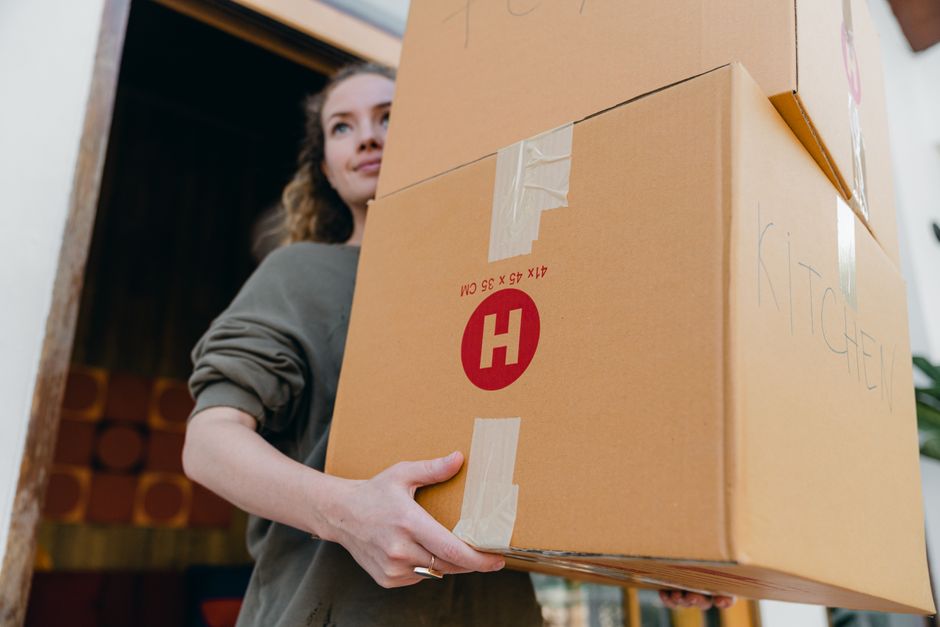
Knowing how to pack lamps for moving comes down to protecting three separate problems at once: a fragile bulb, a shade that dents if you so much as breathe on it wrong, and a base that can be anything from lightweight ceramic to a genuinely heavy iron pole. Most people toss a lamp in a box with a towel wrapped around it and call it packed. Then they unwrap it at the new place and find a crushed shade, a shattered bulb, or a scratched brass finish that never quite looks the same again.
Lamps do not fit neatly into the packing systems built for other fragile items. They are not flat like dishes, not uniformly shaped like glassware, and they come apart in ways that are not always obvious until you are standing there trying to figure out which piece unscrews first. This guide walks through how to pack lamps and light fixtures so every part, shade, harp, bulb, and base, survives the move intact.
Why Do Lamps Get Damaged So Often During a Move?
Lamps get damaged because people pack them like solid objects when they are actually assemblies of several separate, oddly shaped, differently fragile parts. A shade that looks sturdy on a nightstand collapses under twenty pounds of stacked boxes. A base that seems unbreakable chips when it knocks against another item during transit.
The other issue is scale. A lamp does not compress into a small, uniform shape the way a stack of plates does, so people improvise a box size instead of choosing the right one, and improvised packing is where damage sneaks in. Treating a lamp as three separate packing problems, shade, harp and bulb, and base, rather than one object, solves most of this before you even pick up tape.
How Do You Pack a Lampshade for Moving Without Crushing It?
Pack a lampshade in its own dedicated box, never nested inside another item or stacked under anything heavier. Shades hold their shape through thin wire frames and stiff fabric or paper, both of which fold, crease, or tear under even moderate pressure, so the box needs to be sized close to the shade itself with no room for it to shift.
Sizing the Box Correctly
Measure the shade's widest point and choose a box only slightly larger. A box that is too big lets the shade slide around and absorb impacts from every direction; a box that fits snugly lets the cardboard itself do the protecting.
Wrapping Without Denting
Line the shade loosely with acid-free tissue paper rather than plastic wrap, which can trap moisture and stain fabric shades. Never wrap tape directly against the material. If you are moving more than one shade, stack them largest to smallest with tissue between each, similar to nesting bowls, and pad the outer layer with crumpled paper so nothing touches the box walls directly.
What Is the Right Way to Pack a Lamp Base?
Wrap the base in packing paper first, then a layer of bubble wrap secured with tape that never touches the finish, and stand it upright in a box with crumpled paper filling every gap so it cannot tip or slide. Bases vary widely in weight and material, and the wrapping method should match what the base is actually made of.
Ceramic, Glass, or Porcelain Bases
These need the most cushioning. Wrap in packing paper, then bubble wrap, and pack the base standing up in a box with at least two inches of crumpled paper on all sides, including underneath.
Metal or Wood Bases
Sturdier, but still prone to scratches and dents. A single layer of packing paper followed by a moving blanket or towel wrapped around the base is usually enough, especially for floor lamps with a wide, stable footstand.
Floor Lamps and Tall Poles
If the pole disassembles, take it apart and pack the sections like fragile rods, wrapped individually and laid flat in a long, narrow box or bundled with the moving blankets typically used for furniture. If it does not come apart, wrap the entire pole in a moving blanket and secure it upright in the truck rather than boxing it.
Should You Pack Bulbs and Harps With the Lamp or Separately?
Remove bulbs and harps before you pack anything else, and store them separately from the shade and base. Bulbs are glass under thin filament wire, and a harp (the wire frame that holds the shade above the socket) bends easily if it takes any weight at all, so neither should ride inside a box with heavier items.
Wrap each bulb individually in packing paper and place them upright in a small box, ideally the original bulb packaging if you kept it, cushioned with paper on all sides. Harps can be taped loosely to the inside wall of the base's box, away from the base itself, or bundled together with a rubber band and wrapped in a single layer of paper.
How Do You Handle Cords, Switches, and Wiring?
Coil each lamp's cord loosely and secure it with a twist tie or velcro strap, then tape it to the base itself rather than letting it dangle loose in the box, where it can snag on other items or get crushed under weight. If the lamp has a three-way switch or an inline dimmer, avoid bending the cord sharply near that hardware, since repeated flexing at the same point is a common cause of wiring failure after a move.
For lamps with detachable cords, unplug and pack the cord with its matching lamp, labeled clearly, since mismatched cords across multiple lamps become a frustrating puzzle during unpacking.
How Should Light Fixtures Be Packed Differently From Lamps?
Hardwired light fixtures need to be treated as an electrical task first and a packing task second: shut off power at the breaker before removing anything, and label wires with tape and a marker so reinstallation at the new home is straightforward. Once removed, fixtures pack similarly to lamp bases, with glass shades, globes, or diffusers wrapped and boxed separately from the metal frame or canopy.
Chandeliers and multi-arm fixtures benefit from photographing the assembly before disassembly, since reattaching arms and crystals in the wrong order is a common and avoidable headache. Any glass droplets or crystal accents should be wrapped individually, the same way you would treat wine glasses or other delicate glassware.
Getting Help When You Would Rather Not DIY It
Lamps are inexpensive individually but add up fast when several get damaged in one move, and fragile, oddly shaped items are exactly where professional packing earns its keep. A crew that packs household goods daily has the boxes, dividers, and technique to handle shades, bases, and fixtures without the trial and error of a first attempt.
If your move includes a full room of lighting, chandeliers, or other delicate fixtures alongside the rest of your belongings, our professional packing services cover exactly this kind of detailed, item-by-item work so nothing gets left to chance. For lamps and fixtures mixed in with other breakables throughout the house, the same care applies across the board; see our guide on packing fragile items for moving for the broader approach to cushioning and box selection.
Once everything is boxed, loading order matters just as much as packing technique. Lamp boxes should ride upright and on top of heavier furniture, never underneath it, which is one more reason a practiced eye helps on moving day itself. When you are ready to schedule that help, you can get a moving quote and talk through exactly what needs special handling.
Frequently Asked Questions
Can you pack lamps in the same box as clothes or linens?
It is better not to. Soft items seem like natural padding, but they compress unpredictably under weight and do not hold a lampshade's shape the way structured packing paper and a properly sized box do. Keep lamps in their own boxes labeled fragile.
Do lamp bulbs need to be removed before a move?
Yes. Bulbs should always come out before you pack the lamp itself. Wrap each one individually and pack them upright in a small, cushioned box separate from the shade and base.
How do you keep a lampshade from getting crushed in storage?
Store shades in their own boxes sized close to their dimensions, never stacked under other items, and keep them in a climate-stable area if they are fabric, since humidity and temperature swings can warp the frame or discolor the material over time.
What is the best box size for packing a table lamp?
Use two separate boxes rather than one large one: a snug box for the shade sized to its widest point, and a slightly larger box for the wrapped base with room for two inches of cushioning on every side.
Should floor lamps be disassembled before a move?
If the pole separates into sections, take it apart and pack each section individually since this reduces the risk of bending and makes the pieces easier to fit into the truck. If it does not disassemble, wrap it fully in a moving blanket and transport it upright.
Knowing how to pack lamps for moving comes down to protecting three separate problems at once: a fragile bulb, a shade that dents if you so much as breathe on it wrong, and a base that can be anything from lightweight ceramic to a genuinely heavy iron pole. Most people toss a lamp in a box with a towel wrapped around it and call it packed. Then they unwrap it at the new place and find a crushed shade, a shattered bulb, or a scratched brass finish that never quite looks the same again.
Lamps do not fit neatly into the packing systems built for other fragile items. They are not flat like dishes, not uniformly shaped like glassware, and they come apart in ways that are not always obvious until you are standing there trying to figure out which piece unscrews first. This guide walks through how to pack lamps and light fixtures so every part, shade, harp, bulb, and base, survives the move intact.
Why Do Lamps Get Damaged So Often During a Move?
Lamps get damaged because people pack them like solid objects when they are actually assemblies of several separate, oddly shaped, differently fragile parts. A shade that looks sturdy on a nightstand collapses under twenty pounds of stacked boxes. A base that seems unbreakable chips when it knocks against another item during transit.
The other issue is scale. A lamp does not compress into a small, uniform shape the way a stack of plates does, so people improvise a box size instead of choosing the right one, and improvised packing is where damage sneaks in. Treating a lamp as three separate packing problems, shade, harp and bulb, and base, rather than one object, solves most of this before you even pick up tape.
How Do You Pack a Lampshade for Moving Without Crushing It?
Pack a lampshade in its own dedicated box, never nested inside another item or stacked under anything heavier. Shades hold their shape through thin wire frames and stiff fabric or paper, both of which fold, crease, or tear under even moderate pressure, so the box needs to be sized close to the shade itself with no room for it to shift.
Sizing the Box Correctly
Measure the shade's widest point and choose a box only slightly larger. A box that is too big lets the shade slide around and absorb impacts from every direction; a box that fits snugly lets the cardboard itself do the protecting.
Wrapping Without Denting
Line the shade loosely with acid-free tissue paper rather than plastic wrap, which can trap moisture and stain fabric shades. Never wrap tape directly against the material. If you are moving more than one shade, stack them largest to smallest with tissue between each, similar to nesting bowls, and pad the outer layer with crumpled paper so nothing touches the box walls directly.
What Is the Right Way to Pack a Lamp Base?
Wrap the base in packing paper first, then a layer of bubble wrap secured with tape that never touches the finish, and stand it upright in a box with crumpled paper filling every gap so it cannot tip or slide. Bases vary widely in weight and material, and the wrapping method should match what the base is actually made of.
Ceramic, Glass, or Porcelain Bases
These need the most cushioning. Wrap in packing paper, then bubble wrap, and pack the base standing up in a box with at least two inches of crumpled paper on all sides, including underneath.
Metal or Wood Bases
Sturdier, but still prone to scratches and dents. A single layer of packing paper followed by a moving blanket or towel wrapped around the base is usually enough, especially for floor lamps with a wide, stable footstand.
Floor Lamps and Tall Poles
If the pole disassembles, take it apart and pack the sections like fragile rods, wrapped individually and laid flat in a long, narrow box or bundled with the moving blankets typically used for furniture. If it does not come apart, wrap the entire pole in a moving blanket and secure it upright in the truck rather than boxing it.
Should You Pack Bulbs and Harps With the Lamp or Separately?
Remove bulbs and harps before you pack anything else, and store them separately from the shade and base. Bulbs are glass under thin filament wire, and a harp (the wire frame that holds the shade above the socket) bends easily if it takes any weight at all, so neither should ride inside a box with heavier items.
Wrap each bulb individually in packing paper and place them upright in a small box, ideally the original bulb packaging if you kept it, cushioned with paper on all sides. Harps can be taped loosely to the inside wall of the base's box, away from the base itself, or bundled together with a rubber band and wrapped in a single layer of paper.
How Do You Handle Cords, Switches, and Wiring?
Coil each lamp's cord loosely and secure it with a twist tie or velcro strap, then tape it to the base itself rather than letting it dangle loose in the box, where it can snag on other items or get crushed under weight. If the lamp has a three-way switch or an inline dimmer, avoid bending the cord sharply near that hardware, since repeated flexing at the same point is a common cause of wiring failure after a move.
For lamps with detachable cords, unplug and pack the cord with its matching lamp, labeled clearly, since mismatched cords across multiple lamps become a frustrating puzzle during unpacking.
How Should Light Fixtures Be Packed Differently From Lamps?
Hardwired light fixtures need to be treated as an electrical task first and a packing task second: shut off power at the breaker before removing anything, and label wires with tape and a marker so reinstallation at the new home is straightforward. Once removed, fixtures pack similarly to lamp bases, with glass shades, globes, or diffusers wrapped and boxed separately from the metal frame or canopy.
Chandeliers and multi-arm fixtures benefit from photographing the assembly before disassembly, since reattaching arms and crystals in the wrong order is a common and avoidable headache. Any glass droplets or crystal accents should be wrapped individually, the same way you would treat wine glasses or other delicate glassware.
Getting Help When You Would Rather Not DIY It
Lamps are inexpensive individually but add up fast when several get damaged in one move, and fragile, oddly shaped items are exactly where professional packing earns its keep. A crew that packs household goods daily has the boxes, dividers, and technique to handle shades, bases, and fixtures without the trial and error of a first attempt.
If your move includes a full room of lighting, chandeliers, or other delicate fixtures alongside the rest of your belongings, our professional packing services cover exactly this kind of detailed, item-by-item work so nothing gets left to chance. For lamps and fixtures mixed in with other breakables throughout the house, the same care applies across the board; see our guide on packing fragile items for moving for the broader approach to cushioning and box selection.
Once everything is boxed, loading order matters just as much as packing technique. Lamp boxes should ride upright and on top of heavier furniture, never underneath it, which is one more reason a practiced eye helps on moving day itself. When you are ready to schedule that help, you can get a moving quote and talk through exactly what needs special handling.
Have Questions About Your Move?
Can you pack lamps in the same box as clothes or linens?
It is better not to. Soft items seem like natural padding, but they compress unpredictably under weight and do not hold a lampshade's shape the way structured packing paper and a properly sized box do. Keep lamps in their own boxes labeled fragile.
Do lamp bulbs need to be removed before a move?
Yes. Bulbs should always come out before you pack the lamp itself. Wrap each one individually and pack them upright in a small, cushioned box separate from the shade and base.
How do you keep a lampshade from getting crushed in storage?
Store shades in their own boxes sized close to their dimensions, never stacked under other items, and keep them in a climate-stable area if they are fabric, since humidity and temperature swings can warp the frame or discolor the material over time.
What is the best box size for packing a table lamp?
Use two separate boxes rather than one large one: a snug box for the shade sized to its widest point, and a slightly larger box for the wrapped base with room for two inches of cushioning on every side.
Should floor lamps be disassembled before a move?
If the pole separates into sections, take it apart and pack each section individually since this reduces the risk of bending and makes the pieces easier to fit into the truck. If it does not disassemble, wrap it fully in a moving blanket and transport it upright.