How to transport a mattress safely comes down to three things: keeping it covered and dry, keeping it from bending past the point its internal structure can recover from, and securing it so it cannot shift, slide, or fly off whatever you are hauling it on. Mattresses look indestructible from the outside, but the foam, coils, and padding inside react badly to folding, crushing weight, and water, and the damage is not always visible until you sleep on it for a few weeks and notice a sag that was not there before.
This matters more than people expect because a mattress is one of the few items in a move that is both bulky and genuinely fragile in ways that are easy to overlook. A couch can take a scuff. A dresser can handle a bump. A mattress that gets folded in half to fit through a doorway, or rides home soaking wet on a roof rack, may never go back to its original shape. If you would rather hand the whole problem to someone else, a specialty item moving service is built for exactly this kind of oversized, easily damaged piece.
Can a Mattress Be Transported on Its Side?
Yes, and for most moves it is actually the better option. Transporting a mattress on its side reduces the surface area exposed to wind if it is on a roof rack, and it is often easier to secure tightly against a wall inside a truck or van. The key is to support it properly so it does not bow in the middle.
Memory foam and hybrid mattresses tolerate being on their side for a short trip better than older innerspring units, which can shift their coils if left vertical for an extended period. If you are driving more than an hour or two, lay the mattress flat whenever the vehicle has room, and reserve the on-its-side position for short hauls or tight-loading situations where flat simply will not fit.
When Flat Is the Only Safe Option
Pillow-top and plush mattresses should travel flat whenever possible. The soft upper layer is not designed to bear its own weight sideways for long, and doing so can create a permanent lean or lump in the topper that no amount of time will reverse.
How to Transport a Mattress on a Car Roof
Transporting a mattress on a car roof works if you use a thick protective cover, tie it down with at least four straps (not rope, not bungee cords alone), and keep highway speeds moderate. Bungee cords stretch and loosen as wind resistance works on the mattress, and a mattress that lifts even slightly at speed can peel back or tear away entirely.
Run straps over the mattress and through the open car doors or around the vehicle frame on both sides, front and back, so the mattress is pulled down from multiple directions rather than just side to side. Check the tension again after the first ten minutes of driving, since straps on foam-covered items often settle and need a second tightening.
Avoid this method entirely in rain, snow, or high wind. A wet mattress can develop mold inside the foam core within days, and it is one of the few moving mishaps that is not reversible with a simple cleaning. If the forecast looks uncertain, it is worth checking which items need climate-controlled storage so the mattress is not sitting in a damp garage or storage unit afterward either.
What Kind of Mattress Bag Should You Use for Moving?
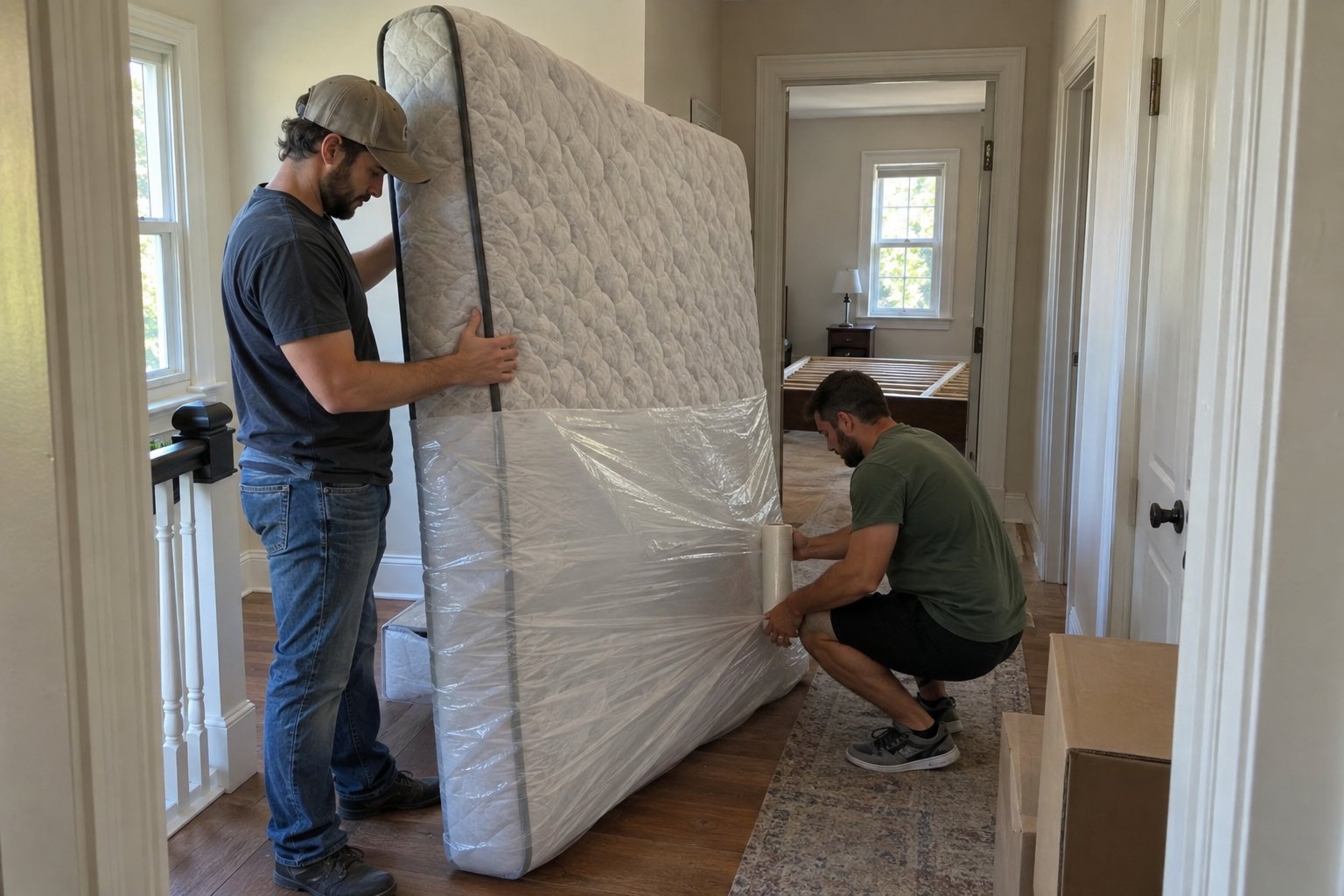
A mattress bag for moving should be a heavy-gauge plastic cover sized specifically for your mattress dimensions, sealed at the seams rather than left open-ended. Thin bags sold as basic furniture covers tear at the corners during loading and leave the mattress exposed exactly where it needs protection most.
Look for bags rated at least 4 mil thick, and tape the open end closed with packing tape once the mattress is inside rather than relying on a drawstring or fold closure alone. For long-distance moves or extended time in a truck, a mattress storage bag with a sealable closure also keeps dust and insects out, which matters if the mattress will sit in a parked truck overnight.
Covering Without a Bag
If a properly sized bag is not available, heavy moving blankets wrapped around the mattress and secured with stretch wrap work as a backup, though they protect against scuffs and minor scrapes far better than they protect against moisture. The same wrapping logic applies to anything soft and bulky; if you are tackling the rest of the bedroom at the same time, see how to pack a bedroom for moving for how bedding, frames, and other furniture should be handled alongside it.
Loading a Mattress Into a Truck or Van Without Bending It
Load the mattress last against a flat wall of the cargo area, or first if it needs to stand upright the entire trip, and never let other boxes or furniture lean directly against its face. A mattress bends easily under concentrated pressure, and a box corner pressed into the same spot for hours can leave a permanent indentation in the foam.
When carrying a mattress through doorways or stairwells, bend it only at a gentle curve, never a sharp fold, and have a second person support the opposite end so one section is not bearing the full weight of the bend. Hybrid and innerspring mattresses are especially unforgiving here since a hard fold can snap or displace the coil structure.
Standing a Mattress Upright for Transport
If the mattress stands upright in the truck, place it between other soft or flat items (never against something with a sharp edge) and strap it to the truck wall if a track system is available. Letting it lean freely means it absorbs every bump and turn with its own weight, which flattens certain areas over time. If you would rather not manage straps and timing yourself, our loading and unloading services cover this kind of careful placement as part of a full move.
Mattresses rarely get the attention they need until something has already gone wrong with one, and by then the fix is a new mattress, not a cleaning or a repair. A little extra care at the bagging, loading, and strapping stage is what separates a mattress that arrives ready to sleep on from one that needs replacing within the year. If you want the whole process handled for you, get a moving quote and let a crew experienced with bulky, fragile items take it from here.
Frequently Asked Questions
How long can a mattress stay in a plastic bag before it needs to breathe?
A mattress can safely stay sealed in a plastic bag for the duration of a typical move, generally up to a few weeks, without trapping enough moisture to cause problems, as long as it went into the bag completely dry. For storage longer than a month, it is worth using a breathable cover instead so trapped humidity does not build up inside the foam.
Is it safe to transport a memory foam mattress rolled up?
Only if it was originally compressed and shipped that way by the manufacturer with the right equipment. Rolling a memory foam mattress yourself for a move can damage the foam's cell structure permanently, so it is safer to transport it flat or on its side rather than attempting to roll it.
Can you transport a mattress in the rain if it is wrapped in plastic?
Plastic wrap reduces the risk but does not eliminate it, since water can seep in through seams, folds, or any tear that develops during loading. If rain is likely, delay an exposed roof-top transport and move the mattress inside a covered truck or van instead.
Do mattresses need to be transported upright or flat for long-distance moves?
Flat is generally better for long-distance trips because it distributes weight evenly and avoids hours of sideways pressure on one edge. Upright transport works fine for shorter local hauls where the mattress is well-supported and secured.
What happens if a mattress gets bent too sharply during a move?
A sharp fold can damage or displace the internal coils in an innerspring or hybrid mattress, and it can crease the foam layers in an all-foam mattress in a way that does not fully spring back. Either outcome can create a lasting soft spot or ridge that affects comfort and support.
How to transport a mattress safely comes down to three things: keeping it covered and dry, keeping it from bending past the point its internal structure can recover from, and securing it so it cannot shift, slide, or fly off whatever you are hauling it on. Mattresses look indestructible from the outside, but the foam, coils, and padding inside react badly to folding, crushing weight, and water, and the damage is not always visible until you sleep on it for a few weeks and notice a sag that was not there before.
This matters more than people expect because a mattress is one of the few items in a move that is both bulky and genuinely fragile in ways that are easy to overlook. A couch can take a scuff. A dresser can handle a bump. A mattress that gets folded in half to fit through a doorway, or rides home soaking wet on a roof rack, may never go back to its original shape. If you would rather hand the whole problem to someone else, a specialty item moving service is built for exactly this kind of oversized, easily damaged piece.
Can a Mattress Be Transported on Its Side?
Yes, and for most moves it is actually the better option. Transporting a mattress on its side reduces the surface area exposed to wind if it is on a roof rack, and it is often easier to secure tightly against a wall inside a truck or van. The key is to support it properly so it does not bow in the middle.
Memory foam and hybrid mattresses tolerate being on their side for a short trip better than older innerspring units, which can shift their coils if left vertical for an extended period. If you are driving more than an hour or two, lay the mattress flat whenever the vehicle has room, and reserve the on-its-side position for short hauls or tight-loading situations where flat simply will not fit.
When Flat Is the Only Safe Option
Pillow-top and plush mattresses should travel flat whenever possible. The soft upper layer is not designed to bear its own weight sideways for long, and doing so can create a permanent lean or lump in the topper that no amount of time will reverse.
How to Transport a Mattress on a Car Roof
Transporting a mattress on a car roof works if you use a thick protective cover, tie it down with at least four straps (not rope, not bungee cords alone), and keep highway speeds moderate. Bungee cords stretch and loosen as wind resistance works on the mattress, and a mattress that lifts even slightly at speed can peel back or tear away entirely.
Run straps over the mattress and through the open car doors or around the vehicle frame on both sides, front and back, so the mattress is pulled down from multiple directions rather than just side to side. Check the tension again after the first ten minutes of driving, since straps on foam-covered items often settle and need a second tightening.
Avoid this method entirely in rain, snow, or high wind. A wet mattress can develop mold inside the foam core within days, and it is one of the few moving mishaps that is not reversible with a simple cleaning. If the forecast looks uncertain, it is worth checking which items need climate-controlled storage so the mattress is not sitting in a damp garage or storage unit afterward either.
What Kind of Mattress Bag Should You Use for Moving?
A mattress bag for moving should be a heavy-gauge plastic cover sized specifically for your mattress dimensions, sealed at the seams rather than left open-ended. Thin bags sold as basic furniture covers tear at the corners during loading and leave the mattress exposed exactly where it needs protection most.
Look for bags rated at least 4 mil thick, and tape the open end closed with packing tape once the mattress is inside rather than relying on a drawstring or fold closure alone. For long-distance moves or extended time in a truck, a mattress storage bag with a sealable closure also keeps dust and insects out, which matters if the mattress will sit in a parked truck overnight.
Covering Without a Bag
If a properly sized bag is not available, heavy moving blankets wrapped around the mattress and secured with stretch wrap work as a backup, though they protect against scuffs and minor scrapes far better than they protect against moisture. The same wrapping logic applies to anything soft and bulky; if you are tackling the rest of the bedroom at the same time, see how to pack a bedroom for moving for how bedding, frames, and other furniture should be handled alongside it.
Loading a Mattress Into a Truck or Van Without Bending It
Load the mattress last against a flat wall of the cargo area, or first if it needs to stand upright the entire trip, and never let other boxes or furniture lean directly against its face. A mattress bends easily under concentrated pressure, and a box corner pressed into the same spot for hours can leave a permanent indentation in the foam.
When carrying a mattress through doorways or stairwells, bend it only at a gentle curve, never a sharp fold, and have a second person support the opposite end so one section is not bearing the full weight of the bend. Hybrid and innerspring mattresses are especially unforgiving here since a hard fold can snap or displace the coil structure.
Standing a Mattress Upright for Transport
If the mattress stands upright in the truck, place it between other soft or flat items (never against something with a sharp edge) and strap it to the truck wall if a track system is available. Letting it lean freely means it absorbs every bump and turn with its own weight, which flattens certain areas over time. If you would rather not manage straps and timing yourself, our loading and unloading services cover this kind of careful placement as part of a full move.
Mattresses rarely get the attention they need until something has already gone wrong with one, and by then the fix is a new mattress, not a cleaning or a repair. A little extra care at the bagging, loading, and strapping stage is what separates a mattress that arrives ready to sleep on from one that needs replacing within the year. If you want the whole process handled for you, get a moving quote and let a crew experienced with bulky, fragile items take it from here.
Have Questions About Your Move?

How long can a mattress stay in a plastic bag before it needs to breathe?
A mattress can safely stay sealed in a plastic bag for the duration of a typical move, generally up to a few weeks, without trapping enough moisture to cause problems, as long as it went into the bag completely dry. For storage longer than a month, it is worth using a breathable cover instead so trapped humidity does not build up inside the foam.
Is it safe to transport a memory foam mattress rolled up?
Only if it was originally compressed and shipped that way by the manufacturer with the right equipment. Rolling a memory foam mattress yourself for a move can damage the foam's cell structure permanently, so it is safer to transport it flat or on its side rather than attempting to roll it.
Can you transport a mattress in the rain if it is wrapped in plastic?
Plastic wrap reduces the risk but does not eliminate it, since water can seep in through seams, folds, or any tear that develops during loading. If rain is likely, delay an exposed roof-top transport and move the mattress inside a covered truck or van instead.
Do mattresses need to be transported upright or flat for long-distance moves?
Flat is generally better for long-distance trips because it distributes weight evenly and avoids hours of sideways pressure on one edge. Upright transport works fine for shorter local hauls where the mattress is well-supported and secured.
What happens if a mattress gets bent too sharply during a move?
A sharp fold can damage or displace the internal coils in an innerspring or hybrid mattress, and it can crease the foam layers in an all-foam mattress in a way that does not fully spring back. Either outcome can create a lasting soft spot or ridge that affects comfort and support.