How to Move a Safe Deposit Box's Contents (and Other Valuables Movers Won't Touch)
Movers won't carry cash, key documents, or ammo—here's how to handle valuables yourself on moving day.
Every professional moving company hands you a list before the truck ever shows up, and buried in that list is a category of items they legally and practically cannot load: cash, important documents, firearms ammunition, certain chemicals, and a handful of irreplaceable personal items that no insurance policy can actually replace. Knowing what movers won't move, and building a separate plan for those items, prevents the single worst kind of moving day surprise: discovering the gap in coverage after something is already gone.
What Items Will Movers Refuse to Transport?
Movers won't transport hazardous materials, perishable food, plants in some cases, live animals, cash, and irreplaceable documents like passports, wills, and deeds. The reasoning splits into two buckets: legal liability (hazmat, flammables) and practical liability (anything a moving company's insurance won't cover if it's lost, stolen, or damaged in transit).
Most binding moving contracts explicitly exclude coverage for cash, jewelry above a certain declared value, and "priceless" items like family photos or irreplaceable heirlooms, even if the mover is willing to physically carry the box. That distinction matters. A mover might load a box of photo albums without blinking, but if it's lost, the reimbursement will be based on weight, not sentimental or replacement value. That's a risk only you can decide whether to take. If you want a full picture of how that coverage actually works before your move, it's worth reading through how to evaluate a mover's insurance and valuation coverage ahead of time.
The Legal Exclusions: Hazardous and Regulated Materials
Propane tanks, gasoline, pool chemicals, aerosols, ammunition, and car batteries fall under Department of Transportation hazmat rules that commercial carriers must follow regardless of company policy. This isn't a judgment call your mover is making; it's federal regulation. Plan to dispose of, use up, or transport these items yourself in your own vehicle, following local disposal guidelines.
The Liability Exclusions: High-Value and Irreplaceable Items
Cash, coin and stamp collections, stock certificates, jewelry, and important paperwork sit in a gray area. Movers can often carry these, but their liability coverage typically won't reimburse the true value if something goes wrong. Most moving contracts cap per-item or per-pound reimbursement well below what a rare coin collection or a set of unset diamonds is actually worth.
How Do You Move Cash and Important Documents Safely?
Cash, passports, birth certificates, wills, deeds, and financial documents should travel with you personally, never in the moving truck. Consolidate them into one fireproof document box or a locked bag that stays in your car or carry-on, and make copies (physical or scanned) of anything that would be a disaster to lose permanently.
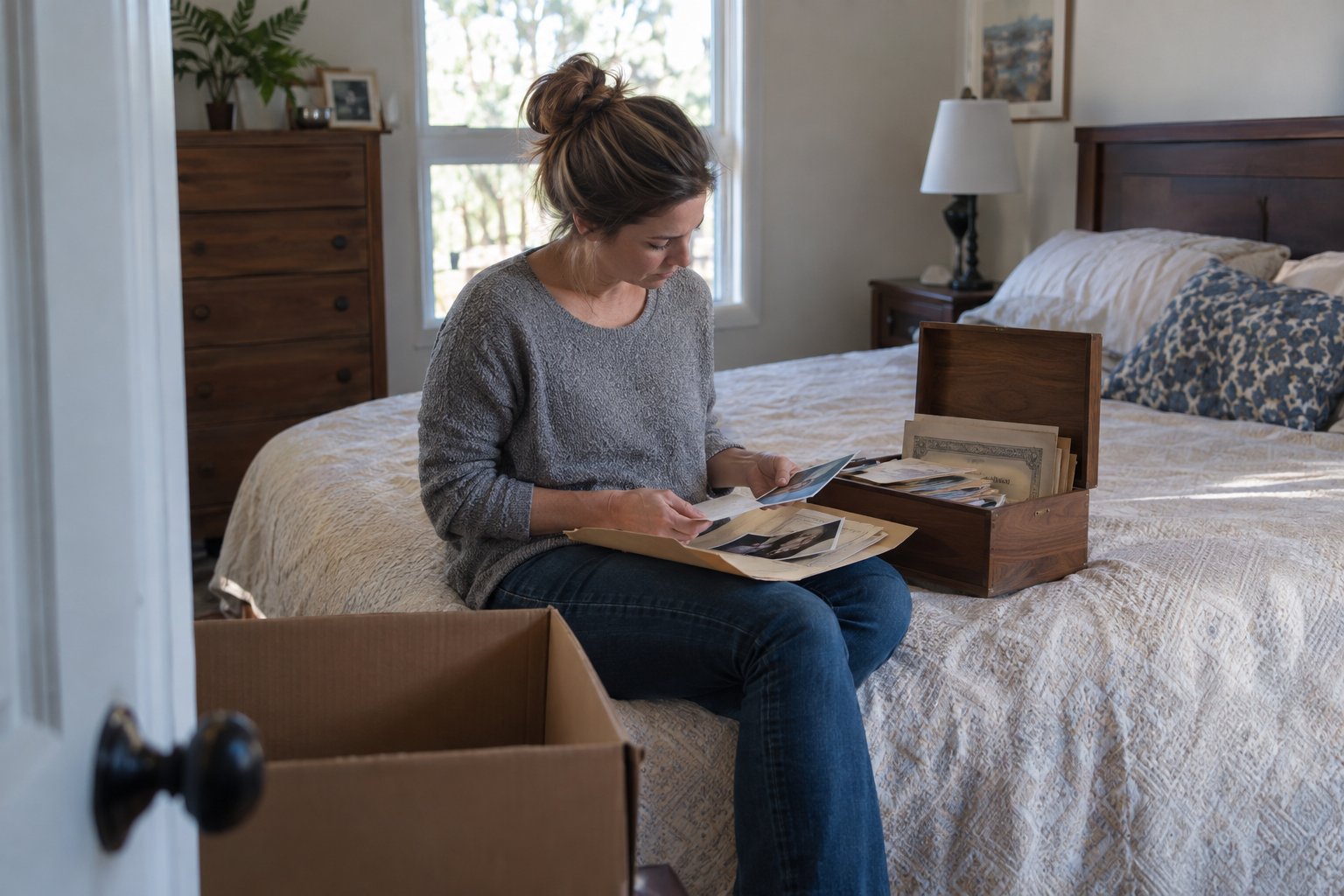
Build this box early, not the morning of the move. A simple system works: one accordion folder or small fireproof box labeled "Move Day: Do Not Load" that holds Social Security cards, passports, the deed or lease to both properties, medical records, insurance policies, and any cash you're not depositing beforehand. If you're closing on a home the same week, add closing documents to this box the moment they're signed.
What to Do With Jewelry and Small Valuables
High-value jewelry should also travel with you rather than in a labeled box on the truck, even a well-padded one. If you have a large collection or a few pieces worth insuring individually, consider a small lockbox that fits in a suitcase you personally control, and photograph each piece beforehand in case you ever need to file an insurance claim. Small, single high-value pieces you'd rather not carry yourself for an entire cross-country trip can sometimes be handled through a single-item pick-up service designed for exactly this kind of individually valuable, individually insured object.
What About Firearms, Ammunition, and Safes?
Ammunition cannot legally be transported by most commercial movers under hazmat rules, so plan to move it yourself in a locked container in your personal vehicle. Firearms themselves are usually movable by professional crews, but many movers prefer you handle them personally or require them to be unloaded, cased, and declared before loading.
Gun safes are a different problem entirely: they're heavy, dense, and awkward, which is a job specialty movers are equipped to handle even though the ammunition inside cannot travel with them. If a full gun safe is part of your move, our team's specialty item moving service for gun safes, pianos, and hot tubs is built for objects like this, where the container and its contents need two completely different transport plans.
Should You Rent a Safe Deposit Box Before a Long-Distance Move?
A temporary safe deposit box at a local bank branch is a reasonable stopgap if you're moving long-distance and don't want to carry original documents, rare coins, or small heirlooms across multiple days on the road. It buys you time to transfer belongings to your new bank's branch or ship them via insured registered mail once you've settled.
This matters most for moves that involve overnight stops, flights with connections, or several days of driving. The longer valuables are outside a controlled environment, the more opportunities exist for loss. If your move is a single-day, local drive, this step is usually unnecessary; carrying the items yourself is enough. For moves that fall somewhere in between, where you're shipping some belongings ahead separately in a portable container, it can help to understand how U-Box hauling works for the items you don't want riding in your personal vehicle but still want handled with more care than a standard freight shipment.
Building Your Personal "Do Not Load" List
Every household's non-allowable list looks a little different depending on what you actually own, so the safest approach is walking through your home room by room and flagging anything that is either irreplaceable, high-value, or legally restricted before the movers arrive. Waiting until moving day to make these decisions under time pressure is how items end up loaded by mistake.
A few categories are easy to overlook: prescription medications (keep these with you, not packed), external hard drives with the only copy of family photos, house keys for the new property, and any perishable or living items like plants that some carriers won't transport on longer routes. Walk each room with a notepad a week or two before your move and write down anything that doesn't belong in a numbered box. Our broader room-by-room guide to preparing your home for moving day covers the rest of that walkthrough if you haven't started it yet.
Once you've sorted what stays with you and what the crew can handle, the rest of the move gets a lot simpler to plan around. Get a moving quote and talk through any specialty or high-value items with our team before booking day.
Frequently Asked Questions
Can I put cash in a moving box if it's well hidden?
No. Even well-hidden cash carries real risk of loss, theft, or accidental disposal if a box gets damaged or misplaced, and no moving company's insurance will reimburse cash. Carry it with you in a bag or wallet you control at all times.
Will movers transport a fireproof document safe?
Most movers will load a fireproof document safe as a heavy item, but the contents inside (deeds, passports, wills) should still be removed and carried personally, since the mover's liability coverage typically excludes paper valuables regardless of the container.
What happens if a mover accidentally loads something on the do-not-move list?
Tell your crew immediately so they can set it aside before the truck leaves; once it's loaded and the truck departs, recovering a single item mid-route is difficult and sometimes impossible until delivery.
Do movers charge extra to leave certain items behind?
No, movers don't charge extra for items you keep out of the shipment. If anything, keeping hazardous or high-value items off the truck can reduce your total weight and cost slightly.
Can I ship valuables separately instead of carrying them myself?
Yes, insured registered mail through the postal service is a legitimate option for small, high-value items like jewelry or rare documents if you'd rather not carry them personally, though it takes longer than driving them yourself.
Every professional moving company hands you a list before the truck ever shows up, and buried in that list is a category of items they legally and practically cannot load: cash, important documents, firearms ammunition, certain chemicals, and a handful of irreplaceable personal items that no insurance policy can actually replace. Knowing what movers won't move, and building a separate plan for those items, prevents the single worst kind of moving day surprise: discovering the gap in coverage after something is already gone.
What Items Will Movers Refuse to Transport?
Movers won't transport hazardous materials, perishable food, plants in some cases, live animals, cash, and irreplaceable documents like passports, wills, and deeds. The reasoning splits into two buckets: legal liability (hazmat, flammables) and practical liability (anything a moving company's insurance won't cover if it's lost, stolen, or damaged in transit).
Most binding moving contracts explicitly exclude coverage for cash, jewelry above a certain declared value, and "priceless" items like family photos or irreplaceable heirlooms, even if the mover is willing to physically carry the box. That distinction matters. A mover might load a box of photo albums without blinking, but if it's lost, the reimbursement will be based on weight, not sentimental or replacement value. That's a risk only you can decide whether to take. If you want a full picture of how that coverage actually works before your move, it's worth reading through how to evaluate a mover's insurance and valuation coverage ahead of time.
The Legal Exclusions: Hazardous and Regulated Materials
Propane tanks, gasoline, pool chemicals, aerosols, ammunition, and car batteries fall under Department of Transportation hazmat rules that commercial carriers must follow regardless of company policy. This isn't a judgment call your mover is making; it's federal regulation. Plan to dispose of, use up, or transport these items yourself in your own vehicle, following local disposal guidelines.
The Liability Exclusions: High-Value and Irreplaceable Items
Cash, coin and stamp collections, stock certificates, jewelry, and important paperwork sit in a gray area. Movers can often carry these, but their liability coverage typically won't reimburse the true value if something goes wrong. Most moving contracts cap per-item or per-pound reimbursement well below what a rare coin collection or a set of unset diamonds is actually worth.
How Do You Move Cash and Important Documents Safely?
Cash, passports, birth certificates, wills, deeds, and financial documents should travel with you personally, never in the moving truck. Consolidate them into one fireproof document box or a locked bag that stays in your car or carry-on, and make copies (physical or scanned) of anything that would be a disaster to lose permanently.
Build this box early, not the morning of the move. A simple system works: one accordion folder or small fireproof box labeled "Move Day: Do Not Load" that holds Social Security cards, passports, the deed or lease to both properties, medical records, insurance policies, and any cash you're not depositing beforehand. If you're closing on a home the same week, add closing documents to this box the moment they're signed.
What to Do With Jewelry and Small Valuables
High-value jewelry should also travel with you rather than in a labeled box on the truck, even a well-padded one. If you have a large collection or a few pieces worth insuring individually, consider a small lockbox that fits in a suitcase you personally control, and photograph each piece beforehand in case you ever need to file an insurance claim. Small, single high-value pieces you'd rather not carry yourself for an entire cross-country trip can sometimes be handled through a single-item pick-up service designed for exactly this kind of individually valuable, individually insured object.
What About Firearms, Ammunition, and Safes?
Ammunition cannot legally be transported by most commercial movers under hazmat rules, so plan to move it yourself in a locked container in your personal vehicle. Firearms themselves are usually movable by professional crews, but many movers prefer you handle them personally or require them to be unloaded, cased, and declared before loading.
Gun safes are a different problem entirely: they're heavy, dense, and awkward, which is a job specialty movers are equipped to handle even though the ammunition inside cannot travel with them. If a full gun safe is part of your move, our team's specialty item moving service for gun safes, pianos, and hot tubs is built for objects like this, where the container and its contents need two completely different transport plans.
Should You Rent a Safe Deposit Box Before a Long-Distance Move?
A temporary safe deposit box at a local bank branch is a reasonable stopgap if you're moving long-distance and don't want to carry original documents, rare coins, or small heirlooms across multiple days on the road. It buys you time to transfer belongings to your new bank's branch or ship them via insured registered mail once you've settled.
This matters most for moves that involve overnight stops, flights with connections, or several days of driving. The longer valuables are outside a controlled environment, the more opportunities exist for loss. If your move is a single-day, local drive, this step is usually unnecessary; carrying the items yourself is enough. For moves that fall somewhere in between, where you're shipping some belongings ahead separately in a portable container, it can help to understand how U-Box hauling works for the items you don't want riding in your personal vehicle but still want handled with more care than a standard freight shipment.
Building Your Personal "Do Not Load" List
Every household's non-allowable list looks a little different depending on what you actually own, so the safest approach is walking through your home room by room and flagging anything that is either irreplaceable, high-value, or legally restricted before the movers arrive. Waiting until moving day to make these decisions under time pressure is how items end up loaded by mistake.
A few categories are easy to overlook: prescription medications (keep these with you, not packed), external hard drives with the only copy of family photos, house keys for the new property, and any perishable or living items like plants that some carriers won't transport on longer routes. Walk each room with a notepad a week or two before your move and write down anything that doesn't belong in a numbered box. Our broader room-by-room guide to preparing your home for moving day covers the rest of that walkthrough if you haven't started it yet.
Once you've sorted what stays with you and what the crew can handle, the rest of the move gets a lot simpler to plan around. Get a moving quote and talk through any specialty or high-value items with our team before booking day.
Have Questions About Your Move?
Can I put cash in a moving box if it's well hidden?
No. Even well-hidden cash carries real risk of loss, theft, or accidental disposal if a box gets damaged or misplaced, and no moving company's insurance will reimburse cash. Carry it with you in a bag or wallet you control at all times.
Will movers transport a fireproof document safe?
Most movers will load a fireproof document safe as a heavy item, but the contents inside (deeds, passports, wills) should still be removed and carried personally, since the mover's liability coverage typically excludes paper valuables regardless of the container.
What happens if a mover accidentally loads something on the do-not-move list?
Tell your crew immediately so they can set it aside before the truck leaves; once it's loaded and the truck departs, recovering a single item mid-route is difficult and sometimes impossible until delivery.
Do movers charge extra to leave certain items behind?
No, movers don't charge extra for items you keep out of the shipment. If anything, keeping hazardous or high-value items off the truck can reduce your total weight and cost slightly.
Can I ship valuables separately instead of carrying them myself?
Yes, insured registered mail through the postal service is a legitimate option for small, high-value items like jewelry or rare documents if you'd rather not carry them personally, though it takes longer than driving them yourself.