Knowing how to pack boxes for moving is the single skill that determines whether your belongings arrive intact or arrive as a pile of regrets on the kitchen floor. Most people focus on which box to buy or how to label it, but the real damage happens inside the box itself: items shifting, weight settling wrong, and lids that bow under pressure they were never built to hold. A box packed correctly can survive a bumpy ride in a moving truck. A box packed carelessly can turn a single pothole into a broken lamp.
This guide is not about picking a room to pack or choosing a box size. It is about the mechanics of packing any box, in any room, so its contents stay exactly where you put them from your old front door to your new one.
Why Do Moving Boxes Fail Even When They Look Full?
A box fails when its contents can move independently of the box itself, not when it looks empty. A box that appears completely packed can still have several inches of shift room between items if nothing was done to lock them in place. That gap is where breakage happens.
Movers do not toss boxes around out of carelessness. Trucks brake, corner, and vibrate constantly, and every box on the truck absorbs some of that motion. A box with a rigid, evenly distributed interior transmits that motion through the whole structure and nothing inside moves independently. A box with loose pockets of space becomes a container where heavier items shift downward and crush whatever is beneath them, and lighter items rattle against each other until something chips or cracks.
How Do You Pack a Moving Box So Contents Don't Shift?
The core method is heavy-to-light layering with no empty space left unfilled. Every box should end up dense enough that shaking it produces no rattle and firm enough on top that you can press down without feeling anything give.
Build the Base With Weight
Put the heaviest, most stable items on the bottom of the box. This is not about protecting them, they can usually handle the trip. It is about giving the rest of the box a solid foundation instead of a shifting one. Books, small appliances, and dense kitchen items belong on the bottom layer.
Fill Every Void as You Go
Gaps along the sides, corners, and between items are the actual cause of most in-transit damage. Crumpled packing paper, towels, or bunched newspaper should be pushed into every visible gap before you add the next layer, not stuffed in at the end as an afterthought. A properly filled box has no pockets of open air anywhere inside it.
Finish With a Cushioned, Level Top Layer
The last few inches of a box take the most pressure when boxes get stacked. Lighter, less fragile items should sit on top, packed tightly enough that the lid closes without bulging or caving. If you can hear movement when you tilt the box side to side, it is not ready to close.
How Heavy Should a Moving Box Be?
A packed box should stay under roughly 50 pounds for anything that will be lifted repeatedly, and lighter for boxes going up or down stairs. The right weight depends more on what is inside than on the box size, which is why smaller boxes are meant for dense items and larger boxes are meant for bulky, lightweight ones.
A common mistake is filling a large box entirely with books or canned goods because it "still has room." The box becomes too heavy to carry safely long before it becomes too full. If a box needs two people to lift comfortably, it is either overpacked or the wrong size for what is inside it. When in doubt, distribute weight across more boxes rather than fewer.
What Is the Right Way to Tape a Moving Box?
A box needs reinforced taping on the bottom seam before it is loaded, not just a strip across the top after it is packed. The bottom is where the full weight of the contents rests, and a single strip of tape there is the most common reason boxes bottom out mid-move.
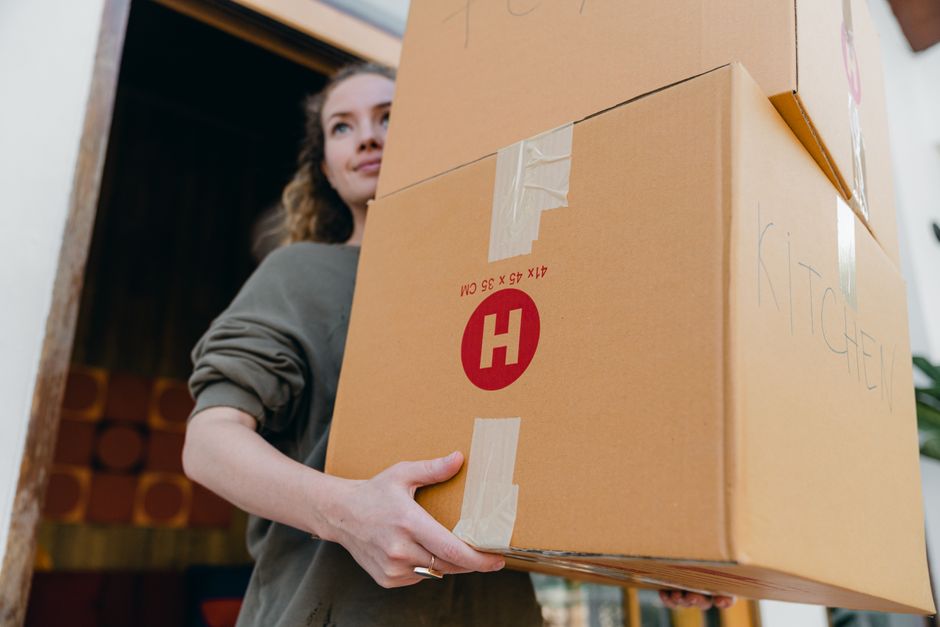
Run tape along the center seam of the bottom flaps, then add a perpendicular strip across it in an H pattern for anything heavier than a light box of linens or clothing. On top, use the same H pattern once the box is filled and closed. Avoid taping only the center seam and skipping the edges. That single strip looks secure but does nothing to stop the flaps from separating under weight.
Should You Pack Different Types of Items in the Same Box?
Mixing item types in one box is fine as long as their weight and fragility are compatible, but mixing fragile glass with heavy tools or appliances in the same box is not. The goal is not uniformity, it is making sure nothing in the box can damage anything else in the box.
A box can reasonably hold a mix of paperback books and folded linens, since the linens act as natural padding around the books. It should not hold a stack of plates beneath a small toolbox, since the weight and hardness of the tools will crack the plates regardless of how much paper separates them. Before closing any box, ask whether the heaviest item inside could damage the most fragile item inside if the box were dropped from a foot off the ground. If the answer is yes, repack it.
Once your boxes are packed and taped correctly, the next challenge is getting them onto the truck without wasting space or risking a shift during loading. Our guide on packing a moving truck like a professional covers how to load and stack boxes so the work you just put into each one actually holds up for the whole trip. If you would rather have the packing itself handled by people who do this daily, our professional packing services team packs and secures every box using these same principles, just faster and with the right materials on hand.
For anything unusually heavy or awkward that does not fit in a standard box at all, like tools, small appliances, or oddly shaped items, it is worth reviewing our advice on packing fragile items for moving before you decide whether it belongs in a box or needs separate handling. And if you are staring down a garage or storage area full of boxes you are not sure you even need to move, a junk removal service can clear out the excess before moving day instead of after it.
Packing boxes correctly is not complicated once you understand what actually causes damage in transit. Weight goes low, gaps get filled, tape gets reinforced, and incompatible items stay separated. Get those four things right on every box and the rest of your move gets considerably easier.
Frequently Asked Questions
Can I reuse old boxes for a move or do I need new ones?
Reused boxes are fine as long as the cardboard is still rigid and the seams are not weakened from previous use. Check that the bottom flaps have not been repeatedly taped and retaped, since that weakens the fold lines. If a box feels soft or the corners are crushed, retire it for something like linens rather than dishes or books.
What household items should never go inside a sealed moving box?
Aerosol cans, flammable liquids, batteries loose in bulk, and perishable food should stay out of sealed boxes headed for a truck. Pressure and heat inside a truck can cause aerosols to leak or rupture, and loose batteries can short against metal objects. Pack these separately and transport them yourself when possible.
Is it better to use small boxes or large boxes for a move?
It depends on what is going inside, not personal preference. Small and medium boxes are meant for dense, heavy items like books or tools, while large boxes should be reserved for lightweight, bulky items like bedding or lampshades. Using a large box for heavy items almost always results in a box that is too heavy to lift safely.
How do I know if a moving box is packed too full?
If the lid bulges upward and will not close flat, or if you need to sit on it to force the flaps shut, the box is overpacked. An overfull box puts stress on the top seams and can burst open when stacked or tilted. Redistribute the top layer into a second box rather than forcing the first one closed.
Do I need special boxes for a long distance move versus a local one?
Standard, undamaged boxes with reinforced taping hold up fine for both, but long distance moves involve more handling and longer time in transit, so double-boxing especially fragile items is worth the extra effort. Local moves have fewer touchpoints, so slightly less reinforcement is needed, though the packing method itself should not change.
Knowing how to pack boxes for moving is the single skill that determines whether your belongings arrive intact or arrive as a pile of regrets on the kitchen floor. Most people focus on which box to buy or how to label it, but the real damage happens inside the box itself: items shifting, weight settling wrong, and lids that bow under pressure they were never built to hold. A box packed correctly can survive a bumpy ride in a moving truck. A box packed carelessly can turn a single pothole into a broken lamp.
This guide is not about picking a room to pack or choosing a box size. It is about the mechanics of packing any box, in any room, so its contents stay exactly where you put them from your old front door to your new one.
Why Do Moving Boxes Fail Even When They Look Full?
A box fails when its contents can move independently of the box itself, not when it looks empty. A box that appears completely packed can still have several inches of shift room between items if nothing was done to lock them in place. That gap is where breakage happens.
Movers do not toss boxes around out of carelessness. Trucks brake, corner, and vibrate constantly, and every box on the truck absorbs some of that motion. A box with a rigid, evenly distributed interior transmits that motion through the whole structure and nothing inside moves independently. A box with loose pockets of space becomes a container where heavier items shift downward and crush whatever is beneath them, and lighter items rattle against each other until something chips or cracks.
How Do You Pack a Moving Box So Contents Don't Shift?
The core method is heavy-to-light layering with no empty space left unfilled. Every box should end up dense enough that shaking it produces no rattle and firm enough on top that you can press down without feeling anything give.
Build the Base With Weight
Put the heaviest, most stable items on the bottom of the box. This is not about protecting them, they can usually handle the trip. It is about giving the rest of the box a solid foundation instead of a shifting one. Books, small appliances, and dense kitchen items belong on the bottom layer.
Fill Every Void as You Go
Gaps along the sides, corners, and between items are the actual cause of most in-transit damage. Crumpled packing paper, towels, or bunched newspaper should be pushed into every visible gap before you add the next layer, not stuffed in at the end as an afterthought. A properly filled box has no pockets of open air anywhere inside it.
Finish With a Cushioned, Level Top Layer
The last few inches of a box take the most pressure when boxes get stacked. Lighter, less fragile items should sit on top, packed tightly enough that the lid closes without bulging or caving. If you can hear movement when you tilt the box side to side, it is not ready to close.
How Heavy Should a Moving Box Be?
A packed box should stay under roughly 50 pounds for anything that will be lifted repeatedly, and lighter for boxes going up or down stairs. The right weight depends more on what is inside than on the box size, which is why smaller boxes are meant for dense items and larger boxes are meant for bulky, lightweight ones.
A common mistake is filling a large box entirely with books or canned goods because it "still has room." The box becomes too heavy to carry safely long before it becomes too full. If a box needs two people to lift comfortably, it is either overpacked or the wrong size for what is inside it. When in doubt, distribute weight across more boxes rather than fewer.
What Is the Right Way to Tape a Moving Box?
A box needs reinforced taping on the bottom seam before it is loaded, not just a strip across the top after it is packed. The bottom is where the full weight of the contents rests, and a single strip of tape there is the most common reason boxes bottom out mid-move.
Run tape along the center seam of the bottom flaps, then add a perpendicular strip across it in an H pattern for anything heavier than a light box of linens or clothing. On top, use the same H pattern once the box is filled and closed. Avoid taping only the center seam and skipping the edges. That single strip looks secure but does nothing to stop the flaps from separating under weight.
Should You Pack Different Types of Items in the Same Box?
Mixing item types in one box is fine as long as their weight and fragility are compatible, but mixing fragile glass with heavy tools or appliances in the same box is not. The goal is not uniformity, it is making sure nothing in the box can damage anything else in the box.
A box can reasonably hold a mix of paperback books and folded linens, since the linens act as natural padding around the books. It should not hold a stack of plates beneath a small toolbox, since the weight and hardness of the tools will crack the plates regardless of how much paper separates them. Before closing any box, ask whether the heaviest item inside could damage the most fragile item inside if the box were dropped from a foot off the ground. If the answer is yes, repack it.
Once your boxes are packed and taped correctly, the next challenge is getting them onto the truck without wasting space or risking a shift during loading. Our guide on packing a moving truck like a professional covers how to load and stack boxes so the work you just put into each one actually holds up for the whole trip. If you would rather have the packing itself handled by people who do this daily, our professional packing services team packs and secures every box using these same principles, just faster and with the right materials on hand.
For anything unusually heavy or awkward that does not fit in a standard box at all, like tools, small appliances, or oddly shaped items, it is worth reviewing our advice on packing fragile items for moving before you decide whether it belongs in a box or needs separate handling. And if you are staring down a garage or storage area full of boxes you are not sure you even need to move, a junk removal service can clear out the excess before moving day instead of after it.
Packing boxes correctly is not complicated once you understand what actually causes damage in transit. Weight goes low, gaps get filled, tape gets reinforced, and incompatible items stay separated. Get those four things right on every box and the rest of your move gets considerably easier.
Have Questions About Your Move?
Can I reuse old boxes for a move or do I need new ones?
Reused boxes are fine as long as the cardboard is still rigid and the seams are not weakened from previous use. Check that the bottom flaps have not been repeatedly taped and retaped, since that weakens the fold lines. If a box feels soft or the corners are crushed, retire it for something like linens rather than dishes or books.
What household items should never go inside a sealed moving box?
Aerosol cans, flammable liquids, batteries loose in bulk, and perishable food should stay out of sealed boxes headed for a truck. Pressure and heat inside a truck can cause aerosols to leak or rupture, and loose batteries can short against metal objects. Pack these separately and transport them yourself when possible.
Is it better to use small boxes or large boxes for a move?
It depends on what is going inside, not personal preference. Small and medium boxes are meant for dense, heavy items like books or tools, while large boxes should be reserved for lightweight, bulky items like bedding or lampshades. Using a large box for heavy items almost always results in a box that is too heavy to lift safely.
How do I know if a moving box is packed too full?
If the lid bulges upward and will not close flat, or if you need to sit on it to force the flaps shut, the box is overpacked. An overfull box puts stress on the top seams and can burst open when stacked or tilted. Redistribute the top layer into a second box rather than forcing the first one closed.
Do I need special boxes for a long distance move versus a local one?
Standard, undamaged boxes with reinforced taping hold up fine for both, but long distance moves involve more handling and longer time in transit, so double-boxing especially fragile items is worth the extra effort. Local moves have fewer touchpoints, so slightly less reinforcement is needed, though the packing method itself should not change.